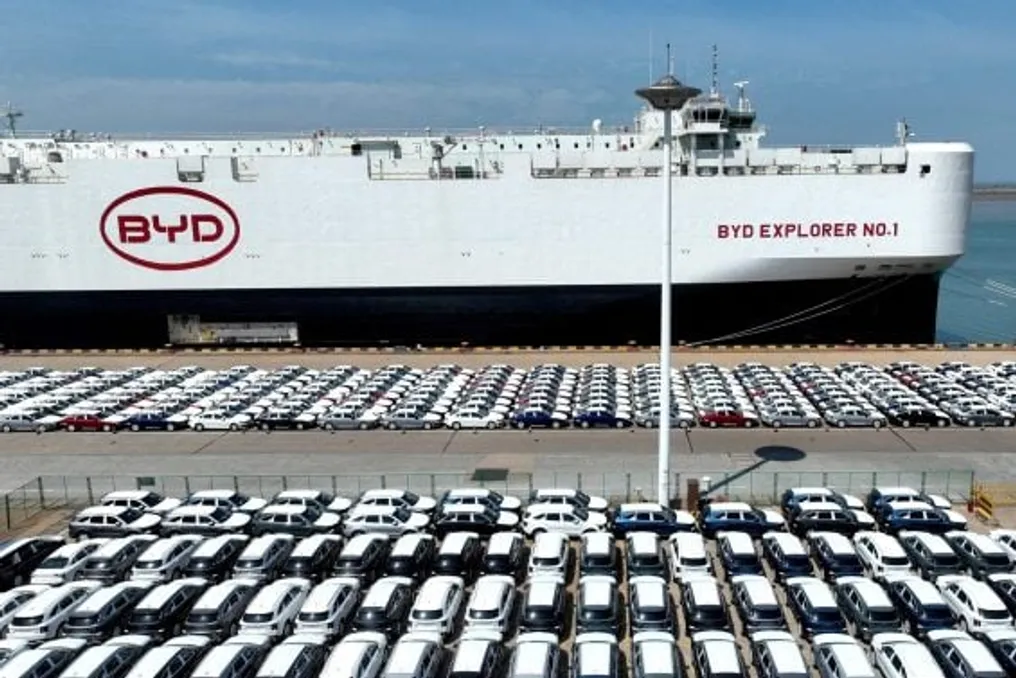
Exports of electric vehicles from China are growing faster than the capacity of the global maritime fleet available for their transport, which is evidenced by high freight costs. In June, the cost to charter a large car carrier reached an average of US$ 70,000 per day, a significant increase compared to the US$ 42,500 recorded at the end of last year, according to data from the broker Clarksons. Over 2026, these rates registered a growth of 65%.
Due to the lack of space on specialized ships, some manufacturers were forced to use conventional containers, the same ones used for transporting electronics and furniture.
The volume of Chinese exports has skyrocketed: in 2019, China exported less than 600,000 vehicles, but this target is expected to reach 10 million in the current year. Figures for 2025 were 7.1 million units, and in June alone, the country surpassed the mark of 1 million units in a single month, representing a jump of 71.2% compared to the previous year.
Andreas Enger, CEO of Höegh Autoliners, told The Wall Street Journal that in just five years, China transitioned from a secondary automotive exporter to the world leader in this segment. He also pointed out that the sea freight for cars currently costs double what it did before the pandemic.
Although ship supply has shown some reaction, it has failed to keep pace with the increased demand. For Lasse Kristoffersen, CEO of Wallenius Wilhelmsen, which operates the largest fleet in the sector, the approximately 40% expansion of the global fleet is still insufficient to meet Chinese shipments. Furthermore, the capacity of ships dedicated to cars and trucks is only expected to increase by 7.6% this year.
With domestic sales falling by more than 20% in the first half, exports have become a decompression channel for the production surplus of Chinese automotive industries.
The use of containers is no longer an atypical situation. Kristoffersen estimates that up to 4 million vehicles annually leave China via containers or other alternatives to car carriers. The consultancy Veson Nautical predicts that this number of cars in alternative modes will double in 2026, reaching about 2 million, treating this practice as a structural characteristic of trade.
Eric Dessupoiu, Vice President of Vehicle Logistics at Ceva Logistics, clarified that car carriers are preferred because the process of loading and unloading driven cars is more economical and minimizes the risk of damage. In the case of containers, the vehicle needs to be transported to a yard near the port, placed in the box, and lifted by a crane, with the reverse procedure occurring at the destination.
Christoph Seitz, Global Vice President of Finished Vehicles at DP World, observed a divergence in approach: while Western manufacturers showed resistance to the idea, Chinese ones did not present this objection. Carriers such as the Danish Maersk and the Swiss MSC already offer this service directly to manufacturers.
Some Chinese companies opted not to rely on third parties; BYD, for example, launched its own car carrier in 2024 and currently operates eight vessels. The company did not respond to The Wall Street Journal on the matter.
Lasse Kristoffersen informed investors that companies with their own fleets have their capacity fully utilized and need to decide which customers will receive space leaving Asia, with Europe, Australia, Latin America, and Brazil being among the main destinations.