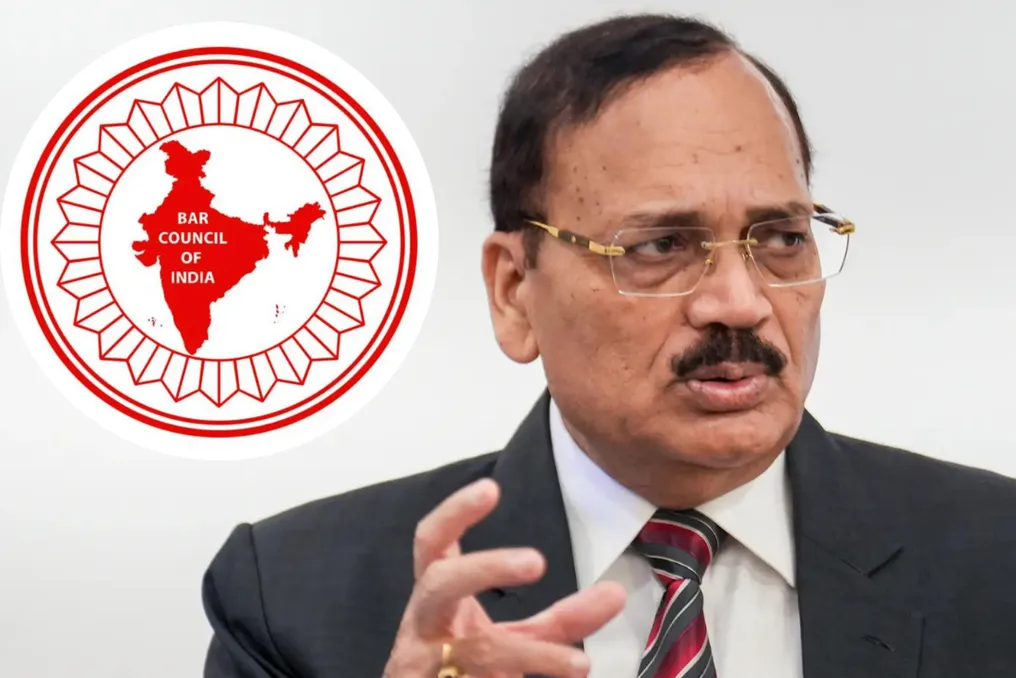
The Supreme Court of India sharply criticized the Bar Council of India (BCI) on Friday for threatening to revoke the practice licenses of students from NALSAR University, based in Hyderabad. These students had protested against the Chief Justice (CJI) Surya Kant's participation as a guest of honor at the graduation ceremony.
The three-judge bench, led by CJI Surya Kant, responded to the dispute that arose on Thursday evening when the BCI issued an unprecedented letter, which was subsequently recalled. The CJI stated: 'This is completely inappropriate. BCI has nothing to do with this. Perhaps the students wrote to me. This is a dialogue between me and the students. Who are they (BCI) to unreasonably create a problem? This action is entirely inappropriate.'
Senior Advocate K Paramishwar approached the Supreme Court seeking urgent intervention to overturn the illegal and arbitrary actions of the BCI. The BCI had attempted to compel the Rector of NALSAR University, one of the leading law schools, to investigate and identify the students who objected to the CJI's presence as a guest of honor at the convocation, and had also issued the now-withdrawn threat of refusing registration of practice licenses by all state bar councils.
CJI Surya Kant directed Senior Advocate K Paramishwar to convey to the law students graduating from NALSAR this year the recommendation to 'obtain practice licenses as soon as possible and start a career in the Supreme Court.' The judicial bench requested explanations from the BCI regarding the process used before adopting the resolutions preceding the letter to the protestors, as well as the subsequent withdrawal of that letter.
Emphasizing that students have the right to peaceful protest, the CJI added: 'We will include them in the lists and provide them with cases for legal aid. This will be our answer to all those who intend to obstruct their professional careers.' He also noted that students possess a fundamental right to freedom of speech and expression.
CJI Surya Kant stressed the need for magnanimity, stating: 'Even if someone makes an incorrect statement at a young age, let it remain so. It does not mean they do not have the right to speak.' He recalled his own student experience, noting that participating in events or protests does not make students guilty. He concluded that as long as students raise their voices legally and peacefully on any issue, their opinion should be heard, not rejected, because the BCI was unreasonably interfering in this process. The CJI also stated that 'neither the BCI nor any other body has the right to interfere in this.'
Earlier, the advocate had highlighted the withdrawn threat of refusal of practice license registration by all state bar councils. The bench led by the CJI, which also included Judges Joymalya Bagchi and V Mohana, prohibited the BCI and all state bar councils from taking any coercive or punitive action against students and faculty without considering the petition from two former NALSAR students. Advocate Radhika Gautam, receiving the notification on behalf of the BCI, reported that the controversial circular had been withdrawn. In its judgment, the Supreme Court required the Bar Council of India to submit its rejoinder memorandum within two weeks.