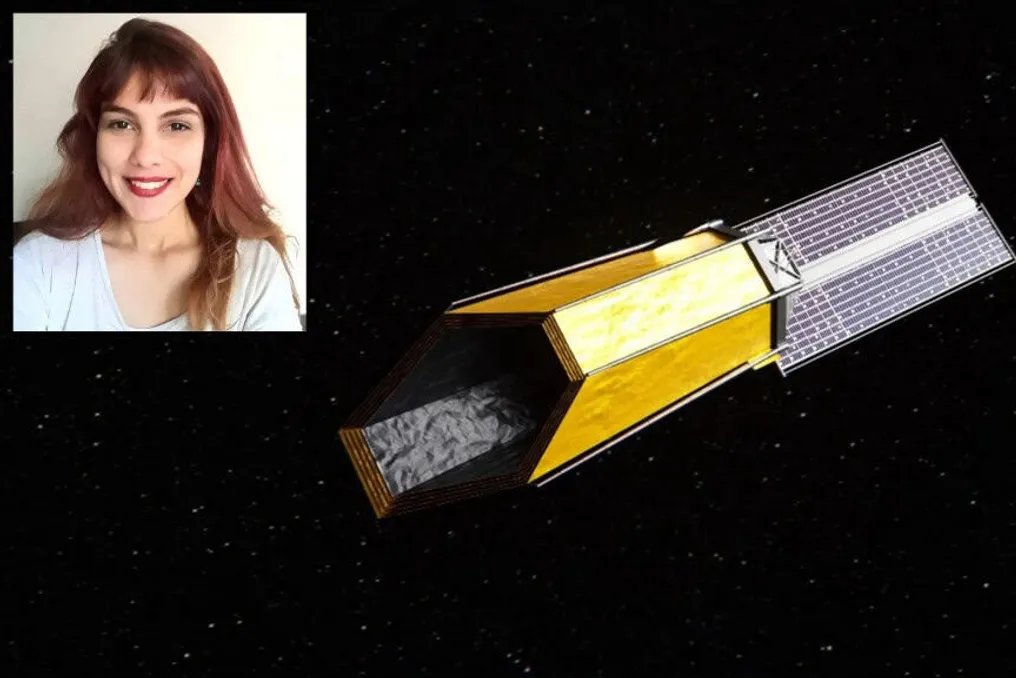
The search for signs of life beyond Earth, once considered science fiction, is a daily activity at the forefront of space exploration. In a conversation with Brazilian astrobiologist Raíssa Estrela, a researcher at NASA's Jet Propulsion Laboratory (JPL), the preparatory work for the Habitable Worlds Observatory (HWO)—a telescope designed to monitor potential 'Earth 2.0's'—was detailed. Estrela also addressed the limitations of current observatories and what is still needed to confirm the existence of extraterrestrial life.
Beyond space exploration, NASA uses instruments directed at our planet. Raíssa Estrela explained how data collected by the International Space Station (ISS) aids in mapping plastic pollution and assessing biodiversity loss, including in Brazil.
Research routine and the future of astrobiology
In her role, Raíssa Estrela works in astrobiology, focusing on identifying biosignatures in exoplanet atmospheres. She also investigates terrestrial pollutants, such as plastic and greenhouse gases, in addition to characterizing the biodiversity of Planet Earth.
Her routine involves handling data from space telescopes. During her doctoral studies, she worked with data from the Hubble Space Telescope, analyzing time series of starlight orbiting planets to identify molecules in their atmospheres. Although she no longer works with Hubble, her current focus is the preparation of the Habitable Worlds Observatory (HWO).
Estrela's current work is no longer data analysis but rather the preparation for this new space mission. A crucial aspect of this preparation is defining the necessary sciences to develop instrumentation capable of delivering the desired results. Among these sciences, the detection of biomolecule signatures, such as oxygen, ozone, and methane, stands out, requiring the definition of adequate levels and instrumentation.
Currently, there are other telescopes, such as James Webb, but the technology does not yet allow for the detection of molecules in an atmosphere comparable to that of an Earth 2.0. Thus, the current effort aims to establish the foundations so that this new space telescope can perform such science in a few years.
Timeline and technological differences
The telescope launch is estimated around 2040, depending on the completion of instrumentation and the funding required to support both the scientific and technological development teams.
The planetary characterization methodology of the HWO will differ from that used by James Webb and Hubble. While the latter employ the planetary transit technique—measuring the host star's light as the planet passes in front of it—the HWO will use a coronagraph to block the star's light. This will allow for the direct observation of light reflected by the planet itself.
The Nancy Grace Roman mission, scheduled for launch at the end of August, has a coronagraph and will serve as a test for this instrumentation. However, Roman's precision will be limited to gas giant planets, as it will not be sufficient to detect the light reflected by a small body like an Earth 2.0. Separating the signal of a tiny planet near the star requires the exclusive precision of the HWO.
Engineers and scientists are debating various possible coronagraph architectures and telescope dimensions, such as six or eight meters, without a final decision on the choice.
Capability comparison and challenges
Nancy Grace Roman will also employ a coronagraph, but its focus will be on gas giant planets, such as Jupiter, and not on small bodies. The HWO, on the other hand, will be built with a coronagraph capable of achieving the necessary precision to measure the light reflected by smaller planets, such as Venus or Earth.
Although there are studies on the telescope's reach, the exact answer depends on the final architecture chosen. A significant challenge is that when observing an Earth-sized planet, its exact size cannot be determined; its characteristics must be inferred based on its atmosphere.
The central hypothesis is to find an Earth 2.0 with oxygen and methane, gases associated with terrestrial life. However, it is necessary to distinguish whether these biogases are generated by biological processes or by abiotic phenomena, such as volcanism or photochemical interactions with the star. This study of the distinction between biological and abiotic origin is a line of research for Estrela, which includes collaboration with Brazilian students.
The case of the exoplanet K2-18b, which showed dimethyl sulfide—a compound linked to life on Earth—illustrates the difficulty. Although it is a promising scientific result, current technology still faces academic debate, where indications may later be questioned.