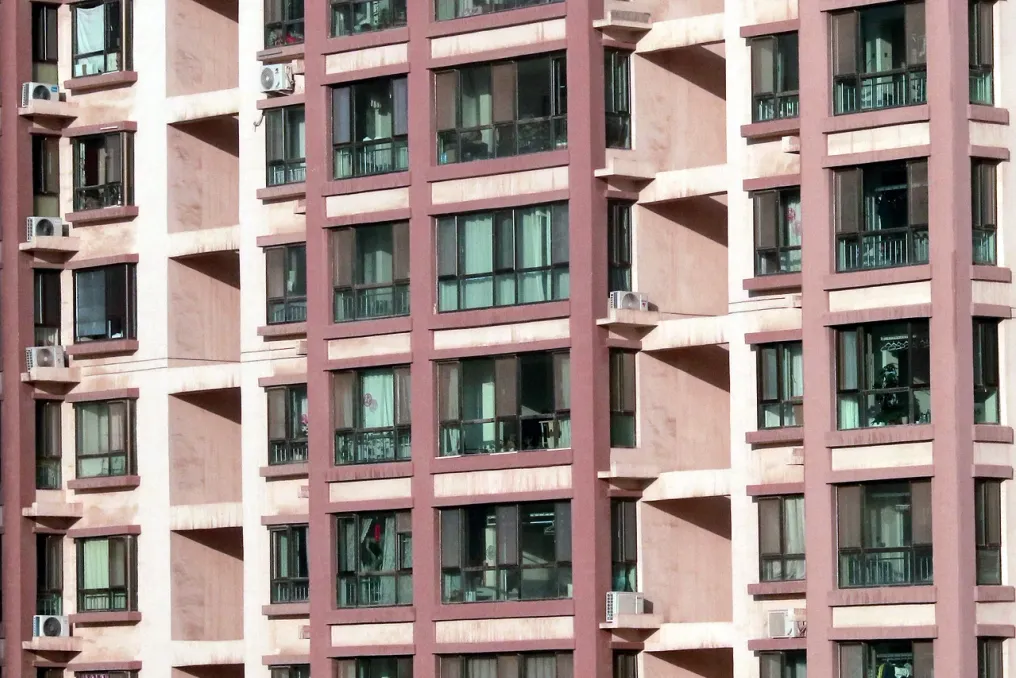
The pilot project for mass valuation in Tashkent, Uzbekistan, has completed the assessment of over 600,000 apartments and more than 213,000 private houses.
The pilot project for mass valuation in Tashkent, Uzbekistan, has completed the assessment of over 600,000 apartments and more than 213,000 private houses.
Preliminary results showed significant discrepancies between the current cadastral value and the appraised value. For apartments, the appraised value was almost 7.4 times higher than the cadastral value, and for private houses—almost 15 times higher.
These figures were presented at an open dialogue in the Ministry of Economy and Finance. The current cadastral value of over 600,000 apartments in the capital was estimated at 57.7 trillion soms, whereas after the mass valuation, the total appraised value reached 426.7 trillion soms.
Regarding more than 213,000 private houses, their cadastral value amounted to 39 trillion soms, while the total value based on the mass valuation increased to 587 trillion soms.
The materials noted that the significant gap in valuations is due to differences in calculation methods. Under the current cadastral value, the value of the land plot is not fully reflected. However, during mass valuation, a private house is considered as a single real estate object, including the land plot, buildings, and structures.
The calculations take into account numerous factors, including the object's location, the area of the land and buildings, the year of construction, the number of floors, building materials, as well as the availability of transport and social infrastructure. Specialists also analyze market listings, information from real estate agents, and data from notarized transactions.
Objects are divided into price zones, based on which valuation models are developed that correspond to the characteristics of specific districts and objects. Preliminary data also revealed significant differences in real estate prices across Tashkent districts: the price per square meter of an apartment ranged from 4.6 to 36 million soms, and the cost of one sotik of land ranged from 115 to 888 million soms.
The Ministry of Economy and Finance emphasized that the presented figures are preliminary and do not determine the future sale price of the property. The goal of mass valuation is to determine a value as close as possible to market conditions, based on unified criteria, and to ensure the comparability of objects.
The valuation results are planned to be presented for a 60-day public discussion. Owners will receive SMS notifications and can review the valuation results and the data used in the calculations. If errors or inaccuracies are found, owners can report them, receive clarifications, and request a revision of the results. Furthermore, owners who disagree with the mass valuation results can hire a valuation organization to conduct an independent expert review.
The mass property valuation system is being implemented in Uzbekistan in stages according to the presidential decree of March 5, 2025. In 2025–2026, the pilot project is being implemented in Tashkent. Expansion of the system to Nukus and regional centers is planned for 2026–2027, followed by all other regions starting in 2027.
According to the Ministry of Economy and Finance, the phased implementation will allow testing the methodology in practice, eliminating identified shortcomings, and adapting the system to the specific features of various regions. It is expected that the results of the mass valuation will be used to create real estate value maps, compare levels of regional development, assess the effectiveness of state capital investments, determine infrastructure development priorities, and form an information base for the mortgage market.
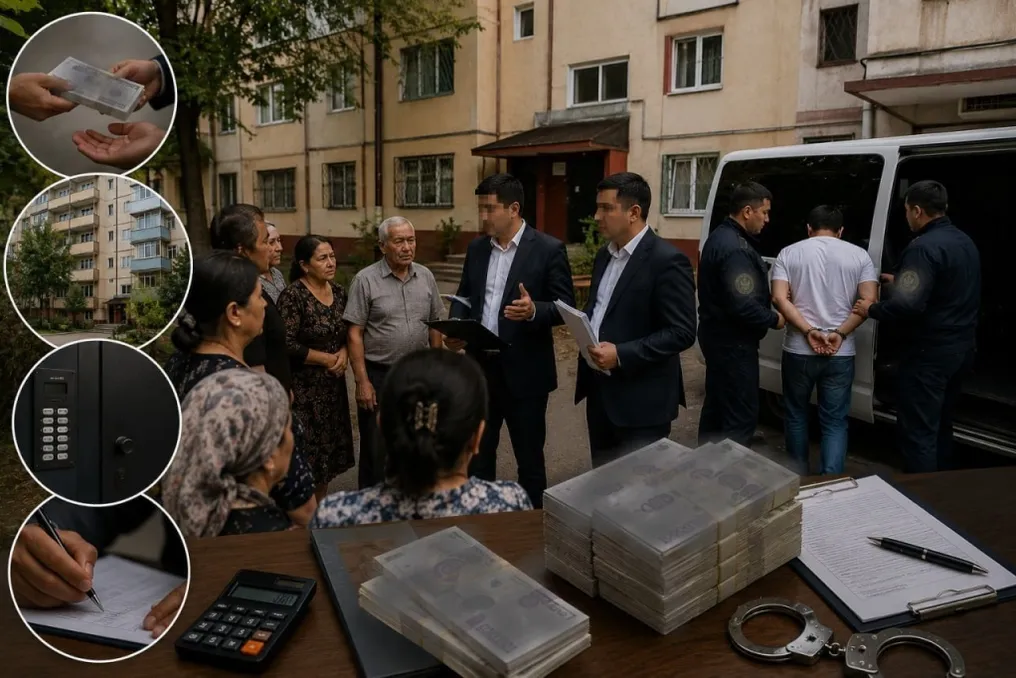
In the Uchtepinsky district of Tashkent, two men who claimed to be managers of the apartment building's management body managed to collect 574.6 million soums from residents.
According to information provided by the Department for Combating Economic Crimes under the Prosecutor General's Office, the suspects claimed to be the heads of the management body of house number 29, located in the 'Vatanparvar' mahalla. Using this deception, they obtained a significant sum of money from the residents—574.6 million soums.
A criminal case has been initiated regarding this act, classified under the article on fraud. Measures are currently being taken to clarify all details of the incident.
It is worth noting that previously, law enforcement agencies in Bukhara region had stopped the activities of another scammer. This individual used a fake account on the Telegram messenger, created under the guise of a local official, to deceive employees of several institutions and appropriate their funds.
According to the National Statistical Committee data, the total volume of construction work in Uzbekistan reached 192.0 trillion Uzbek soums from January to June 2026.
The largest volume of construction activity was recorded in Tashkent, where the figure amounted to 61.2 trillion Uzbek soums. The Tashkent region took second place with a volume of 18.8 trillion Uzbek soums, and the Fergana region came in third with a figure of 12.1 trillion Uzbek soums.
The top five regions by construction volume also included the Bukhara region, where construction was carried out for 10.7 trillion Uzbek soums, and the Samarkand region with an amount of 9.9 trillion Uzbek soums.
Following these were the Kashkadarya region with a volume of 9.4 trillion Uzbek soums, the Andijan region—9.0 trillion Uzbek soums, the Navoi region—8.6 trillion Uzbek soums, the Khorezm region—8.5 trillion Uzbek soums, and the Namangan region—8.4 trillion Uzbek soums.
During the reporting period, construction was completed in the Surkhandarya region for 7.9 trillion Uzbek soums, and in the Karakalpakstan Republic—6.6 trillion Uzbek soums. Figures were also noted for the Jizzakh region—4.8 trillion Uzbek soums, and the Syrdarya region—3.7 trillion Uzbek soums.