Musician and researcher of regional Iranian music Mohsen Sharifian performed in Hiroshima to convey the Iranian people's message of peace and friendship, coinciding with the anniversary of the atomic bombing.
Musician and researcher of regional Iranian music Mohsen Sharifian performed in Hiroshima to convey the Iranian people's message of peace and friendship, coinciding with the anniversary of the atomic bombing.
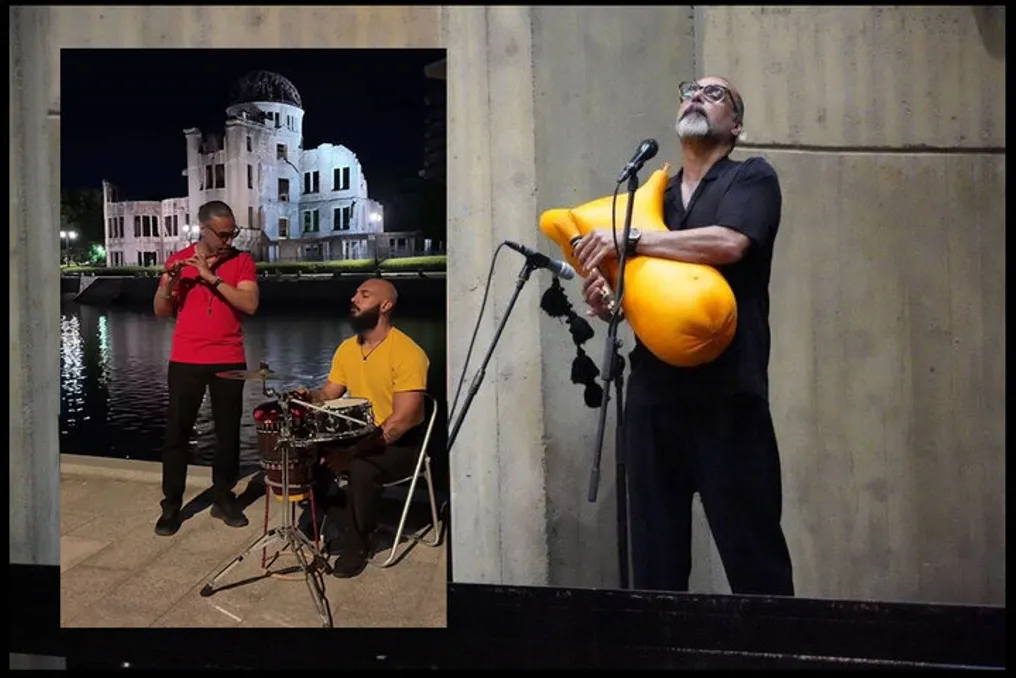
Sharifian, who has been actively promoting the music of southern Iran on the international stage in recent years, visited Japan for the third time on the anniversary of the Hiroshima atomic bombing. Performing in the Hiroshima Peace Park, near the sole building that survived the bombing, he sought to transmit the message of peace and friendship from the people of Iran to the world.
Furthermore, Sharifian, together with percussionist Sadegh Hosseinpour, participated in a joint performance with a group of Japanese artists in Tokyo. At these concerts, Iranian and Japanese music sounded side by side, with the South Iranian flute (ney-anban) playing alongside the koto, shamisen, and other instruments of Japanese musicians.
As part of a special program, the piece 'Shepherd's Story,' written by the Japanese composer and musician Tsumudzi, was performed. This duet between the ney-anban and the violin united two different musical traditions in a shared presentation.
In another segment of the program, Sharifian also performed one of the famous melodies of Japanese music on the ney-anban. Specifically, the melody 'Haru yo, Koi' (Come, Spring) by Yumi Matsutoya, a renowned Japanese singer and composer, was performed using the sounds of the Iranian flute.
Sharifian described his performance of this Japanese melody on the ney-anban as an experience that went beyond a simple musical presentation. He spoke of the tranquility, order, and beauty of the land of Japan, noting that the Japanese melody was reinterpreted through the sound of a characteristic instrument of Southern Iran.
Commenting on his performance, Sharifian stated: 'My presence in Hiroshima, coinciding with the anniversary of one of the most tragic events in modern history, in a way deepened the meaning of these performances; because in this program, music was used not as a tool to remember war, but as a language to express peace, friendship, and coexistence of nations.'
In his opinion, such joint performances serve as an example of cultural dialogue between Iran and Japan through music. This dialogue demonstrates that differences in languages, instruments, and musical traditions do not create obstacles, but rather become the basis for mutual understanding and connection between the two cultures.
It is also worth noting that the ney-anban, an instrument deeply rooted in the musical culture of Southern Iran and a symbol of Bushehr and Persian Gulf coastal music, transcended its geographical boundaries in these performances, taking its place alongside Japanese instruments and the violin to tell the melodies of two lands on one stage.
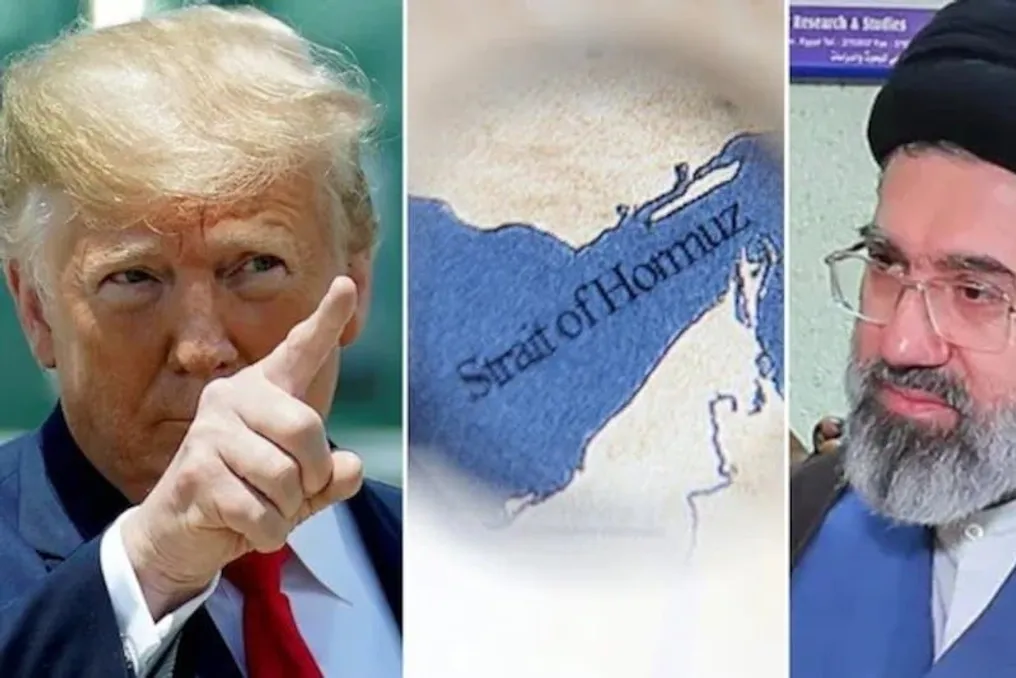
The route through the Strait of Hormuz, which has been closed due to the conflict in the Middle East, may be restored. US President Donald Trump stated in a recent declaration that progress has been made in peace talks with Iran.
Iran also noted that negotiations with Oman proceeded positively. Attention is now focused on confirming the statements made by Trump.
Qatar has disclosed the latest information regarding negotiations between Iran and Oman concerning the tensions between the US and Iran. Qatar stated that efforts to resolve this issue are at a 'very advanced stage,' and draft agreements are currently being exchanged between the parties.
A representative of the Qatari Ministry of Foreign Affairs, Majid Al Ansari, reported that Qatar and Oman are closely cooperating in this process. He specified that both countries are helping to facilitate dialogue between Washington and Tehran, as well as promoting draft proposals.
Majid Al Ansari noted that 'the language of the potential agreement has been prepared and is being transmitted to the parties.' He also emphasized that there is currently no direct dialogue between the US and Iran. However, mediators are working on a short-term mechanism that will allow both sides to return to negotiations.
Qatar also expressed hope that the resumed talks could pave the way for a larger agreement. In his view, such an agreement could contribute to reducing regional tensions. Qatar's statement came at a time when tensions in the Strait of Hormuz remain high despite diplomatic efforts. Currently, the efforts of Qatar and Oman are focused on advancing the process of exchanging drafts and returning the US and Iran to official dialogue.