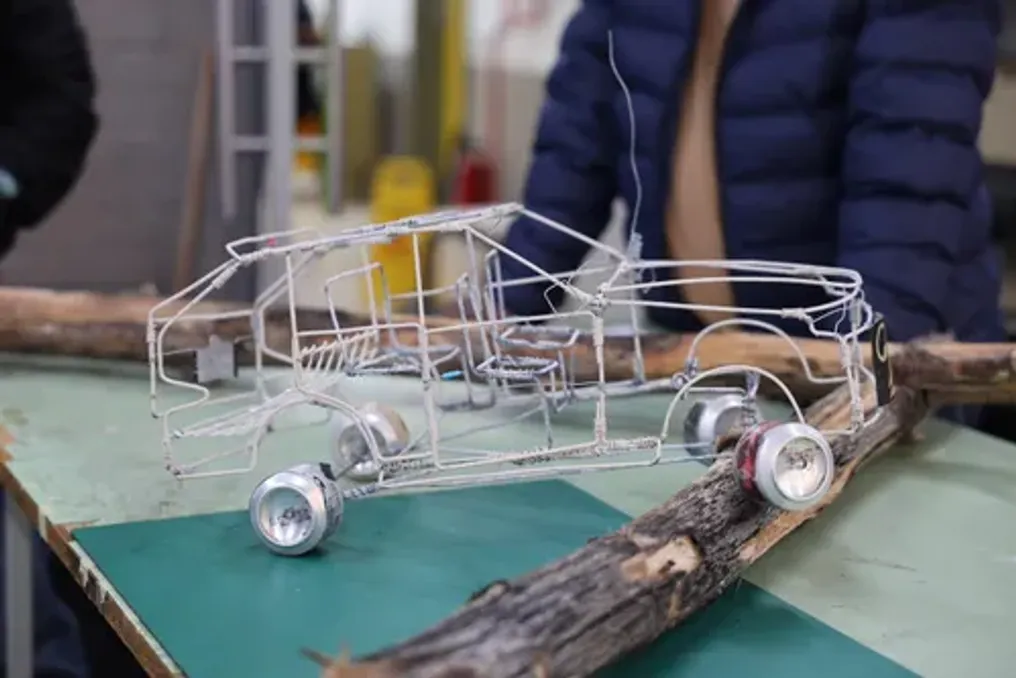
A simple children's activity from Philips Town, located in the North Cape, has turned into an annual spectacle and a source of inspiration for architecture students at the University of Free State (UFS).
What started as a simple hobby in the small town of Philips Town has grown into an annual Wire Grand Prix, which celebrates the ingenuity and creativity of local children who build and race their own wire cars. This town, situated about 230 kilometers west of Kimberley, comes alive every year thanks to this event.
The idea for the race originated in 2010 when a local resident, Kai Fury, noticed children in the town joyfully crafting and playing with wire cars. For Fury, it was more than just children's play; in a community with limited recreational opportunities, she saw this activity as a way to engage youth, stimulate creativity, and prevent crime.
Fury noted that watching the children play with the cars is a 'spectacle,' especially considering the town's difficult circumstances and limited leisure options. She emphasized that the activity gives children a constructive outlet, as they focus on building and playing with their cars, which prevents them from getting involved in criminal activities.
This initiative extended beyond Philips Town and found an unexpected application in UFS classrooms. A chance meeting between Fury and UFS architecture lecturer David van der Merwe led to the project being integrated into the curriculum for architecture students. Although building wire cars might seem far removed from architectural principles, Van der Merwe saw an opportunity to encourage students to think broadly and creatively using practical skills.
Students embraced this challenge by creating their own wire cars, which were then sent to the children of Philips Town. Furthermore, students are expected to visit the town in September to meet the young creators in person and gain direct experience of the project. For second-year student Zene de Clercq, this exercise was not just about assembling a miniature car; it brought back memories of her own childhood. Having grown up in a rural area, De Clercq said that working with her hands reminded her of simpler times, recalling the joy of riding in a pickup truck with her hair blowing in the wind.
The creativity of Philips Town's children has gained recognition far beyond their town. The story of these wire cars has been featured in an award-winning documentary and video game, and their ingenuity even led to the creation of a wire racing car prototype for Lewis Hamilton's Formula 1 championship. Thus, what began as children's toys has evolved into something greater, connecting the rural community of the North Cape with university students, promoting practical creativity, and demonstrating how a simple idea can inspire people of different generations.
For Philips Town, these cars have drawn attention to the town, and for UFS students, they have become an unconventional lesson in creativity, reminding them that innovation does not always start with complex technology; sometimes it originates from wire, imagination, and a child's play.