The Monterey Car Week began this Friday, bringing several important new developments for automotive enthusiasts. Among the highlights, McLaren unveiled the McL 6GT, a supercar equipped with a manual gearbox, inspired by the iconic M6GT from the 1960s.
The original M6GT was conceived by Bruce McLaren as a street version of his racing prototypes, but its development was halted by the founder's premature death in 1970. By reviving this history, the brand reconstructed an example of the classic and now uses this legacy to gauge public reaction to a modern, analog supercar, hitting the mark with the tribute.
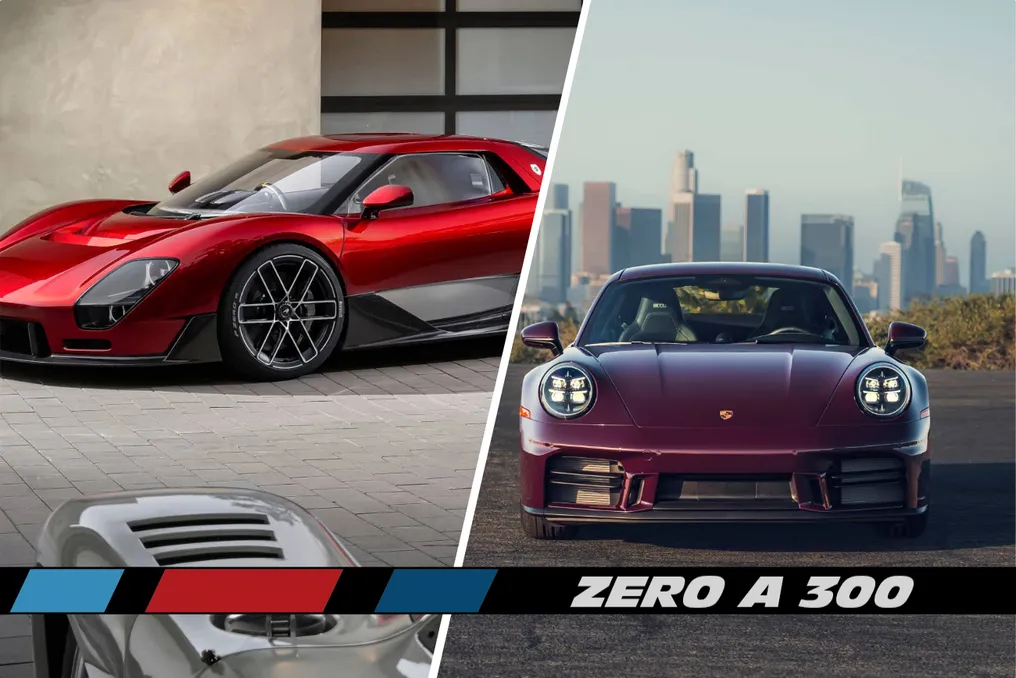
The references to the M6GT go beyond the name; the lines of the McL 6GT echo the 60s model, featuring a similar headlight shape (although the M6GT's main ones were retractable), hood air intake, and almost identical waistline. Details such as the air intakes in the rear wheel arches, the taillight shape, and the junction of the engine cover with the body elegantly recall the M6GT, without falling into excessive nostalgia.
The vehicle differs from recent releases by the McLaren design studio, reinforcing that the McL 6GT is an exception and not a definitive return of the manual gearbox to the brand's line. Although internal photos do not show the complete cabin, they reveal the designed steering wheel, black finishes, and crucially, the partially exposed manual gear lever, confirming it is a real manual gearbox, with a six-speed plus reverse scheme engaged by moving the lever forward.
Despite the enthusiasm, the McL 6GT is officially classified as a concept, meaning there is no detailed information about the engine, except that it is a twin-turbo V8, likely the 4.0 already used in other models. McLaren confirmed that the McL 6GT will have rear-wheel drive, is not hybrid, and has hydraulic steering, aiming to provide an immersive driving experience. The manufacturer positions the McL 6GT in a category above the Sport, Super, and Ultimate series, and anticipates its launch sometime in 2028, without disclosing price or production volume.
Porsche 911 Carrera S returns to manual gearbox
Continuing the theme, Porsche also used the Monterey Car Week to announce good news for three-pedal enthusiasts: the 911 Carrera S will once again offer the manual gearbox option.
Previously, in 2022, with the mid-cycle update (992.2), the Carrera S began being sold exclusively with the PDK gearbox, justified by the fact that the dual-clutch transmission is superior, offering faster shifts ideal for reducing lap times on circuits. Those who wanted a manual gearbox had to opt for the Carrera T, the entry version with 393 hp from the three-liter twin-turbo flat-six engine, or go directly to the GT3.
However, Porsche apparently recognized public demand, announcing the return of the six-speed manual gearbox to the intermediate 911 Carrera. This model uses a 480 hp version of the twin-turbo boxer six-cylinder engine with rear-wheel drive. The manual gearbox is integrated into the MT Package, which also includes quick-release wheels with center pins, rear wheel steering, and the Sport Chrono package.
Additionally, the package offers aesthetic details such as a wooden gear knob, exclusive badges, the red 'S' rear badge, and sill lights that project the gear pattern onto the ground when doors are opened. However, the MT Package is currently only available in the North American market.
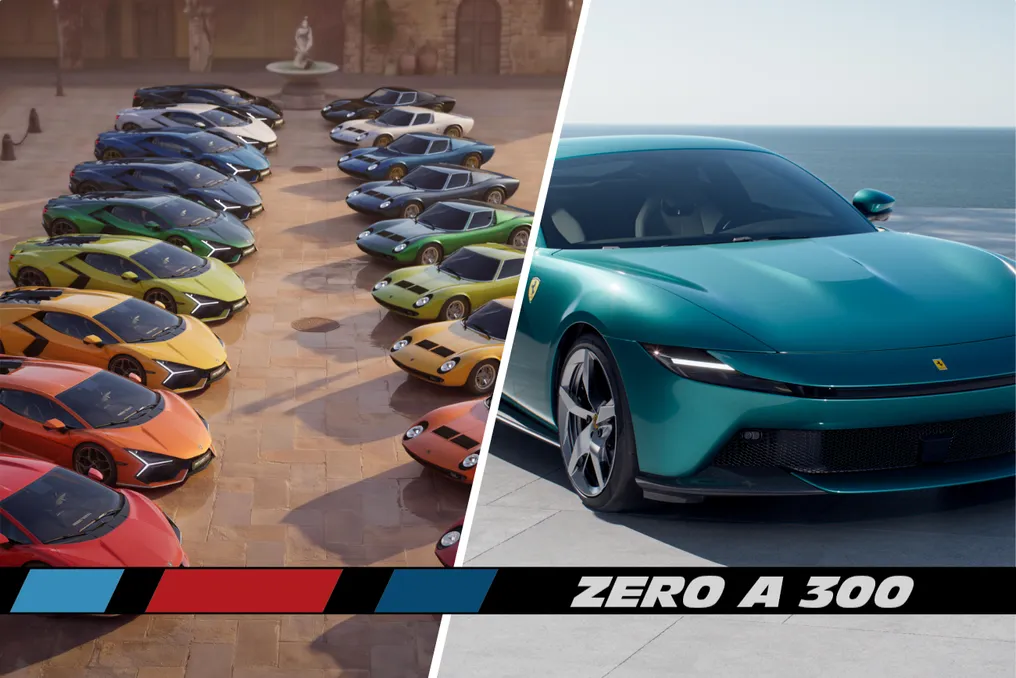
This is the Ferrari CZ26, Maranello's newest Special Project
Often, the most notable design projects from manufacturers never reach the roads. One cited example is the second-generation Voyage, the 'G5', whose leaked mockup was more interesting than the finalized model. Generally, technical or financial infeasibility prevents the large-scale replication of certain design elements.
This observation is made when comparing the Ferrari SF90, which was well-received by the public, with its successor, the 849 Testarossa, which generated more divided opinions. Despite having a new name and a distinct look, the 849 Testarossa shares electromechanical components with the SF90, following a Ferrari tradition (as seen in previous models like the 348/355, 308/328, 458/488).
A wealthy client, dissatisfied with the look of the 849 Testarossa, requested a customized car from Ferrari's Special Projects team. Receiving the CZ26, this model was designed and built exclusively for him, inspired by Italian industrial design from the 1970s. It is neither an SF90 nor a Testarossa, although Ferrari states it is based on the former.
The CZ26 maintains the same 4.0 F154 twin-turbo V8 and the trio of electric motors from its siblings, generating 1,000 hp, with 0 to 100 km/h acceleration in 2.5 seconds and a top speed of 328 km/h. The cooling system was adapted to the new design, but the interior retained the SF90's base, using different fabrics and visible carbon fiber. The initials CZ suggest the client, and the two-year development justifies its basis on the SF90, raising questions about other possibilities Ferrari could have explored.
KTM 390 Adventure launched to compete with the Royal Enfield Himalayan
KTM launched the 390 Adventure, a model created specifically to compete with the Royal Enfield Himalayan, demonstrating the growth and maturity of Royal Enfield in the market. The presentation took place at the Interlagos Festival.
The new KTM adventure will be available in two configurations: the R, costing R$ 33,990, and the X, for R$ 37,990. Both share a 398.7cc single-cylinder engine, generating 45 hp at 8,500 rpm and 4 kgfm of torque, assisted by a six-speed gearbox with Quickshifter+, allowing shifts without engaging the clutch.
Comparatively, the Himalayan ranges between R$ 29,990 and R$ 31,990, featuring a 452cc single-cylinder engine, 40 hp, and the same 4 kgfm of torque. The main distinction lies in the vocation for rough terrain. The 390 Adventure X has 19-inch alloy wheels in the front and 17 in the rear, with tires better suited for asphalt, a lower seat height (825 mm from the ground), and a smaller ground clearance (232 mm).
The 390 Adventure R comes from the factory with 21-inch spoked wheels in the front and 18 in the rear, tires with a larger tread width, and WP Apex suspension optimized for off-road. It is also better equipped, including three riding modes (Street, Off-road, and Rain), a colored TFT display, and ABS with its own calibration. Both versions have a 14-liter tank and weigh 176 kg ready to ride. Assembled in Manaus with parts from India, sales will begin this year, with the X version delivered in October and the R in December.
Honda is selling historical race cars from its collection
Honda's racing division (HRC) inaugurated the Heritage Racing Program, a program dedicated to selling historic Honda and Acura vehicles, also offering restoration, maintenance, and support services so that buyers can use these cars in historic motorsport events.
This program covers everything from touring and GT cars derived from street models to IMSA prototypes and Indy/CART open-wheelers. From a corporate perspective, the initiative allows the cars to be maintained, displayed, and used on tracks, generating revenue from sales, while the operational cost is transferred to the owner, who receives support from the manufacturer itself.
The first vehicle available for sale is the Acura ARX-01a No. 26 from Andretti Green Racing, LMP2 class champion at the 12 Hours of Sebring in 2007, driven by Dario Franchitti, Bryan Herta, and Tony Kanaan. This car was the first competition prototype developed specifically by Acura and used the first racing V8 designed by Honda Performance Development in the United States.
In addition to that, Honda exemplified the program with the Acura ARX-01, a chassis that won the LMP2 class at the 24 Hours of Le Mans in 2010 with Strakka Racing, an Acura NSX GT3, and the Reynard 01i used by Gil de Ferran in the 2001 CART season, which currently belongs to Zak Brown. The cars will be presented to interested parties during The Quail at Monterey Car Week, but the selling price has not yet been disclosed.