Residents of the United Arab Emirates may begin to notice gradual changes in the weather in the coming weeks as the country exits the most intense phase of summer, but cooler conditions will not arrive suddenly.
The appearance of the star Suhail, expected on August 24th, has long been considered a seasonal marker in the region. Ibrahim Al Jarwan, Chairman of the Emirates Astronomy Society, noted that the days following this star's rising should bring a steady, rather than sharp, drop in temperature.
Al Jarwan emphasized that this is not about cold weather, but rather that people will feel a change in the atmosphere and a softening of conditions. This change should become more noticeable around the time Suhail rises, which will be in about 10 days. Although actual temperatures are likely to start dropping, high humidity may occasionally make conditions uncomfortable.
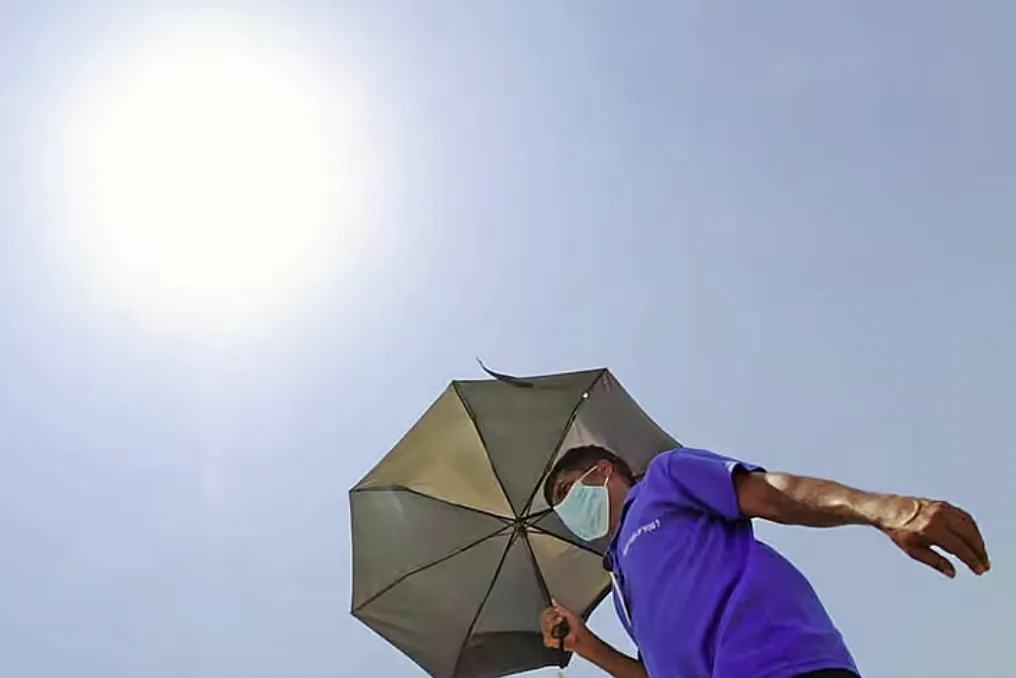
The UAE has just experienced the peak of the traditional summer heat period, known locally as Ayyam Al Ghais, which usually lasts about six weeks, starting from early July until around August 10th. During this period, the highest temperatures in the UAE peaked, exceeding 51°C on August 5th. Nighttime lows also rose to 35°C.
Humidity will increase as temperatures drop
As temperatures begin to fall, an increase in humidity is expected. Al Jarwan explained that this means residents may still experience a strong feeling of heat even if thermometer readings are lower than in the height of summer.
He clarified that humid summer air contains significantly more moisture than equally humid winter air, making conditions more exhausting. At 40°C and 80% humidity, a cubic meter of air can contain about 50 grams of water, compared to less than 15 grams at 20°C with the same relative humidity.
September and October are typically among the most humid months in the UAE. Increased humidity may also lead to morning fog and dew, with the first signs possible in late August and becoming more frequent in September.
Brief return of heat is possible
Residents should also not rule out short periods of intense heat. Al Jarwan mentioned the traditional concept of Zafarat Al Ghais—heat spikes in late summer that can occur after the peak season ends.
He noted that such episodes do not change the overall seasonal trend but can cause a temporary rise in temperature until conditions stabilize around the autumn equinox on September 23rd. After this evening, it should gradually become more pleasant. Cooler daytime conditions will take longer to arrive, and a more noticeable softening is expected in November, with the overall seasonal cooling trend continuing until mid-December.
Marker of the traditional calendar
Suhail, known internationally as Canopus, does not cause weather changes by itself. Rather, its appearance has served as a reliable marker in the traditional Arabic calendar for generations, coinciding with the gradual transition from peak summer conditions.
Al Jarwan also stressed that traditional references to constellations such as Virgo, Libra, and Scorpius are used as indicators of time and season, not as factors influencing the weather. In local seasonal knowledge, these markers generally correspond to the months of September, October, and November.
At present, the worst summer heat is beginning to recede, but patience will be required. Temperatures may drop slightly in the coming weeks, while humidity, fog, and occasional heat spells remain part of the transition to a cooler season.