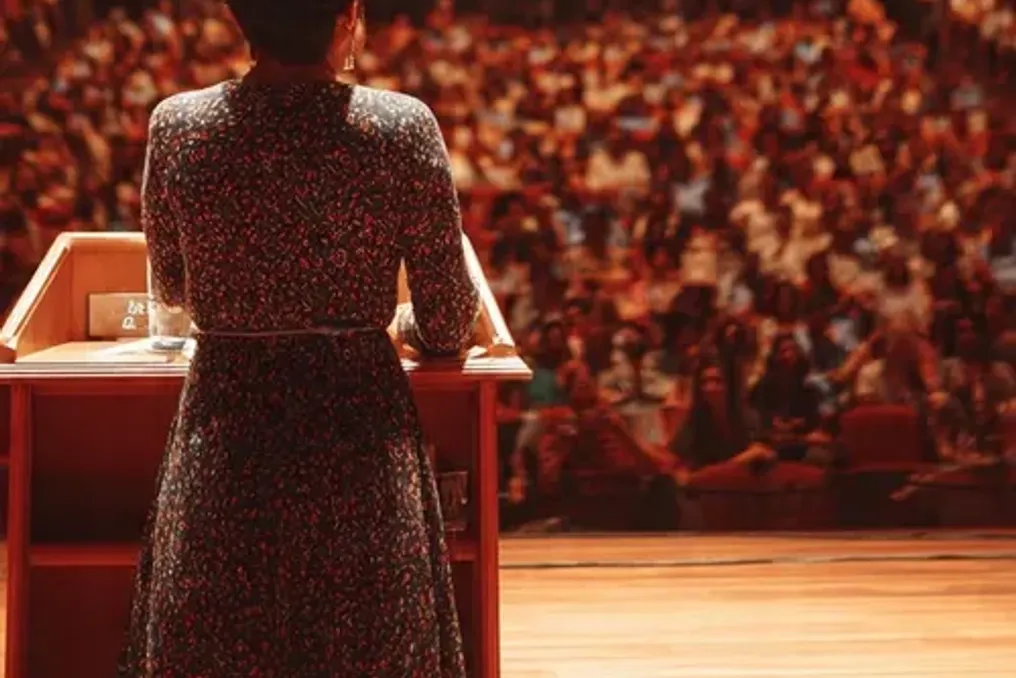
The author questions the reason why successful women are constantly invited to share advice, inspire, and motivate other women. The author notes that this question often arises after key speeches or panel discussions when the moderator poses a final question: 'What advice would you give to young women?'
For many years, the author answered this question without hesitation, as she considers it thoughtful and well-intentioned, given her experience in mentorship, leadership, coaching, and women's rights advocacy. However, recently, she has started asking a different question: why is it almost always successful women who are asked to give advice?
This request rarely concerns economic policy, the future of higher education, artificial intelligence, management, or organizational strategy—areas where many women possess deep expertise. Instead, they are often asked to focus on inspiration, support, and preparing other women.
The more the author reflected on this, the clearer it became that this was not just an innocent question, but a reflection of societal expectations placed upon successful women. When men are invited onto the stage, they are usually asked to discuss markets, innovation, growth, geopolitics, or the future of their industries, and their knowledge is perceived as professional expertise.
When women speak, the conversation inevitably turns to resilience, work-life balance, self-confidence, imposter syndrome, and advice for young women. Thus, in addition to their achievements, women acquire an additional role: teacher, mentor, coach, role model, or cheerleader.
Although no one formally assigns this role or includes it in the job evaluation agreement, this expectation exists. The author emphasizes that mentorship itself is important, as many influential people in her life generously shared wisdom and opened doors.
However, the author draws a distinction between the voluntary choice of mentorship and being expected to mentor solely because of one's success. This transition from choice to expectation happens so subtly that we barely notice it.
We praise women who 'lift others up while lifting themselves,' applaud those who 'look back,' and admire those who 'empower other women.' These ideals are commendable, but they have become obligations almost exclusively tied to successful women.
The author notes that it is rare to see a successful man conclude a speech with the question: 'What advice would you give to young men?' Or to be asked about plans for preparing the next generation of male leaders. Instead, he is asked about the future, vision, strategy, and expertise.
Women, however, are often expected to explain not only how they achieved success but also how everyone else can achieve it. This is a subtle but important difference, implying that women are expected not just to excel professionally, but to become custodians of the entire development process. They are expected to carry the emotional burden of ensuring the prosperity of other women. This expectation requires careful examination.
The author asks: why is the responsibility for advancing women so easily placed on the women themselves? Why do organizations ask less about why 'the pipeline keeps leaking' instead of asking women how to fix it? Why do we ask women how to navigate complex workplaces instead of asking the workplaces themselves why they remain complex?
These questions are fundamentally different: one assumes the responsibility lies with the women, while the other places it where it belongs—with institutions, leadership, and corporate culture. Perhaps this is the conversation that should be having.
Every minute spent figuring out how women overcame unnecessary barriers is a minute not spent figuring out the reasons these barriers exist. Women should never feel guilty for mentoring, as it is one of the most generous expressions of leadership. However, they should also not feel that success entails an unwritten contract requiring them to be constant motivators, consultants, and role models just because they are women.
Successful women deserve something that many of us rarely receive: permission simply to be experts, to be invited because of their knowledge, to ask difficult questions in their fields, to shape public discourse, influence policy, and challenge conventional views. And yes, when they voluntarily choose to mentor the next generation, let it be a choice, not another expectation quietly placed on the shoulders of women at the moment of their success.