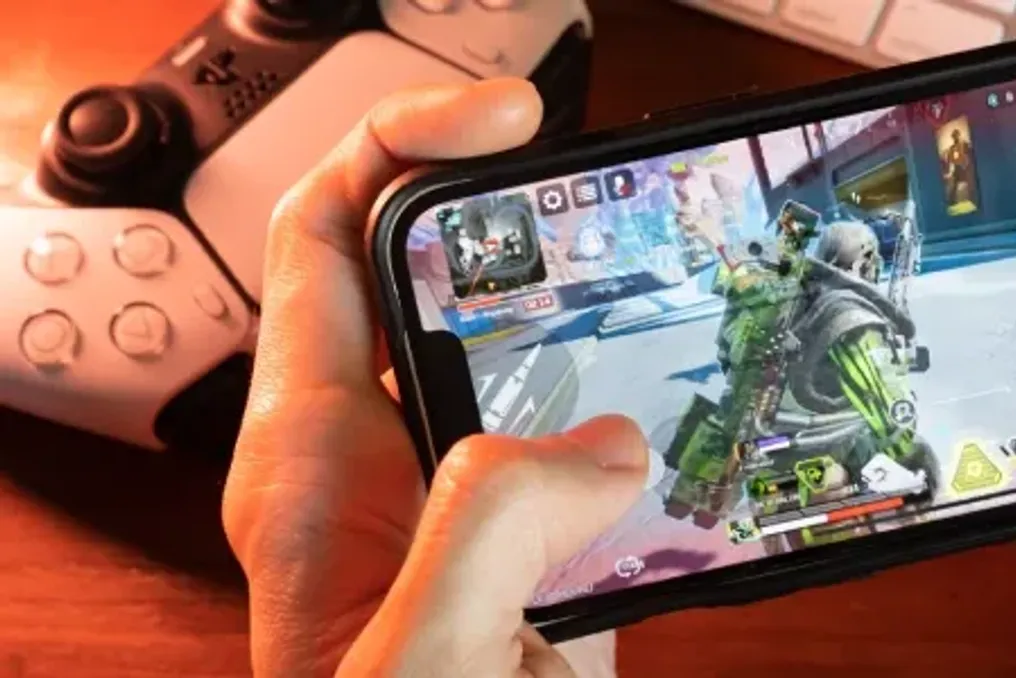
There is a persistent contradiction in the Brazilian gaming scene: the device held by the majority of national players is still viewed by part of the industry as a secondary category.
Historically, the idea of video games automatically evoked platforms like PlayStation, Xbox, Nintendo, or gaming computers equipped with LEDs. The mobile phone, on the other hand, was relegated to a complementary role, associated with casual games and short playing sessions.
However, the market has undergone significant transformations, and the current perception may not have kept pace with this change. Brazil has over 100 million players, and the mobile phone functions as one of the main access routes to this audience. Furthermore, the country follows a global trend where the smartphone has transcended its function as a mere communication device, becoming an entertainment hub, financial transaction center, social network, video platform, and increasingly, a gaming platform.
Given this, the central question should not be about the growth of mobile, but rather why it is still considered a smaller market.
Mobile holds an undeniable competitive advantage: distribution. To play on a console, one must acquire the console itself; to play on a PC, a computer compatible with the desired titles is required. In the case of the mobile phone, in most situations, the user already possesses the equipment.
This drastically alters the user acquisition dynamic because the mobile phone does not force the consumer to invest in a new platform; it is the platform itself, generating immense scale. This is why titles like Free Fire, PUBG Mobile, Roblox, and Honor of Kings have managed to build vast communities in markets where entry barriers for consoles and PCs are considerably higher.
The success of mobile does not necessarily lie in the superiority of the experiences offered, but in the ability to reduce the distance between the individual and the game. One of the industry's biggest mistakes seems to be maintaining an obsolete definition of who a 'gamer' is.
In the past, the term 'gamer' designated someone who bought games, owned a dedicated console or PC, and dedicated long hours to playing. Today, the player can interact with the game at various moments of daily life: while commuting to work, while waiting for an appointment, during lunch break, or before going to sleep. The session duration can range from ten minutes daily to four hours.
The modern player can choose to make in-app purchases or spend nothing. They can follow streamers on their mobile, play with friends on the same device, and consume game-related content on the same screen. The smartphone has integrated gaming into daily routine, taking it out of the condition of an isolated event of the day.
This aspect is crucial for brands because mobile doesn't just deliver audience; it provides frequency. And frequency constitutes one of the most valuable assets in the digital economy.
The discussion becomes even richer when analyzing the economic model of mobile, which has transformed gaming into a relationship platform. Mechanisms such as free-to-play, battle passes, skins, events, advertising, subscriptions, in-app purchases, content creators, and communities have established an economy that goes beyond the simple sale of a game copy.
This opens up substantial opportunities for companies that do not traditionally belong to the gaming sector. Telecom operators can offer connectivity and benefits; banks can develop financial products targeted at gamers; retailers can implement loyalty programs; brands can create experiences within games; content platforms can focus on acquisition and retention; and publishers can convert communities into consumption ecosystems.
In this context, mobile is not merely a distribution channel, but a complete business infrastructure. The Brazilian market presents a specific opportunity due to its vast population, being one of the largest global player bases, combined with a very strong digital culture. However, there is still a gap between the volume of audience and the ability to convert that audience into locally developed businesses.
There are talents, studios, and consumers in the country, but the challenge lies in establishing stronger connections between these three elements. This implies viewing games not just as entertainment, but as a comprehensive industry involving technology, advertising, media, payments, telecommunications, intellectual property, and commerce.
Perhaps the biggest mistake is persisting in questioning whether mobile is as relevant as the console or PC. This comparison has become outdated. The mobile phone does not need to replace the console; it has simply created a category with a characteristic that other formats cannot replicate on such a scale: the near universality of ownership.
While the gaming industry spent years debating resolution, hardware, exclusives, and teraflops, a distinct platform was silently conquering space in the pockets of billions of people: the mobile phone. This might be the greatest irony of the market.
Although part of the industry still views mobile as an inferior category, many companies have built their greatest gaming ventures by exploiting exactly what the smartphone does best: accessibility, scale, frequency, and connection. Mobile is not just the future of gaming; it is already the present. The question now is whether the Brazilian industry will continue to treat this market as a 'smaller game' or if it will finally recognize its true magnitude. Because in Brazil, the biggest console may not be under the television, but in the pocket.