The website uses a security service to protect against cyberattacks. The action you performed triggered this protective system.
The website uses a security service to protect against cyberattacks. The action you performed triggered this protective system.
There are several actions that can lead to such a block, including entering a specific word or phrase, executing an SQL command, or submitting incorrect data.
Users are advised to contact the website owner to report the block. When contacting them, they should specify what actions were being performed when this page appeared, and also provide the Cloudflare Ray ID, which is located at the bottom of the page.
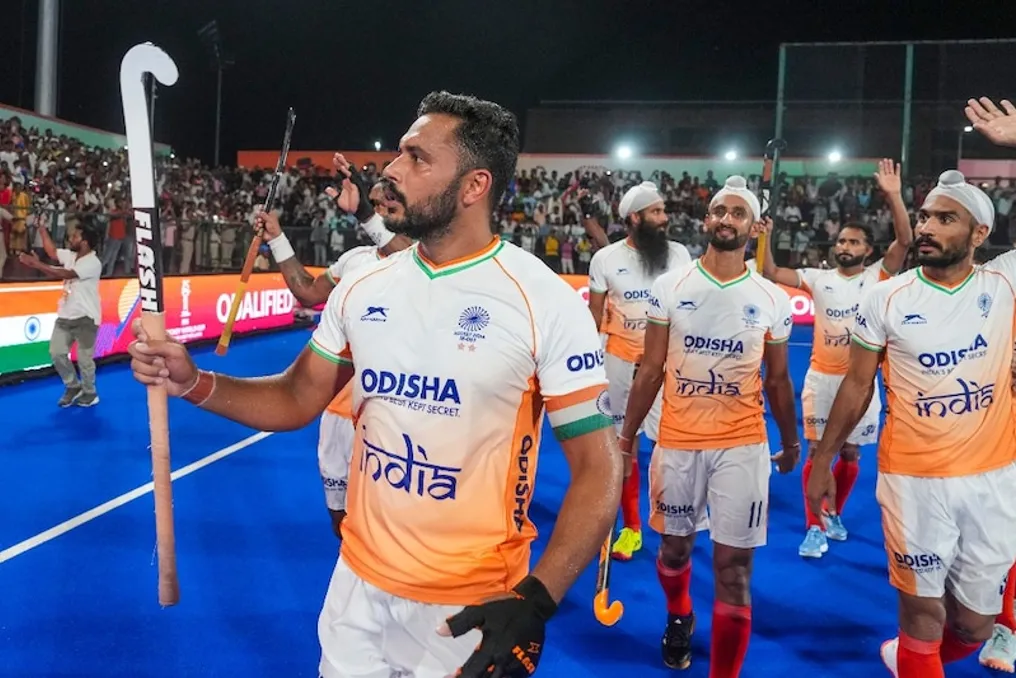
The Indian men's hockey team aims to win a trophy that has been awaited for 51 years. At the FIH Hockey World Cup 2026, which will take place in the Netherlands and Belgium from August 15 to 30, India will fight for the title.
India last won the Hockey World Cup in 1975; since then, the team has failed to win the title or even reach the podium. Now, the team will try to end this long wait under the leadership of captain Harmanpreet Singh and coach Craig Fulton.
Although Fulton helped India win the bronze medal at the Paris Olympics, the current task is even more difficult. Sixteen world teams will participate in the tournament, and the competition format differs from previous ones.
India has been placed in Group D, where it will play against Wales, England, and long-time rival Pakistan. Each team in the group will play one match against the other three teams. The top two teams from the group will advance to the second round.
All three group matches will be played by India at the Vegner Stadium in Amsterdam, Netherlands. It should be noted that all times are given in Indian time. Thus, India's campaign will begin on August 15 with a match against Wales, and four days later, on August 19, there will be an intense confrontation with Pakistan.
There will be no direct crossover matches or quarterfinals at the FIH Hockey World Cup 2026, as in previous events. After the group stage, the top two teams from each group will advance to the second round. There, eight teams will be divided into two groups. The top two from Group D will face the top two from Group A, and the top two from Group B will face the top two from Group C. In the second round, teams will play against two other teams from their new group. Points earned in the first round in the same group will be retained.
After the second round, the top two teams from both groups will advance to the semi-finals. For teams that finish lower in the first and second rounds, classification matches are provided.
Head coach Craig Fulton has decided to rely on almost the same core squad he worked with over the past two years. Harmanpreet Singh will lead the team in the second World Cup in a row. Mandip Singh and Manpreet Singh will participate in the fourth World Cup. Additionally, this tournament will be a debut for some players.
Before the start of the tournament, the main problem for India is its recent form. Currently, India ranks eighth in the world rankings. The Pro League season has been very difficult, and the team finished second to last in the table. In the first eight matches of the season, India did not secure a single clean victory. However, the team improved its results in the later stages.
In Europe, India defeated teams such as the Netherlands, Germany, and Pakistan, and also won against England in a penalty shootout. Thanks to these results, India avoided relegation in the FIH Nations League. The improvement in the Indian team's attack was noticeable in the matches against the Netherlands, Germany, and England. Nevertheless, defense remains a concern.
India's strength lies in Harmanpreet Singh, one of the best drag flickers in the world. His ability to score goals from penalty corners has long been a powerful weapon for India, as his drag flick can change the course of big matches. Although there is some concern about his current form, as he scored only one goal in the last eight Pro League matches in Europe. Previously, he missed some matches due to finger injury. Over the past two years, he has faced several injuries, but he currently looks completely healthy.
The FIH Hockey World Cup 2026 in India will be broadcast on the Star Sports channel. Furthermore, the matches will be available for live viewing on JioHotstar, allowing Indian viewers to follow the India team's games both on television and in digital format.
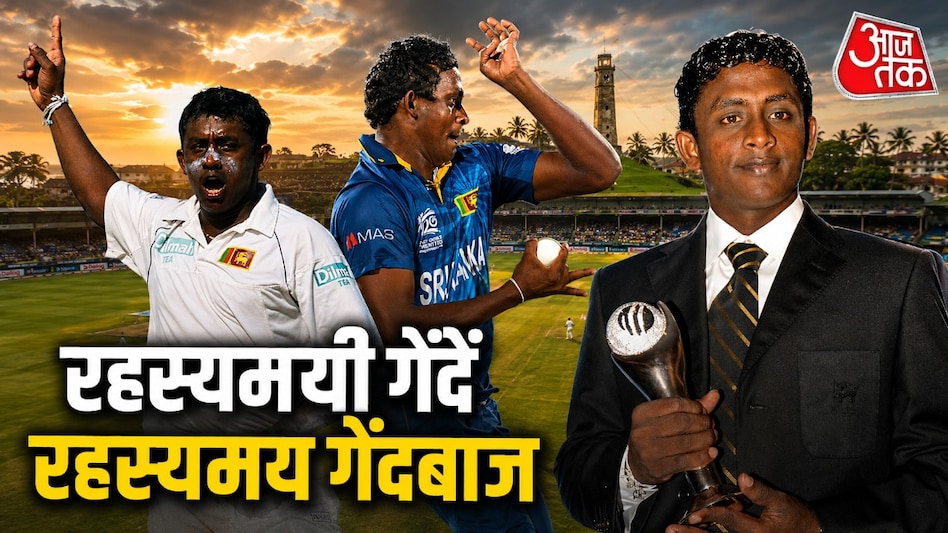
Some statistical data may seem small, but they pertain to a bowler who played internationally from 2008 to 2015. During this period, his play was very successful, but then he suddenly disappeared from the cricket field. His bowling style inspired awe: outwardly he appeared calm, but inwardly he was a warrior.
This player is also considered one who helped revive the use of the 'carromball' type of ball in modern cricket. The technique of this ball was later adopted by Ravichandran Ashwin from India and Mujib Ur Rahman from Afghanistan, but it was the Sri Lankan spinner, Ajanta Mendis, who brought this ball to fame. Next, we will talk about the carromball technique itself, but first, let's look at Ajanta's game.
Mendis's strength led to him being promoted directly from rifleman to lieutenant in the Sri Lankan army's artillery unit in 2008. Later, he became a lieutenant. Technically, Ajanta served as an armorer in the Sri Lankan artillery when he was given this rank. Mendis is currently 41 years old, and at that time, he was about 23 years old.
The question of why Ajanta received such a promotion finds its answer in his performance in the 2008 Asia Cup final against the Indian team. The match took place on July 6th in Karachi. Sri Lanka, batting first, scored 273 runs. The target set for the Indian team seemed easy, as Indian opener Virender Sehwag started aggressively. However, after this, Ajanta Mendis demonstrated incredible spin that completely demoralized the Indian team. In 8 overs, 1 without conceding a run and 13 runs conceded, he took 6 wickets, and the Indian team was bowled out for 173 runs. Thanks to this, Sri Lanka won the Asia Cup final by 100 runs, and Mendis's name became widely discussed.
It was this performance that attracted the attention of world cricket. Mendis held a record that no one has yet managed to break: he became the fastest player to take 50 wickets in ODI cricket, and this record remains intact. Mendis reached 50 wickets in 19 ODI matches.
He debuted in ODIs against the West Indies in April 2008, taking 3 wickets for 39 runs, but it was in the 2008 Asia Cup that Mendis gained fame. Thanks to his performances in the Asia Cup, he was invited in July 2008 for a match against India in a test match. Along with Mutaiya Muralitharan, he stunned the Indian batting order, allowing Sri Lanka to win 2-1. He took 26 wickets in three matches, including eight in his debut Test match. In this match, Sri Lanka defeated India by another innings and by 239 runs. In this match, he dismissed Rahul Dravid, Sachin Tendulkar, V.V.S. Laxman, and Sourav Ganguly.
At the age of 34, Mendis decided to retire from all formats of cricket in 2019. He was last seen in an ODI match against New Zealand in Christchurch in 2015.
Mendis possessed numerous variations that allowed him to spin the ball in both directions or make it skid. He proved extremely effective in T20 cricket. He holds the record for best performances in T20 Internationals: in the first T20 World Cup match in 2012 against Zimbabwe, he took 6 wickets for only 8 runs. He also performed brilliantly in the T20 World T20 Edition in 2009 (12 wickets in seven matches) and in 2012 (15 wickets in six matches), which helped Sri Lanka reach the final twice. He is the only bowler in T20Is to have taken six wickets twice; the second time (6 wickets for 16 runs) he did against Australia in 2011.
Kwan Plaatjies, a young player for Stellenbosch FC, scored an impressive hat-trick in his debut match in the Betway Premiership tournament against Marumo Gallants. The game took place on Friday evening at Atlon Stadium in Cape Town.
During the match, which ended with a 3-1 victory for Stellenbosch, Plaatjies scored his second goal during the game. He became a sensation in the senior team's opening match by scoring three goals within the first hour of the confrontation against a stunned Marumo Gallants.
A graduate of the Stellenbosch FC academy, who had previously established himself in the Diski Challenge, has confidently moved up to a higher level. His first goal was a moment of genius: he maneuvered the ball around his body and then struck it with his right foot from the edge of the penalty area, hitting the Gallants' goal.
This young man, originally from Atlantis in the Western Cape, continued his brilliant start. During his second goal, which was worthy of the prime-era Shane Bartlett, Plaatjies found himself between two defenders and headed the ball, scoring the second goal for Stellenbosch.
Plaatjies' debut did not end there. Approximately ten minutes after halftime, he found open space near the far post and headed the ball into the net, thus completing his hat-trick in his debut.
The young player looked very enthusiastic and could have scored several more goals and provided excellent passes to his teammates. Ultimately, in the 67th minute, he left the field to the ovation of dedicated Stellenbosch FC fans, including Plaatjies' family members and former teachers. He was replaced by midfielder Kobelowake Sibande under Gavin Hunt.
After Plaatjies' substitution, the Stellenbosch team lost some of its energy, and Gallants managed to score a consolation goal through Tapelo Dludlu, preventing Sage Stephens from keeping a clean sheet.
Nevertheless, this evening could mark the birth of a new star in the young Plaatjies, who dedicated his man of the match award to his late mother. After the game, Plaatjies stated: 'I just want to dedicate this to my grandmother, my mother in heaven, my sister. For me, this is a very special moment in my debut; all my relatives are supporting me here. I cannot be happier after the first game. To score a hat-trick in a debut. I have no words.'
However, when Mendis began to be perceived as a batsman, his performance started to decline, and he found himself in the lower order of the famous Sri Lankan spinning team. Before retiring, he was troubled by injuries, after which he disappeared from the selectors' sight.
Nevertheless, his success in all formats allowed him to be included in the squad for the 2011 World Cup, where he took seven wickets in five games. He regularly played for Sri Lanka in white-ball formats until 2014, until a back injury impacted his career. He was not selected for the 2015 World Cup and was absent mid-year due to injury. He was then selected in an ODI against the West Indies in November of that year, where he took 4 wickets in three matches. In his last ODI against New Zealand, played a month later, he took no wickets, conceding 49 runs in Sri Lanka's 7-wicket defeat. Mendis also played in the IPL, but his performance was not memorable: only 8 wickets in 10 IPL matches.
Before saying goodbye to his international career, Mendis captained the police sports club in a local Tier B tournament in Sri Lanka, where he once again established himself as a batting all-rounder. There, he scored more than 50 runs four times in eight of his first-class matches. Ajanta, born on March 11, 1985, returned to the cricket field in 2022 and participated in the Legends League.