There are experiences that are extremely difficult to put into words. These feelings can only be understood by those who have lived through them. On August 14, 1947, millions of people faced inexpressible pain as India and Pakistan were formed as separate states based on religion. Although everyone knows what happened in both countries during this partition, another story was born—one that transcended religion, caste, and discrimination through the power of humanity.
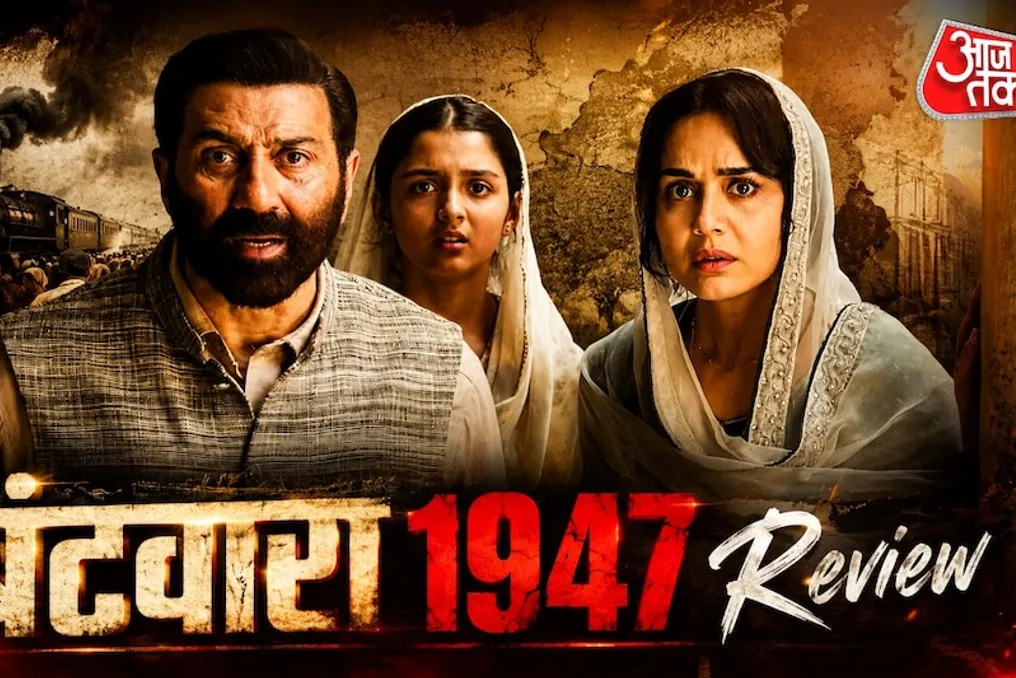
Popular writer Asagar Wajahat created the play 'Jis Lahore Nahi Vekhya, O Jamyay Nahi' (He who has not seen Lahore is not born). Based on this play, director Rajkumar Santoshi and Amir Khan made the film 'Bantwara 1947,' featuring stars such as Sunny Deol, Preeti Jinta, and Shabana Azmi. We detail how much we enjoyed this film released on the day of the partition.
Sikandar Mirza (Sunny Deol), owner of a printing press in Merat, is preparing to celebrate India's independence with his family. He is highly respected in the city. However, due to riots between Hindus and Muslims, he is forced to leave his country and travel to Lahore, Pakistan. He boards a train to Lahore with his wife Hamida (Preeti Jinta), son Javed (Karan Deol), and daughter Tanu (Khushi Jahare), but for some reason, his son Javed cannot join them.
Mirza arrives in Lahore, where Habib Akhtar Qadmi (Ali Fazal) helps him find accommodation. An elderly woman, Durgavati Kishanpal Devi, known as Mai (Shabana Azmi), already lives in this house. This house belongs to her son Ratan, who died along with his entire family in the fire of the partition. Mirza and his family are under the scrutiny of Yaqub Khan (Abhimanyu Singh) because they provided shelter to the Hindu old woman. Consequently, extremism escalates in the streets of Lahore, as Yaqub wants to drive Mai out of the house at any cost. During these attempts, he attacks Mirza's family. The main plot revolves around how Sikandar Mirza manages to protect his family and the elderly Mai from hatred fueled by religion.
Although the film's plot is fictional and not directly related to real life, this imaginative story reawakened the pain of the partition without resorting to hate or excessive drama. Instead, it told a simple story based on humanity and a mother's emotions.
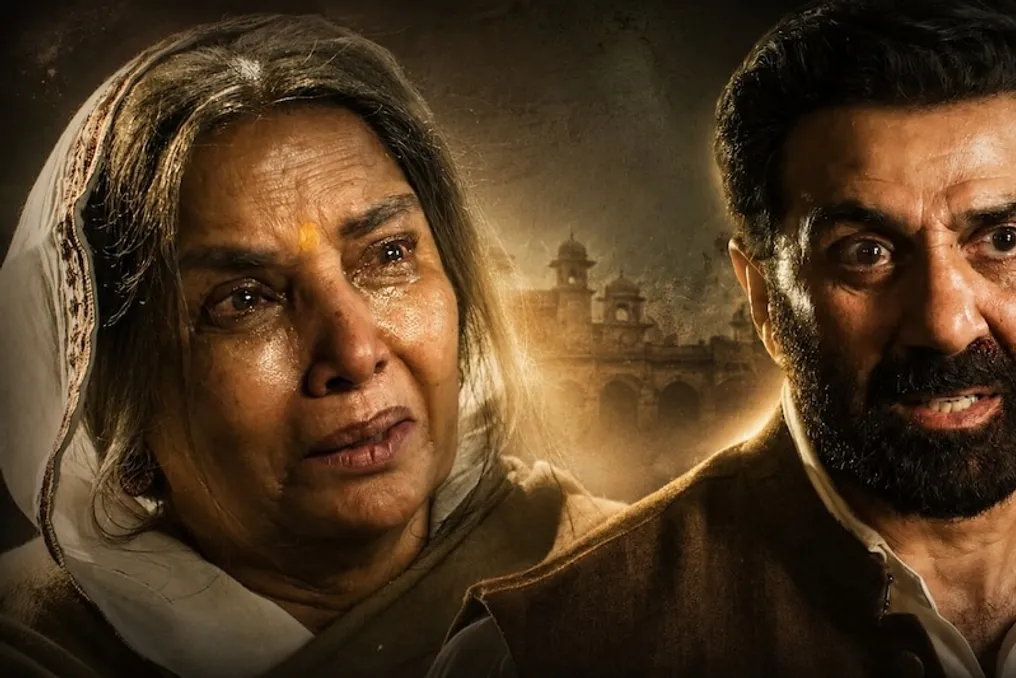
'Bantwara 1947' beautifully portrays the hidden emotions of each character. You feel the emotions experienced by Sunny Deol and Preeti Jinta's characters during the Partition. Furthermore, Shabana Azmi's story is tear-jerking. The pain of a mother dying while waiting for her child is felt by the audience until the very end of the film.
The only drawback of the film is that its length begins to become tiresome over time. The songs are also not memorable enough to want to listen to after leaving the cinema. A.R. Rahman's background music is good, but one expects more from it.
The film does not engage in playing mind games with any religion—be it Hinduism or Islam. On the contrary, it showcases an image of humanity that may never have been seen in Indian cinema before. No religion is depicted negatively; rather, one thought is explained: no religion is inherently bad; there are good and bad people.
Director Rajkumar Santoshi has created a contemporary piece of cinema that is a truly magnificent viewing experience. Where hatred and negativity prevail everywhere, this film guides the viewer toward a certain positivity. The film contains many moments that make one ponder whether using religion for politics is justified.
Those who doubted that Sunny Deol would release another film in the style of 'Gadar' are mistaken. In 'Bantwara 1947,' Sunny plays a completely different character. His actions are limited to what is shown in the trailer; the rest of the film revolves around the emotions of his character Mirza and Mai. Sunny poured his heart into his role, and it is undoubtedly one of the best performances of his career.
As for Shabana Azmi, she is the true soul of this film. She demonstrated complete sincerity in her role. For a moment, the viewer might feel that she is genuinely someone's mother. Shabana ji masterfully conveyed a mother's pain using her life experience. Ultimately, she will make you cry a lot, so be prepared for that.
Preeti's Return to Bollywood