Mahindra is intensifying its ambitions in the Indian heavy commercial vehicle (HCV) market, aiming to raise its market share from the current 3–3.5 percent to 5 percent in the near future. This growth will be driven by the launch of new products, network expansion, and the implementation of a technological strategy.
Over the next twelve months, the company intends to open 15 new dealerships, primarily in eastern and parts of western India. Furthermore, Mahindra plans to leverage its recently integrated SML Mahindra network to strengthen its presence in the heavy truck segment. This move aligns with the consolidation of Mahindra Group's truck and bus business under the unified SML Mahindra brand.
Vinod Sahai, President of Trucks and Buses at Mahindra Group and Executive Chairman of SML Mahindra, told Business Standard that the company currently holds a heavy truck market share of around 3–3.5 percent, and the goal of launching a new product is to return to the 5 percent level and then continue increasing performance.
According to Sahai, the Indian commercial vehicle market annually includes about 500,000 trucks and buses, of which heavy commercial vehicles account for 40–45 percent, corresponding to a market size of approximately 200–225 thousand units per year. With the current 3–3.5 percent share, Mahindra's annual heavy truck sales range from 6,000 to 7,900 units. Achieving the target of 5 percent will increase this volume to 10,000–11,250 units annually.
The company currently has 88 Mahindra Truck and Bus dealerships and 103 SML Mahindra dealerships. Although the SML network focuses on light and medium commercial vehicles, Mahindra plans to convert some of these locations into heavy truck dealerships, creating common workshops for both brands.
Sahai noted that there are regions, particularly in the east and certain areas of the west, where the company's presence is insufficient, hence the plan to open another 15 dealerships over the next year.
Mahindra is also targeting a double-digit market share in three key heavy truck segments: 55-ton tractors, 48-ton multi-axle trucks, and 28-ton dumpers, which together constitute a significant portion of the industry volume.
This expansion comes amid expected favorable demand. Sahai forecasts that replacement demand, which typically accounts for 10–15 percent of annual truck sales, could exceed 20 percent this year. This is due to aging fleets delaying purchases during the Covid pandemic and successive transitions to new emission norms.
He pointed out that the industry peaked in 2019, followed by changes in axle load, the Covid period, and multiple shifts to emission standards. In his view, a strong fleet replacement cycle is now underway.
According to Sahai, replacement demand combined with increased spending on infrastructure, manufacturing activities, and the mining industry should support medium-term industry prospects, despite short-term volatility caused by geopolitical tensions and commodity prices.
Diesel Remains a Priority
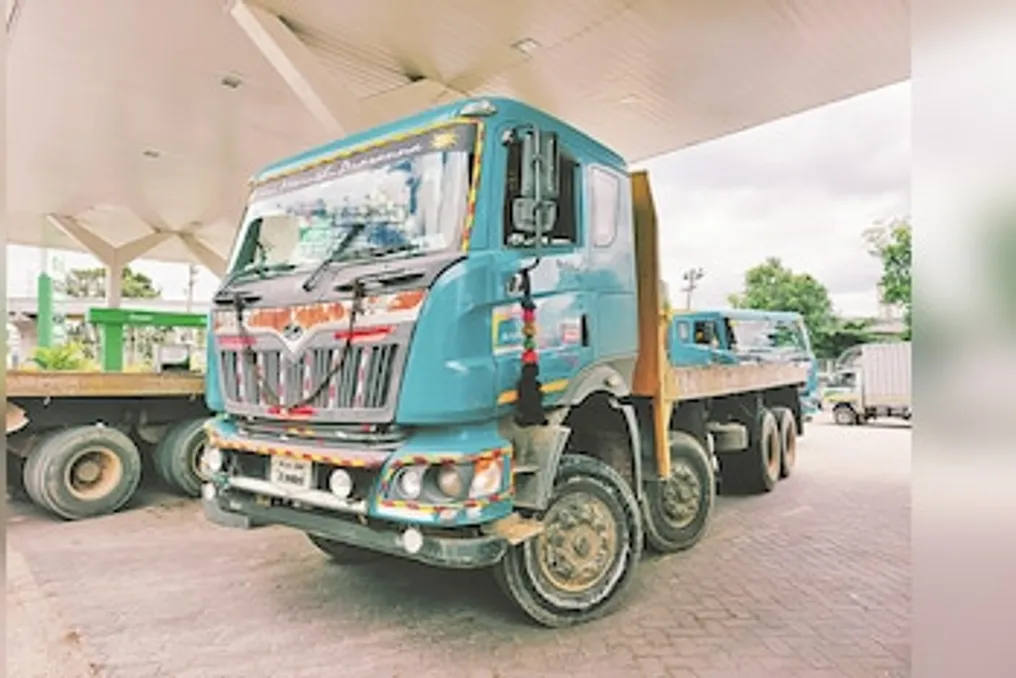
Although several commercial vehicle manufacturers are testing hydrogen fuel trucks, Mahindra has stated that its immediate focus is on perfecting diesel technology and reducing fleet operating costs. The company's new heavy trucks are equipped with a 320 horsepower diesel engine, higher than in earlier models with 280 hp engines, and include features such as cruise control, automated fuel management systems, and connected vehicle technologies aimed at reducing operational expenses.
Sahai stated: 'We are not selling trucks; we are selling a livelihood. Everything we do is aimed at increasing customer productivity, reducing fuel costs, and improving vehicle uptime.'
Mahindra estimates that improved fuel efficiency can lead to savings of up to 15 lakh rupees over five years for a fleet operator with an annual mileage of about one lakh kilometers.
Hydrogen in the Roadmap
While diesel will dominate Mahindra's truck portfolio in the near term, Sahai reported that the company has already developed a prototype hydrogen truck. He confirmed that it is part of the company's plans and that it is ready to utilize alternative fuels. However, he added that the market is not yet ready for mass adoption, and as a challenger brand, it is preferable for the company to concentrate on current capabilities.
Additionally, the company clarified that exports remain a secondary priority, as India offers sufficient opportunities for growth in the heavy truck market.
No Production Constraints
Mahindra assured that its expansion plans will not be limited by production capacity. Its Chakan plant has an annual capacity of about 35,000 trucks, with current production at approximately 11,000 units, leaving significant room for growth. Additional volumes can be secured by introducing a second shift if necessary.
The company has already implemented two price hikes this year, in April and July, amounting to about 5 percent to compensate for rising input costs. Nevertheless, it does not plan further price increases in the current quarter unless raw material prices deteriorate.
Mahindra also introduced a new line of heavy trucks, the Blazo i-TRK, starting from 29.99 lakh rupees (excluding taxes). These trucks are equipped with a 7.2-liter mPower diesel engine producing 320 hp. The company reported that thanks to AI-supported fuel management technologies, the truck can achieve up to 10 percent better fuel efficiency and save up to 15 lakh rupees over five years for fleet owners.
}, 2