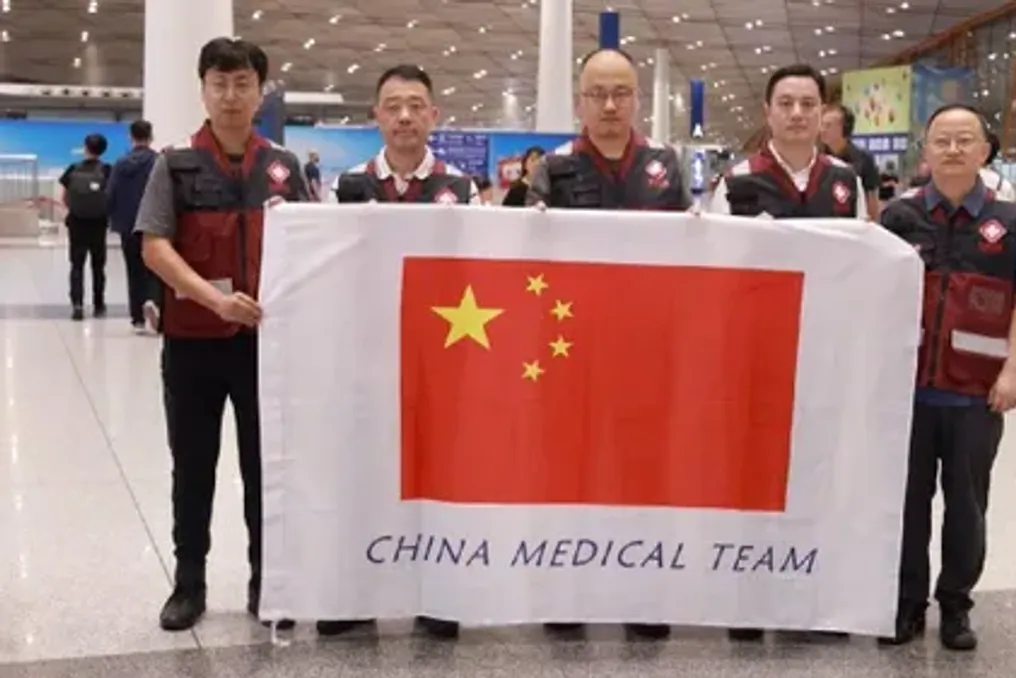
The third group of Chinese medical experts arrived in Kinshasa, the capital of the Democratic Republic of Congo (DRC), on Saturday to support the country's efforts to strengthen protection against the Ebola epidemic.
The third group of Chinese medical experts arrived in Kinshasa, the capital of the Democratic Republic of Congo (DRC), on Saturday to support the country's efforts to strengthen protection against the Ebola epidemic.
A representative from the DRC Ministry of Health, Luku Malayo Marius, met the team at the airport. He noted that the Ebola situation in the DRC remains serious, and response measures continue to face significant pressure. The arrival of Chinese specialists will provide substantial assistance in epidemiological surveillance, patient treatment, and laboratory testing.
Luku Malayo Marius added that the DRC is ready to deepen cooperation with China and jointly enhance its capabilities in responding to epidemics.
Yang Xiaochen, head of this third group, stated that the team will continue the work of the previous two groups by providing technical assistance based on practical response needs, as well as deepening interaction with DRC health authorities and relevant international partners. According to Yang, the team will bring Chinese experience to the efforts to quickly conclude the current Ebola outbreak.
Previously, the teams worked together with Congolese health authorities and international partners, conducting training on Ebola prevention, diagnosis, and treatment. The World Health Organization (WHO) reported on Saturday that the current Ebola outbreak in the DRC has become the largest in the country, surpassing the 2018–2020 epidemic.
The World Health Organization (WHO) has issued a warning that the Ebola outbreak in the Democratic Republic of Congo is spreading faster than response measures can cope. In some hotspots, the number of new infections is doubling, and frontline healthcare workers are disrupting services due to strikes.
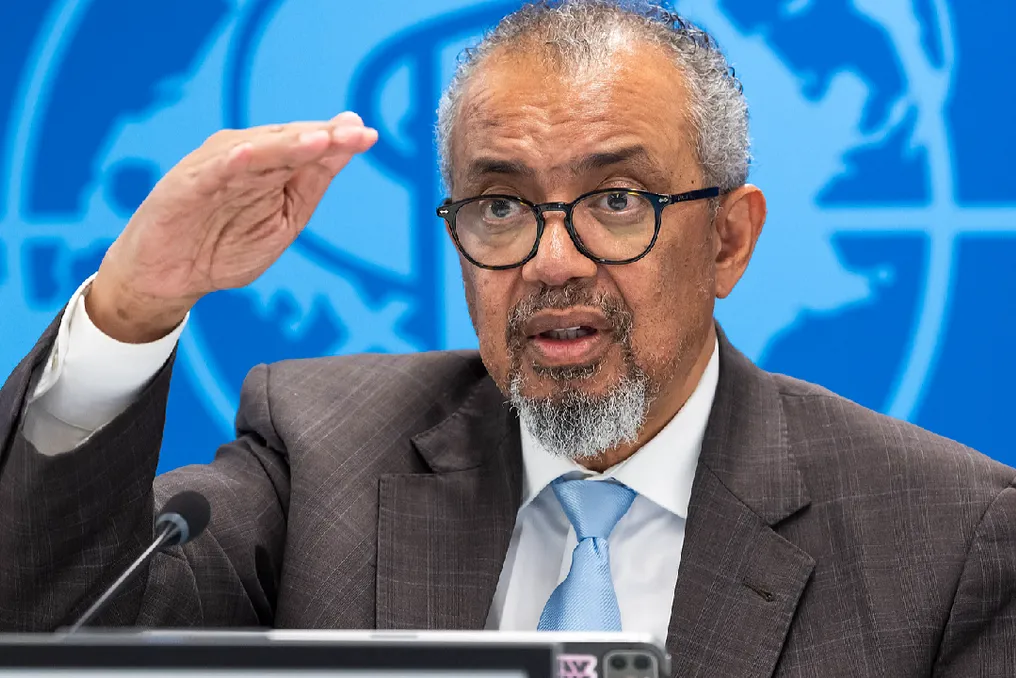
WHO Director-General Tedros Adhanom Ghebreyesus issued this warning on Wednesday during a visit to the DRC, noting that this Ebola epidemic is the fastest-growing in history. After meeting with government officials in the capital, Kinshasa, Tedros stated in an X post: 'In some hotspots, new cases are doubling. We all agree that we need to urgently and massively scale up all our efforts across all response areas with all partners.'
This was Tedros's second visit to the DRC since the outbreak was declared in mid-May. According to the DRC Ministry of Health, 3,874 people have been infected, and 1,751 have died, making this outbreak the second largest in history after the West African epidemic in 2014–2016.
Residents of Bunia reported a worsening situation after many healthcare workers stopped working due to lack of pay. Although some workers have started receiving payments for work performed since the start of the outbreak, they are demanding higher wages and more reliable compensation.
Local residents note that the strike has led to fatal consequences. Aniset Baluku, a resident of Bunia whose two brothers died of Ebola during the disruptions, called on authorities to find a quick solution to avoid similar tragedies for other families.
The strike has further weakened the healthcare system, which was already undermined by armed conflict in eastern DRC, near the borders with South Sudan, Uganda, and Rwanda.
The United States announced an additional $242 million for fighting Ebola, preparedness, and humanitarian aid, bringing total US support for the outbreak to over $512 million. Health experts believe that the rate of disease transmission has already exceeded the figures of previous Ebola epidemics.
The outbreak is caused by the Bundibugyo ebolavirus strain, for which there is currently no approved vaccine or treatment. Officials believe the virus circulated in remote communities long before the official declaration of the outbreak on May 15.
'The outbreak is spreading at alarming and unprecedented rates,' warned Médecins Sans Frontières (MSF) on Wednesday, despite expanded response efforts. MSF added that 'the response is expanding but still not reaching communities quickly enough to break chains of transmission.'
Africa CDC Director General John Kasieye stated that contact tracing is failing to identify a significant portion of new cases. On Tuesday during his visit to Bunia, he said: 'At least 60% to 70% of new cases are not coming from the list of controlled contacts.'
Healthcare workers point out that the delayed detection of infections significantly contributed to the high fatality rate of the outbreak, which stands at about 45%. Of 77 new cases registered in the last 24 hours, 44 were classified as severe. Currently, at least 717 patients remain in isolation, and 749 people have recovered.
A representative of China's Ministry of Foreign Affairs stated on Tuesday that China will continue to dispatch its medical specialists to Africa, assist African states, and provide necessary support for the early termination of the Ebola outbreak.
These statements were made by Lin Jian's representative in response to a question about the arrival of the third medical expert group from the Chinese government in Kinshasa, the capital of the Democratic Republic of Congo (DRC), on August 1.
Lin noted that after the Ebola outbreak began in Africa, China took the situation seriously and sent several groups of medical experts there, including to the DRC, to combat the epidemic, adding that these efforts have been highly appreciated.
He specified that the composition of the third medical group includes specialists in epidemiology, sanitary quarantine, clinical treatment, and pathogen laboratory testing. This team will continue to develop cooperation and coordination with the DRC and international organizations, building on the experience of previous missions, while considering the needs for epidemic prevention and control.