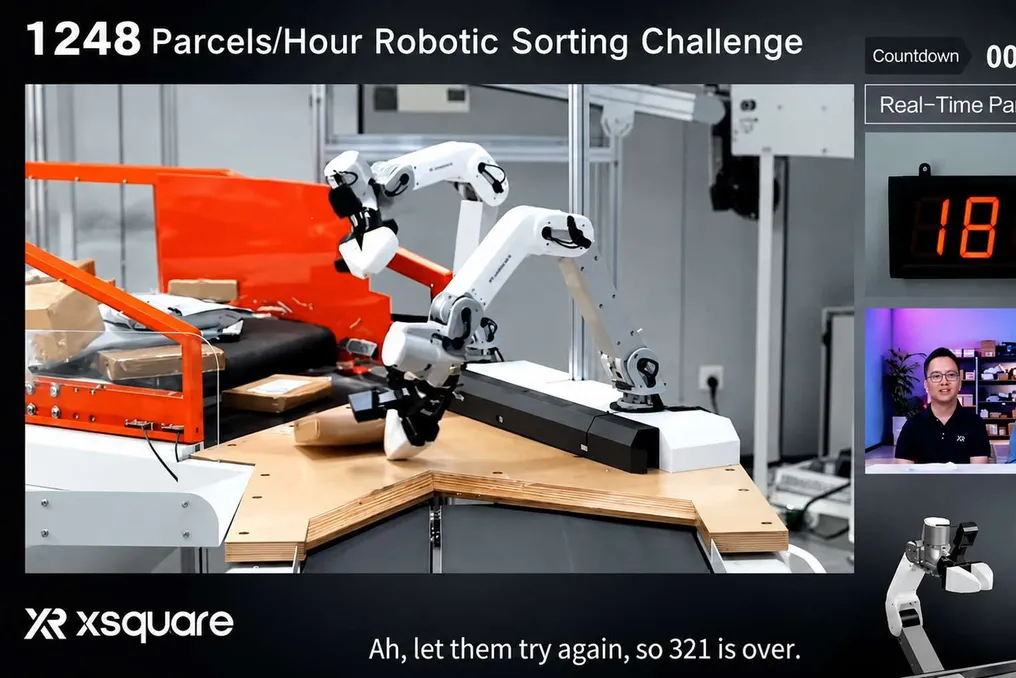
The question of whether a robot for parcel sorting needs two legs and ten fingers remains open. X Square Robot placed a two-armed robot in front of a conveyor belt, equipped with standard industrial grippers. This robot worked with real logistics parcels that varied in size, weight, material, and orientation. During one hour of live broadcast, it performed 1816 effective sorting operations, which is 45% higher than the Figure 03's rate of 1248 parcels per hour.
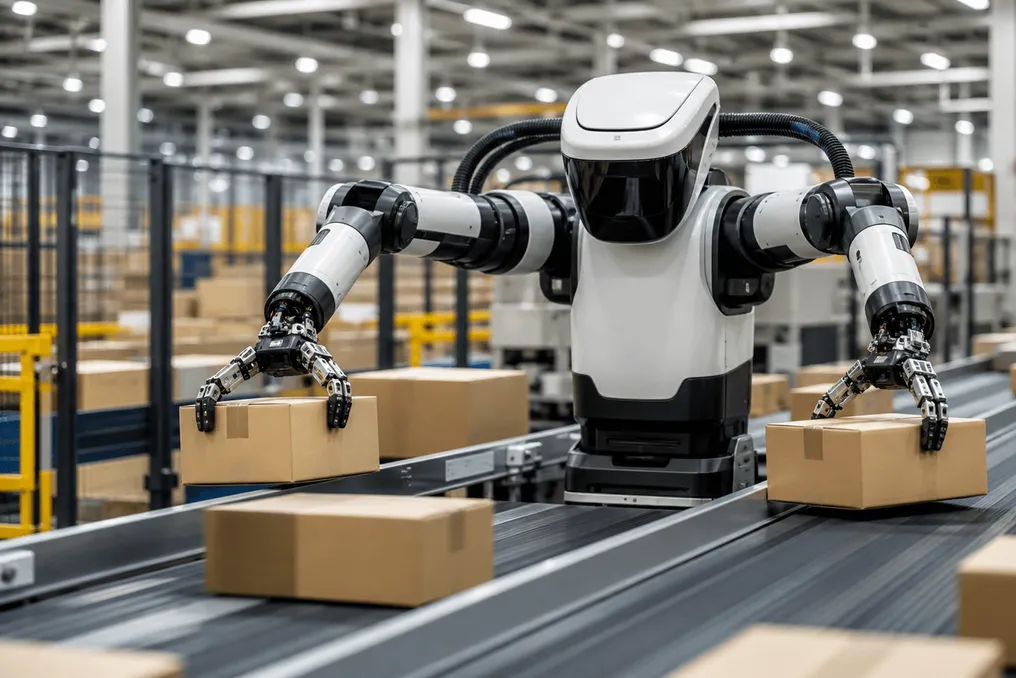
Both companies engage in similar activities, but their hardware philosophies differ significantly. Figure 03 uses a full-scale humanoid body and five-fingered hands. X Square Robot, however, has abandoned legs and extra fingers, retaining only two manipulators and grippers. As a result, the solution costs approximately 70% less, while maintaining a sorting accuracy exceeding 98%. The parcels processed were not uniform: they included cardboard boxes, soft bags, cylindrical shipments, and fresh goods in styrofoam packaging, simulating a real sorting line.
The key element is the model behind the grippers. In April 2026, X Square Robot introduced WALL-B. This model is built on a single unified architecture that simultaneously trains vision, language, action, and prediction of physical changes within one network, instead of piecing together VLA components. The model determines the next step and predicts the behavior of surrounding objects. Simply seeing a gripper close on a soft bag is not enough; the system must anticipate whether the bag will slip through the middle. When moving a box sideways, it is necessary to assess whether it will shift, rotate, or tip over. This prediction is then used to adjust actions: either by lifting with two arms or by using inertia and the work surface to flip items.
This approach, similar to the idea of DeepSeek, is applied to the hardware: the model takes on the complexity, allowing the body to remain simple and inexpensive. The grippers sacrifice degrees of freedom, and WALL-B compensates for them with smarter strategies dependent on the parcel's state. Hardware still matters: gripper opening, friction, arm load, and force accuracy determine the robot's capabilities. However, now the same standard equipment can handle arbitrary scenes. Figure maintains a fully humanoid form for mobility, tool use, and fine manipulation, whereas X Square Robot supports a minimalist body for the conveyor station, asserting that warehouses should not pay for walking, balance, and ten fingers.
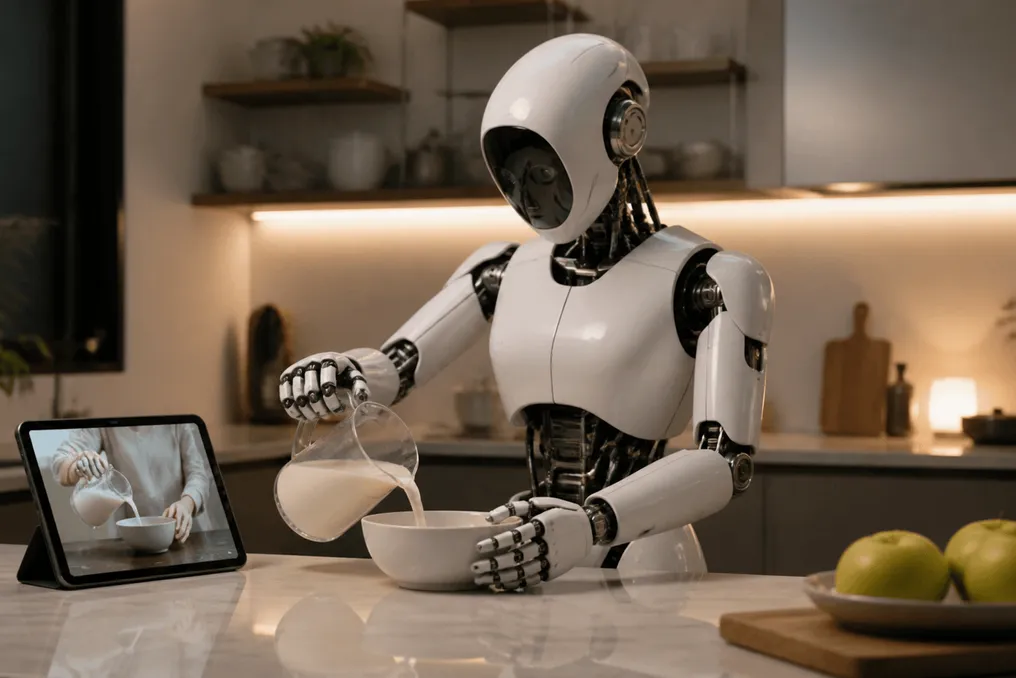
The same model is applicable to both home and industry. After releasing the first comprehensive base model, WALL-A, at the end of 2024, X Square Robot began deploying robots in nursing homes and regular residential homes. In 2026, the company partnered with 58 Daojia to provide on-demand intelligent cleaning services, becoming the first company to implement embodied AI in ordinary homes at scale. WALL-B was tested in these fragmented environments before moving to warehouse settings. Economic factors are what the industry calls the 'killer line': efficiency, cost, stability, and reproduction speed. As models begin to understand weight, friction, and inertia, robots can use fewer expensive bodies, and embodied intelligence approaches overcoming this barrier.