Starting from October 1, 2026, the Department of Tourism and Culture in Abu Dhabi is introducing a new law that mandates hotels to offer healthier food options on their menus.
Starting from October 1, 2026, the Department of Tourism and Culture in Abu Dhabi is introducing a new law that mandates hotels to offer healthier food options on their menus.
According to the circular, adult menus must contain at least one healthy option in each food category, including appetizers, side dishes, main courses, and desserts. This requirement applies to all food and beverage establishments operating in hotels, regardless of their status, provided they hold a tourism license.
The healthy option must comply with the food standards defined by the SEHHI classification. This standard helps identify products with lower levels of fat, sugar, and salt, but with higher nutritional value.
This rule also applies to children's menus: at least half of all items on the children's menu must be healthy options. If necessary, healthy options for adults can be adapted and offered to children in smaller, age-appropriate portions to ensure compliance with this requirement.
The Department added that these healthy dishes must be marked on the menu with a special SEHHI logo to facilitate identification.
The authority also published a list of compliance requirements, which include the following:
Establishments already collaborating with the Abu Dhabi Public Health Center to verify healthy items on their menus will be considered compliant during the verification process, provided constructive progress is demonstrated.
Menus are expected to change over time. If items are added or replaced on the menu, establishments must ensure that the required minimum number of SEHHI-compliant options is maintained continuously.
Any changes to previously approved healthy menu items must be resubmitted for review to ensure continuous compliance.
Despite this directive applying to everyone, the authority has outlined several exceptions. It was clarified that buffets and other service models without a fixed menu are not subject to this policy. Nevertheless, venues offering such options must provide reasonable healthy dining options for customers.
Tasting menus are also exempt from this policy, as they offer a fixed or curated selection of items based on a predefined list.
Furthermore, small food businesses offering a limited range of products and not aiming for full-service operations are not obligated to follow this rule. However, to obtain this 'niche' restaurant status, the establishment must meet the following criteria:
This step is not isolated. Abu Dhabi, as an emirate, aims to promote healthier food choices among residents by introducing mandates for supermarkets and schools.
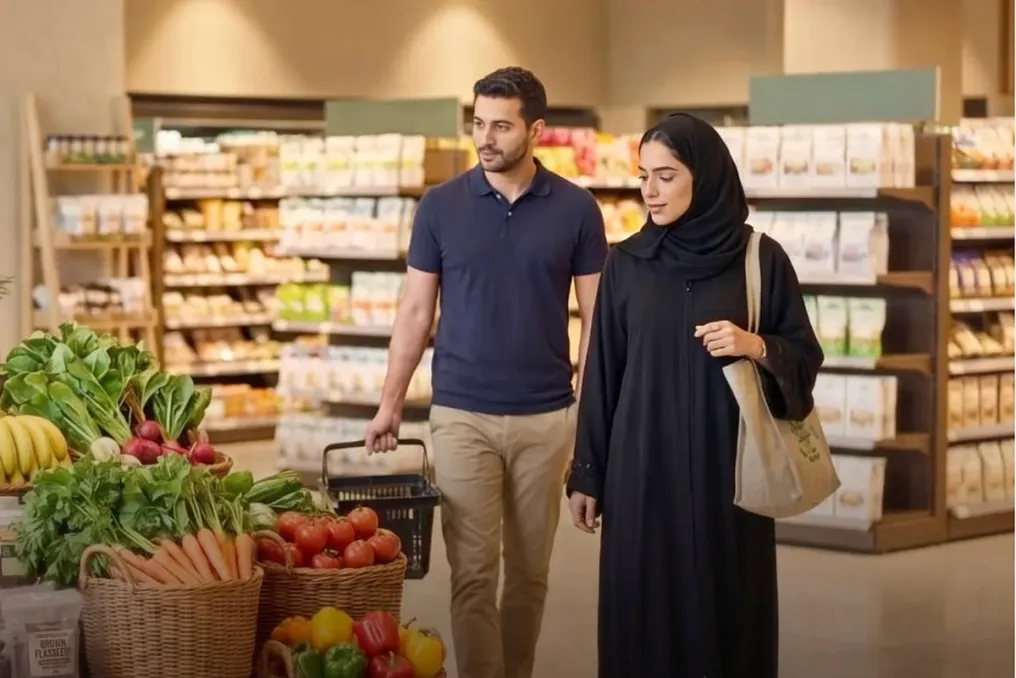
In Abu Dhabi supermarkets, starting January 1, 2027, unhealthy products and drinks must be moved away from high-visibility areas, such as store entrances, checkout areas, and end caps. This policy also extends to supermarket online platforms, limiting the prominent placement of high-fat, high-salt, and high-sugar (HFSS) food and beverages, but not prohibiting their sale.
Another policy requires Early Childhood Institutions (ECIs) across the UAE capital region to implement a comprehensive nutrition and dietary policy, and to ensure parental involvement in decisions regarding their children's diets. The updated guideline aims to reduce health risks, support healthy growth, and ensure consistency in food provision in centers, brought from home, and during holidays.
According to the Abu Dhabi educational authority's recommendations, school lunch boxes must not contain sugary drinks, high-fat and high-sugar products, processed foods, additives, as well as some dairy and soy products. The authority has issued updated healthy eating guidelines and published a list of prohibited foods and drinks in schools. The policy details the list of banned products in Abu Dhabi schools, whether provided by the school or brought by the parent.
One of the first and most visible examples of implementing the new policy was the ban on promoting unhealthy food and drinks in public places in the Capital towards the end of 2025. These rules were issued by the Abu Dhabi Department of Health, setting clear restrictions on what can appear on billboards and various external physical and digital media platforms, strengthening control over advertising content seen by residents and visitors.
Supermarkets in Abu Dhabi are reviewing store layouts, checkout displays, and online platforms ahead of the implementation of new regulations. These standards aim to prevent the conspicuous placement of high-fat, high-salt, and high-sugar (HFSS) products, while healthier alternatives may occupy these busy areas.
HFSS products will not be completely banned from sale; they will continue to be sold, but retailers are required to move them from locations such as entrances, end-of-aisle displays, and checkout zones. In the online environment, such items must not be highlighted on main pages, search results, pop-up advertisements, or checkout pages.
These rules become mandatory on January 1, 2027, and apply to supermarkets larger than 4,000 square feet. They restrict the placement and promotion of goods classified as unhealthy according to the SEHHI classification of the Abu Dhabi Public Health Center.
Retailers informed Khaleej Times that they have already begun analyzing their merchandising strategies and identifying healthier products that could take priority spots.
At Choithrams, changes are expected to involve relocating some products currently in highly visible, impulse-buy locations. Mark Mortimer-Davis, CEO of Choithrams, noted that after products are classified under the new system, rules will emerge defining where and which categories of goods can be displayed.
He added that at the checkout, for example, sugar-free gum and other compliant snacks might remain, and there is also an opportunity to introduce healthier options there. The retailer is reviewing its entire assortment, not just confectionery and traditional sweets, as the rules cover high-fat, high-sugar, or high-salt products.
Choithrams has already started assessing its portfolio and store layouts, awaiting further clarification regarding the final product classification before making any physical changes. The company also forecasts the impact of these changes on its supply chain, as moving healthier products into higher-traffic areas may increase demand for them.
Mortimer-Davis emphasized that this is not merely moving products from one shelf to another: 'Changing the placement of products changes their sales velocity.' He also noted that retailers will need to ensure sufficient stock and production capacity if healthier products begin selling in larger volumes. Furthermore, he mentioned that the commercial impact may vary between products, as some healthy alternatives may come at a higher price.
GMG is already implementing healthier options at checkouts across all its stores. The new Monoprix Abu Dhabi store, scheduled to open in August-September, will feature at least one Healthy Checkout zone. Florian Hutmayer, President of Grocery Department at GMG, stated that the company is also integrating principles of healthier merchandising into the design of new stores and reviewing the presentation of healthier products on its digital platforms.
GMG announced that it is expanding its fresh produce range and adding more convenient healthy meal options while controlling the visibility and discoverability of these items online. Lulu Group has also begun reviewing its merchandising strategy, store layouts, advertising displays, and digital platforms in anticipation of the January deadline.
V. Nandakumar, Marketing and Communications Director at Lulu Group, stated that healthier alternatives will receive more attention, while HFSS products will be placed according to the new requirements. The retailer reported expanding its healthy product range through its global supply network and expects the new rules to further increase their visibility.
For shoppers, the key change is not whether the products are available, but where they are found. HFSS products will be sold, but retailers anticipate that healthier alternatives will become more noticeable in areas traditionally used to stimulate spontaneous purchases.
Mortimer-Davis suggested that product positioning can influence consumer behavior because 'prime spots, checkouts, and promotional zones are used because visibility helps increase sales volume.' He concluded that if healthier products occupy more such positions, customers will naturally encounter them more often, and sales volumes are expected to respond accordingly.
GMG noted that this policy will reinforce the existing consumer trend towards healthier eating, while emphasizing that customers retain the freedom to choose. Retailers are using the months leading up to January 1st to assess affected products, determine their placement, and prepare their stores and online platforms for the new requirements. The policy was developed in collaboration with Healthy Living, Abu Dhabi Registration Authority, Abu Dhabi Department of Health, Abu Dhabi Public Health Center, Abu Dhabi Quality and Compliance Council, and Abu Dhabi Agriculture and Food Safety Authority.