There was a period when men played female roles in films. This was due not only to the early stage of cinematography's development but also because the appearance of women in the world of acting was not socially acceptable. Under such circumstances, a woman appearing before the camera was not just performing a role, but challenging the existing social order.
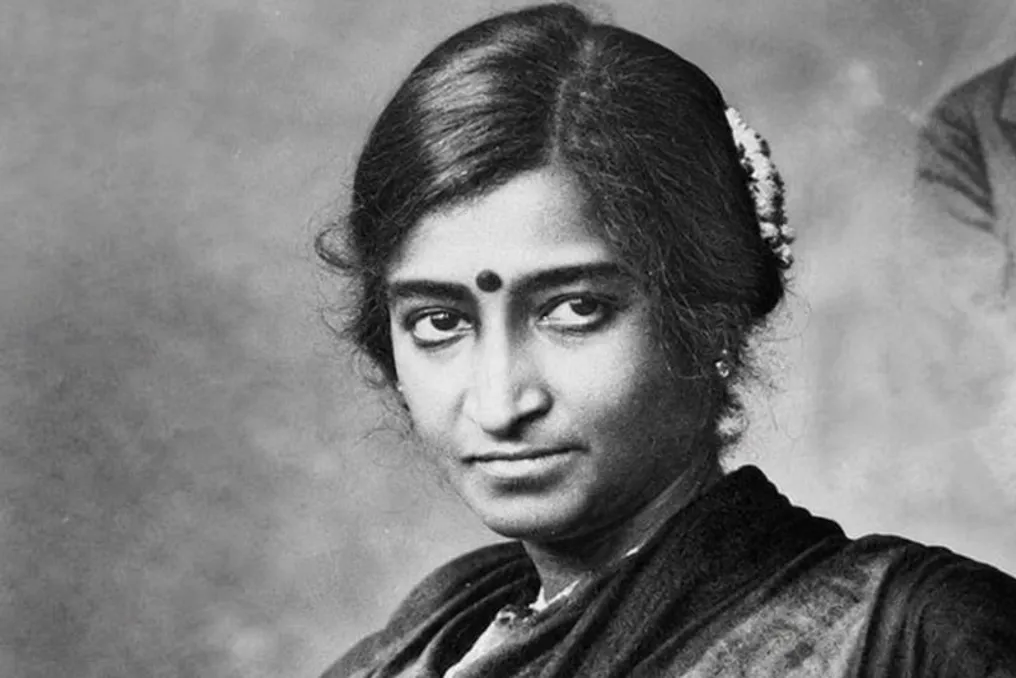
During this period, one woman fought on two fronts simultaneously. On one hand, she faced domestic violence in her personal life. On the other hand, she violated established societal rules by pursuing acting. This story belongs to the woman Durgabai Kamat.
In 1913, Indian cinema was in its nascent stage; Dadasaheb Phalke released the first feature film, 'Raja Harishchandra.' Since the profession of an actor for women was not considered ordinary at that time, the role of Taramati in the film was played by the male actor Anna Salunke.
It was customary at that time for men to play female roles. However, Phalke sought to overcome this taboo in his next film, 'Mohini Bhaskar.' Perhaps he realized that the presence of women on screen was necessary for the advancement of Indian cinema. He began searching for an actress for 'Mohini Bhaskar,' which led him to Durgabai Kamat and her daughter Kamlabai.
The story began with theatre. Theatre was a much older and more established world compared to cinema. There was a tradition of acting on stage, artists received training, and theatrical troupes toured various regions of the country. Therefore, if one hoped for the appearance of a talented female actress, it was in the theatre.
Dadasaheb Phalke was a theatre enthusiast and was deeply interested in music. His attention was drawn to the Chitrakarchak theatre company. Ranganathrao Gohle owned this company. This theatre company was set to close in a few months. Later, Kamlabai Gohle shared many memories about her mother and Phalke in Rina Mohan's documentary 'Kamlabai' (1992).
She recounted that when Phalke learned about the company's closure, he went to Ranganathrao Gohle's house the next day. He asked how long the company would be closed. When informed that the company's work would be suspended for about four to five months, Phalke made a proposal that changed the history of Indian cinema.
He asked Ranganathrao if Durgabai and Kamlabai could work in his film during that time. Ranganathrao immediately agreed. In 'Mohini Bhaskar,' Durgabai Kamat received the role of Parvati, and her daughter Kamlabai Gohle played Mohini.
Durgabai was a trained and experienced artist. Kamlabai once mentioned that her mother knew Kathak and was also proficient in playing the veena, sitar, and tabla. She performed in various roles in the theatre and participated in the translation and adaptation of Shakespeare's plays.
This was the first instance of a woman playing a female character in Indian cinema. Kamlabai was very young then, but she came into the film not only with her mother; she became part of a historical moment when Indian cinema first opened up space for women in front of the camera. The film took about six months to complete, and when it was released, extremely important changes occurred in the world of Indian cinema. No longer was a male actor required to play female roles.