Controlled nuclear fusion, often called the dream of creating a sun on Earth, is becoming a visible reality in China. A thermonuclear reactor has the potential to power a medium-sized city, and new Chinese 'artificial suns' are under construction along two technical tracks.
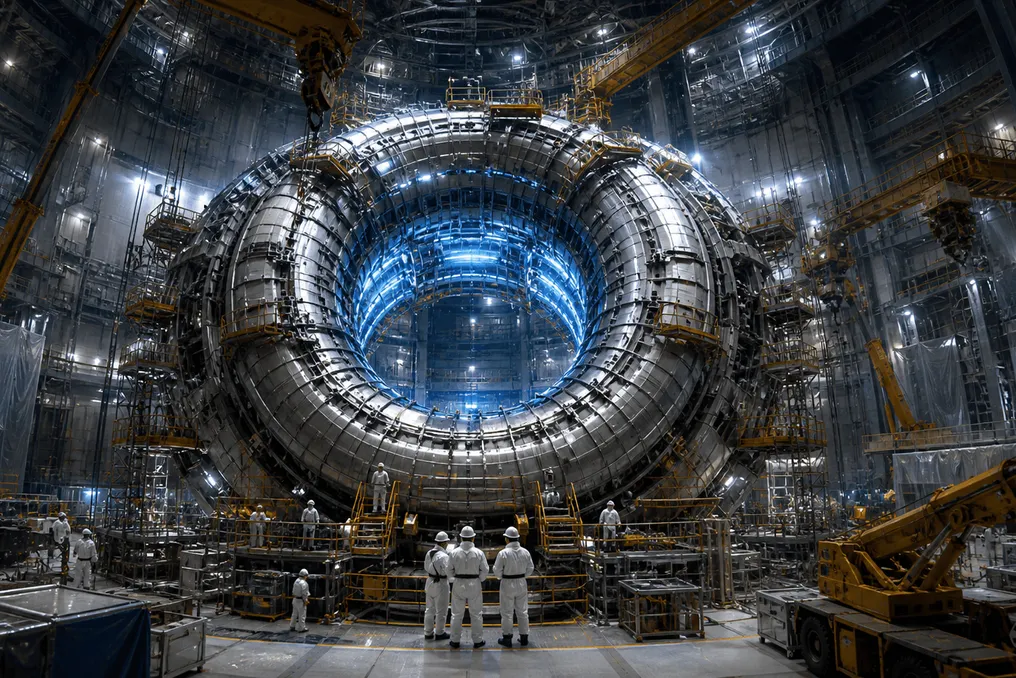
In Hefei, Anhui Province, the world's first compact experimental device for generating energy through fusion—BEST—is being built. Its construction is proceeding at an intensive pace. The heart of this device is a giant donut-shaped ring divided into eight segments that are raised section by section. Once connected, they form a closed cavity where fusion reactions and plasma burning occur.
Concurrently, development of another artificial sun is accelerating in Chengdu. This is a stainless steel cylinder over twenty meters long. Unlike bulky hall-sized toroidal tokamaks, this is China's first thermonuclear reactor utilizing a linear configuration with a reverse field. If a tokamak is compared to a large power plant, this device is more akin to a small generator. It is planned to become operational by the end of 2026, targeting tens of millions of degrees and the production of commercially viable neutrons.
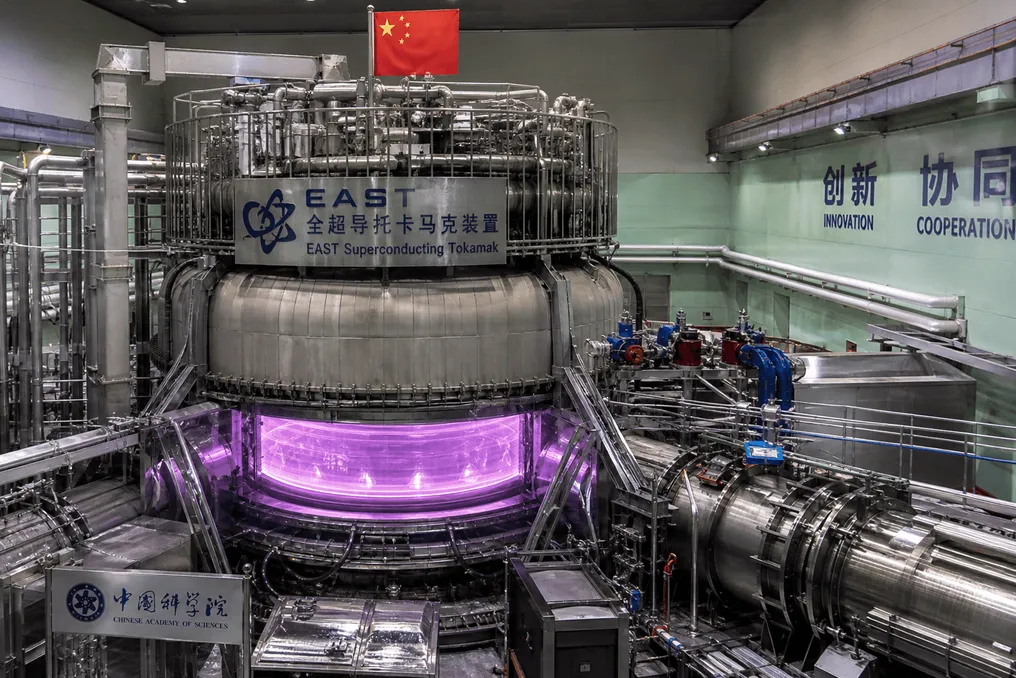
Earlier generations of devices have already demonstrated significant progress. In January 2025, the experimental superconducting tokamak EAST achieved sustained plasma operation at a temperature of 100 million degrees Celsius for 1066 seconds, setting a world record. In March 2025, this device made a breakthrough by reaching double one hundred million degrees, marking China's entry into the experimental burning stage. Now, BEST is moving further: beyond achieving fusion reactions, it aims to create a complete cyclical engineering system capable of stably generating energy, with plans to demonstrate the first kilowatt-hours of fusion-derived electricity by 2030.
The development of this industry requires expanding the entire supply chain. A ten-billion yuan thermonuclear reactor mobilizes the entire industrial system: from raw materials like superconducting materials and special metals, to magnet systems, vacuum, cryogenic cooling, heating, and power supply systems, as well as first wall and divertor components that directly contact the plasma. Technologies developed within this process are already finding applications in medicine: in August 2026, a domestic superconducting device for proton therapy completed the treatment of the first patient in a clinical trial, offering a non-invasive method for treating tumors.
The knowledge accumulated during the mass production of proton therapy—including design, testing, electromagnetic compatibility, and emergency shutdown standards—is being used to optimize the BEST device, closing the loop between research, industry, and research support. Fusion is no longer the exclusive prerogative of state commands. Since 2025, a wave of startups has joined the race, offering both compact devices with fast iteration cycles and massive, more expensive superdevices, providing capital with numerous technical avenues to choose from. Market institutions report dozens of domestic companies involved in fusion that completed funding in the first half of 2026, raising over 7 billion yuan, with records repeatedly broken in rounds. Thus, fusion has transformed into an arena for venture capital, and the artificial sun is moving from myth to grid connection.