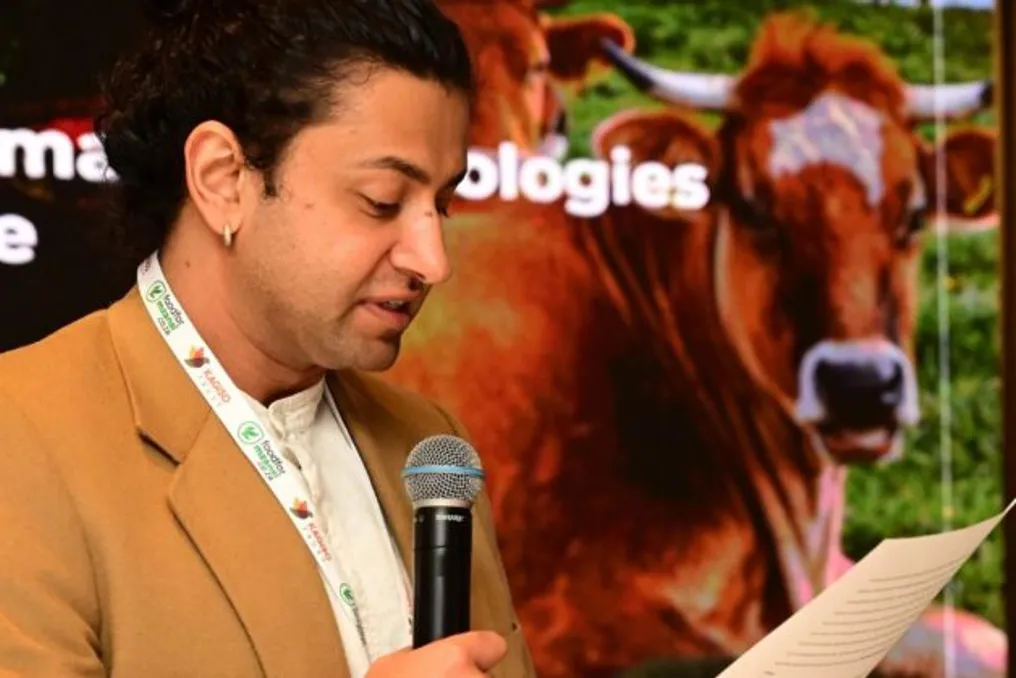
During the SADC High-Level Dialogue on Food System Transformation, held as an official event of the SADC Summit in Durban in 2026, experts called for climate adaptation technologies to be more thoughtful and accessible to all farmers.
The transition to climate-resilient agriculture encompasses new farming methods, financial models, data, and practices. However, the success of these approaches directly depends on how well they align with the real living conditions of farmers and the environment in which they operate.
Desri Lesele, Senior Value Proposition Manager for Agriculture at Nedbank Commercial Banking, noted that one of the main challenges in scaling regenerative agriculture is the financing model supporting producers. He stated that his conversations with farmers showed that many understand the importance of soil health and sustainability and are not resistant to the regenerative approach.
Nevertheless, Lesele highlighted the complexity of the situation: transition costs are immediate, while the return on investment can take several years. He asserted that the key issue is not the viability of regenerative agriculture, but whether the financing, especially in the banking sector, is designed to support this transition.
He explained that farmers need what is called 'patient capital' because agricultural systems follow biological cycles, whereas financial institutions typically operate on shorter reporting and repayment schedules. This imbalance often forces farmers to use short-term financing to cover transition costs, which can last five years or longer.
Lesele also called for broader use of blended finance and risk-sharing mechanisms, emphasizing that commercial financing alone is insufficient. He proposed that climate-focused funds, development institutions, and governments should help mitigate investment risks and stimulate private sector participation.
Meanwhile, Dr. Tara Sousi, founder and CEO of TerraClim, which uses climate and agricultural data to help farmers make informed decisions, stated that agritech should complement farmers' knowledge, not replace it. Sousi emphasized: 'No one knows their land better than the farmers themselves.'
She described initiatives to integrate diverse agricultural datasets, including agro-climate information, crop suitability, soil data, and remote sensing analytics. Work was presented in the Eastern Cape, where information from institutions such as the Agricultural Research Council (ARC) and the Council for Scientific and Industrial Research (CSIR) was consolidated into a single platform accessible to farmers and consultants. This platform underwent field testing with farmers in Mthatha, Eastern Cape, whose feedback helped developers simplify the tool and identify necessary information for consultants.
Sousi noted that the project subsequently focused on training agricultural consultants in the province, and now over 40 users utilize the system daily. She stressed that such a tailored approach is critical across the entire SADC region, as farming conditions vary significantly between countries, regions, and even districts. As she put it: 'There is no one-size-fits-all solution.'
Ishmael Sunga, CEO of the Southern African Confederation of Agricultural Unions (SACAU), observed that the problem extends beyond just climate-resilient technologies and relates to agricultural innovation in general. He pointed out that researchers sometimes create impressive technologies that are ultimately not adopted because they do not solve specific farmer problems. Sunga stated: 'It is perfect, but rejected.'
He insisted that farmers must be involved in the development of innovations from the outset, and research and development must be rethought to account for the diverse needs, scales, and ambitions of farmers. Sunga added that climate-resilient agriculture must also include basic infrastructure such as electricity, water supply, roads, and bridges. He argued that farmers require a holistic approach combining government, researchers, and policymakers.
Michael Lille, CEO and founder of Orizon Agriculture, highlighted precision agriculture as another area where the focus can easily shift from core farming principles to the technology itself. He stressed that the essence of precision agriculture is applying the right resource in the right place at the right time. While large commercial farms can use expensive machinery across thousands of hectares to achieve this, smallholder farmers can apply the same principles without owning specialized equipment.
Lille stated: 'At its core, precision agriculture is simply placing the right resource in the right place at the right time.' He advocated prioritizing education over technology investment so that farmers can understand the fundamental principles and assess whether a particular machine or system will yield sufficient return on investment. Professor Naude Malan, an expert in sustainable food systems from Holistic Economic Revolution Research and Development, warned that an excessive focus on high technology could create significant barriers for smallholder farmers. He explained that expensive equipment is often only sensible in large operations capable of maintaining high productivity. Malan noted: 'If you implement high technology, the largest systems around that machine must be absolutely optimized for maximum productivity.'
He pointed to simpler, less expensive technologies that can be adapted to various farming conditions, arguing that farmers should have the ability to progress through stages of technology adoption. Malan also stated that sustainable food systems must reflect the ecological differences between individual farms, rather than relying on a standardized model. He concluded: 'We must have diversity of approaches. Policy cannot be monolithic; it must be diverse.'
He added that the financial viability of individual farm enterprises must remain central to decisions regarding technology, finance, and policy, allowing farmers to adopt customized solutions at a managed pace.