Despite revenue growth driven by the mobile business, metrics concerning Telkom's leading prepaid services show a significant dependence of this growth on issuing call-time loans and artificial intelligence-managed offers.
In the first-quarter trading report, ending June 30, 2026 (first financial quarter of 2027), the group reported that prepaid service revenue increased by 9.1%, reaching 3.97 billion Rands. This figure was the main driver of the 6.4% growth in total mobile service revenue. The group's total revenue grew by 2.6% to 11.1 billion Rands, supported by an 8.8% increase in data revenue to 6.92 billion Rands, which now accounts for 62.4% of the total, up from 58.8% the previous year.
Telkom attributes the surge in prepaid services to targeted customer acquisition and the use of 'human-centric AI,' implemented through the Mo’Nice and Mo’Town customer value management platforms. These platforms accounted for 54.6% of prepaid service revenue in this quarter. Typically, these platforms apply personalized discounts and special offers to increase top-up frequency.
Concurrently, the company's 'call-time loan' offering—short-term credit provided against future top-ups—made up 24.7% of all prepaid top-ups and had 4.4 million active users. Simply put, nearly a quarter of Telkom's prepaid top-ups are financed by credit, and over half of prepaid revenue is generated through personalization platforms, raising questions about the long-term sustainability of the operator's prepaid momentum.
Broader growth proved stable. Mobile data revenue increased by 11.4%, aided by a 19.6% rise in data traffic to 574 petabytes. The group's Earnings Before Interest, Taxes, Depreciation, and Amortization (EBITDA) grew by 10%, reaching 3.08 billion Rands, and the EBITDA margin expanded by 1.8 percentage points to 27.7%, thanks to a 1.9% reduction in overall expenses. Group CEO Serame Taukobong noted that mobile service revenue resumed accelerating compared to the previous quarter, and margin growth was sustained by the group's OneTelkom approach and cost discipline.
Decline in Subscribers
Despite the annual increase, Telkom's mobile subscriber base contracted during the quarter. By the end of June, the group had 25.3 million active mobile subscribers, which is 6.1% more than last year, but approximately 372,000 fewer than the 25.65 million registered at the end of March. Prepaid subscribers, numbering 22.3 million, decreased by about 326,000 compared to the previous quarter, despite a 7.1% annual increase, while the postpaid base slightly declined both quarterly and year-on-year.
Data subscribers were a bright positive point, increasing by 15.5% to 19.8 million and now constituting 78.4% of the mobile base. Average Revenue Per User (ARPU) showed that volume outweighed value. Combined ARPU fell to 74.87 Rands from 75.40 Rands the previous year, and postpaid ARPU dropped to 182.51 Rands from 187.13 Rands, while prepaid ARPU remained relatively stable at around 59 Rands.
Capital expenditures decreased by 19.4%, totaling 888 million Rands, lowering capital expenditure intensity to 8% from 10.2% the previous year—significantly below the group's annual target of 12–15%. Telkom attributed this drop mainly to the implementation timelines of the multi-year Openserve projects, although some costs were directed towards modernizing the IT systems underpinning business support system transformation. The group stated it would increase spending in the remainder of the financial year.
Openserve, the group's division handling wholesale fiber optic services, increased revenue by 5.6% to 3.32 billion Rands, with external revenue growing by 18.2%, and an EBITDA margin of 33.2%. The company raised its industry metric for fiber optic coverage to 53.9%, connecting 843,563 out of 1,565,750 homes it serves.
Telkom also used this report to push Openserve into retail, confirming the launch of its own Internet Service Provider (ISP) service in July and insisting that the direct channel 'fully aligns with our open wholesale market access strategy'—a move that concerned some ISPs purchasing wholesale access from Openserve and drew attention from the Internet Service Providers Association.
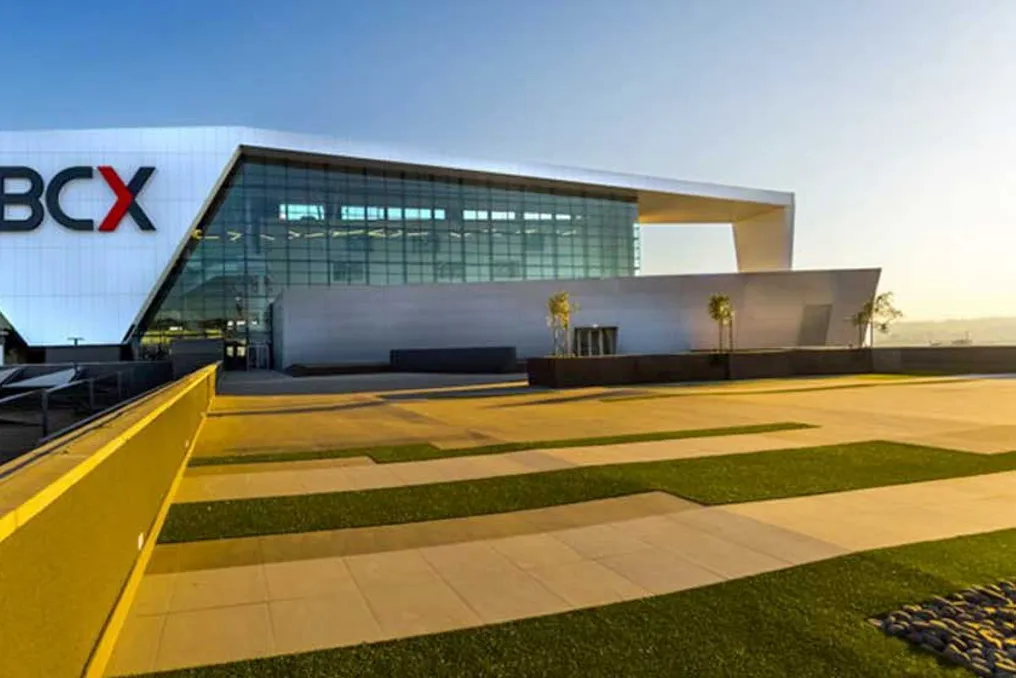
BCX lagged behind, as its revenue fell by 10.9% to 2.59 billion Rands. Revenue from IT hardware and software sharply declined by 30.1%, linked to supply delays and client decisions that Telkom attributed to input cost pressure due to geopolitical conflict. Converged Communications revenue dropped by 11.1% as customers migrated from legacy voice and bundled services. Core IT services revenue remained roughly flat, increasing by only 0.3%, although cybersecurity revenue grew by 36.6% and cloud services by 11.8%. BCX's EBITDA rose slightly by 2.6% to 194 million Rands—due to cost reductions, lower bad debt write-offs, and margin improvement, rather than growth, lifting the margin to 7.5%. Taukobong noted that the recovery process will take time as new management continues to reform the division.
Telkom expects group service revenue to grow in the mid-single digits, 'potentially exceeding the upper limit of the range,' and confirmed its capital expenditure intensity guidance of 12–15% for the year.