Seven years ago, during a vacation in Dubai, Andrey had an unusual but very vivid dream about winning the city's lottery. The Russian sailor himself was unaware of the existence of such a lottery.
Seven years ago, during a vacation in Dubai, Andrey had an unusual but very vivid dream about winning the city's lottery. The Russian sailor himself was unaware of the existence of such a lottery.
The next morning, he started searching online and stumbled upon the Dubai Duty Free Millennium Millionaire draw. After that, he began buying tickets. Seven years later, his dream came true.
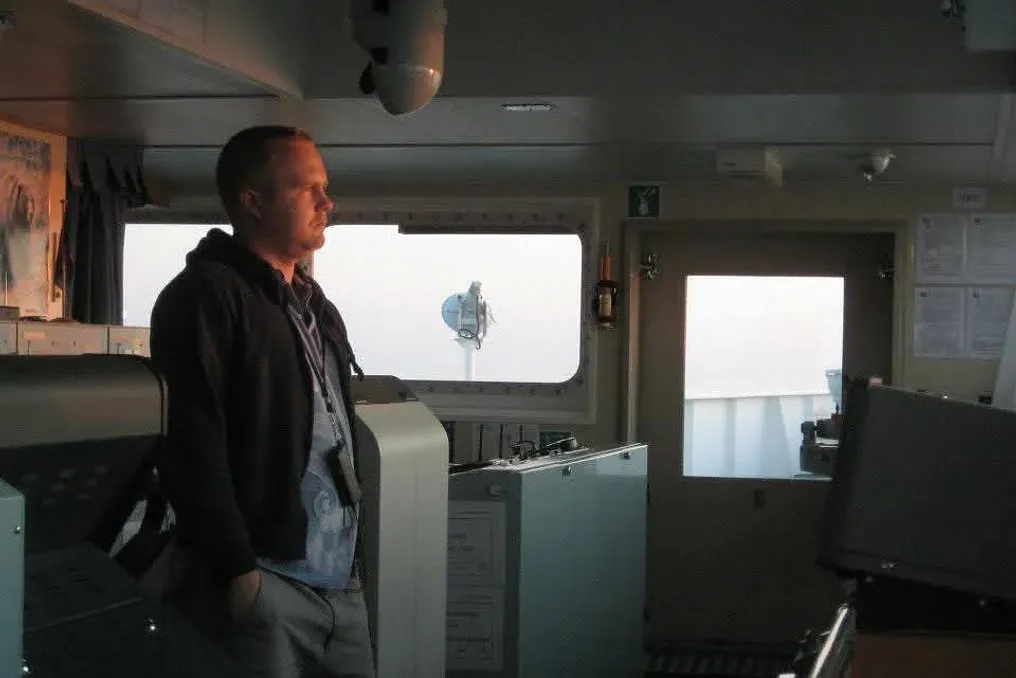
Andrey, a 49-year-old employee of the maritime industry, won $1 million in the Dubai Duty Free Millennium Millionaire promotion. He told Khaleej Times: 'I dreamed that I won the lottery somewhere in Dubai. At the time, I didn't even know about lotteries in Dubai. The next day I woke up and started checking what lottery existed there.'
After discovering the Dubai Duty Free draw, he decided to try his luck. 'I started buying tickets several times a year because I had this dream. It was a very clear dream that I had won,' he shared.
However, Andrey jokes that he received another prize first. During his vacation in Dubai with his wife, they hoped to expand their family. Nine months after this trip, their son was born. 'I didn't win the lottery then, but nine months later I had a son. So that was a different victory,' he noted. His son is now seven years old, which matches the number of years Andrey waited for his lottery dream to come true.
Even the moment of realizing he had become a millionaire was not smooth. Andrey was in Vladivostok visiting his father when Dubai Duty Free tried to contact him on August 12. He had recently been at sea and left his phone with his mother because he usually has little or no signal while working on board.
His mother answered the call and immediately became suspicious. 'She thought it was scammers,' Andrey reported. 'She told me: 'A strange call came to your phone. Be careful. Don't answer calls from Dubai.''
Another thought occurred to Andrey. Previously, he had applied for jobs at the company in Dubai and assumed the call might be from a potential employer. 'I thought that perhaps one of my applications to the company in Dubai had been accepted, and someone was calling me about work,' he said. He called back, and instead of discussing a new job, the person on the other end started asking him to check the details of his Dubai Duty Free ticket.
'At first, I didn't understand what he was talking about regarding the lottery,' admitted Andrey. Eventually, he checked the numbers and realized what had happened.
Instead of leading to a new job, this call brought him one million US dollars.
Despite the large win, Andrey stated that he does not intend to radically change his life. 'Of course, I am happy. My life hasn't been easy, and suddenly this is a very nice gift,' he said.
He plans to use a significant portion of the money for his three children, aged 14, 10, and seven, especially for their education. He is also considering donating part of the funds to charity and helping acquaintances.
'I have no plans for myself,' he added. 'I think I will continue doing what I am doing now.'
Andrey mentioned that he might eventually stop working on ships but does not plan to completely leave the maritime industry. He previously worked in Dubai, including twice at Dubai Drydocks, when servicing the ships he worked on.
Dubai has also become a regular holiday destination for his family. 'I visit Dubai almost every year, sometimes twice a year,' he shared.
It is expected that Andrey will return to Dubai and is considering leaving part of the winnings in the emirate. One idea is to buy an apartment that his children can use if they decide to study in Dubai. 'Maybe I will buy them an apartment so they can stay in Dubai and get an education here in the future,' he speculated.
For Andrey, investing money in Dubai has a deeper meaning. 'You get money here and you invest it here,' he observed. 'Dubai gives you an opportunity, and you give something back. It's like a balance.'
He also noted that the winning ticket differed from those he bought previously because this time he chose numbers that had a personal connection to his life. His advice to those hoping for similar luck is simple: 'Choose your favorite numbers that are somehow connected to your life.'
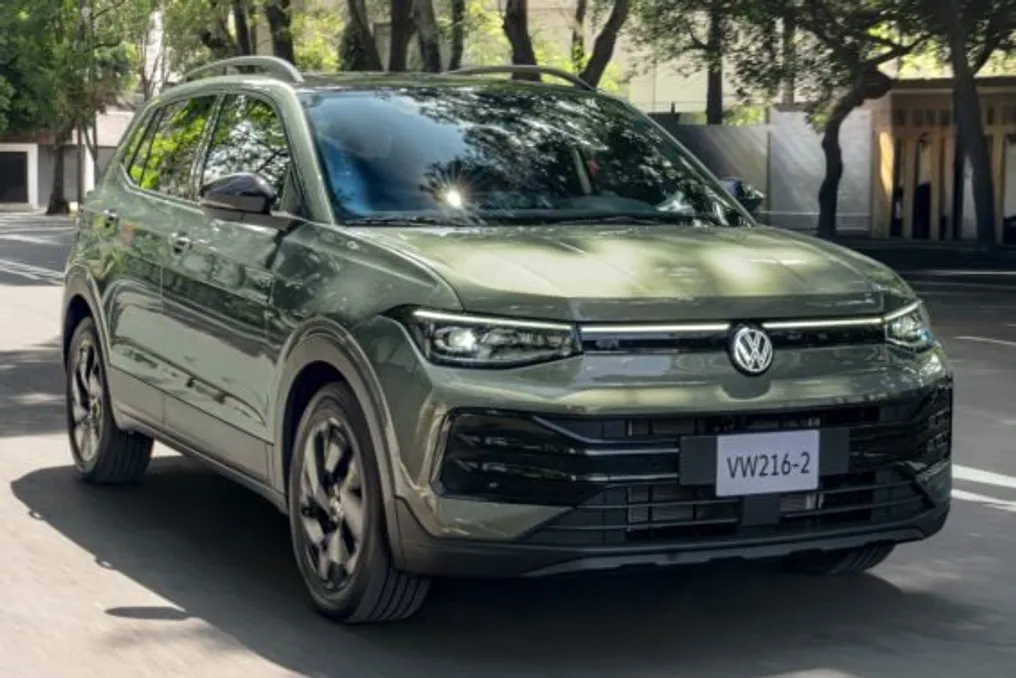
Volkswagen has introduced a restyled version of the Taigun in Mexico, a model known as T-Cross in certain international markets, which has been serving the Mexican market since 2022, replacing the SUV manufactured in Brazil. Although there is no confirmation that this facelift will be applied to the Brazilian line, which received an update in 2024, it may signal future modifications to the vehicle.
It is noteworthy that despite the existing free trade agreement between Brazil and Mexico, the automaker opted for the car originating from India. According to the manufacturer itself, the Taigun is not subject to the 50% import tariff imposed by the country, thanks to the quota system Volkswagen has through local production.
This SUV is available in two configurations: the Comfortline, with an approximate price of R$ 144 thousand, and the GT, a new version, costing around R$ 152 thousand.
On the front, the design recalls the Tiguan, featuring narrower headlights, new bumpers, and an illuminated LED strip on the grille. The Volkswagen emblems are activated both at the front and rear, and the turn indicators now have sequential operation. The taillights are connected by a dark strip, which now incorporates new internal details, and new wheel patterns have been added, along with the exclusive Avocado Green color.
Inside, the dashboard has been redesigned and now includes vertical air vents, synthetic leather finishes, and a semi-floating 10-inch multimedia center with a renewed interface. This system is complemented by a digital instrument cluster and support for wireless mirroring of Android Auto and Apple CarPlay. The GT version also offers a panoramic sunroof, black paint on the roof and sills, exclusive badges, a sporty steering wheel with red details, ambient lighting in the same tone, and a completely dark interior finish.
The main mechanical change lies in the transmission. The 1.0 TSI engine maintains its power of 116 hp and torque of 18.1 kgfm, but the automatic gearbox has been updated from six to eight speeds. However, the list of assistance features is lower than that of the Brazilian T-Cross, as it does not have adaptive cruise control, blind spot warning, or lane keeping assist. Both models come standard with autonomous emergency braking, driver fatigue detection, and six airbags.
Looking ahead, Volkswagen plans two SUVs for mid-2028: Project Saga, which will give rise to the national version of the T-Roc, and Project A-SUV, intended for the next generation of the Taos. Both projects will incorporate hybrid systems based on the 1.5 TSI Evo2 engine.
The A-SUV, initially conceived as the next generation of the T-Cross, had its positioning altered due to the commercial performance of the current model. For this reason, it is expected that the T-Cross will receive a more substantial modernization, incorporating design features from the ID electric vehicle family, to maintain its relevance instead of being replaced. The national SUV portfolio should consolidate with five models: Tera, Nivus, T-Cross, the derivative of Project Saga, and Taos.
The United States is expressing concern over the strengthening ties and growing trade between India and Russia. As India purchases crude oil from Russia, the US is taking daily steps to curb this process, recently threatening to impose a 100% tariff against India.
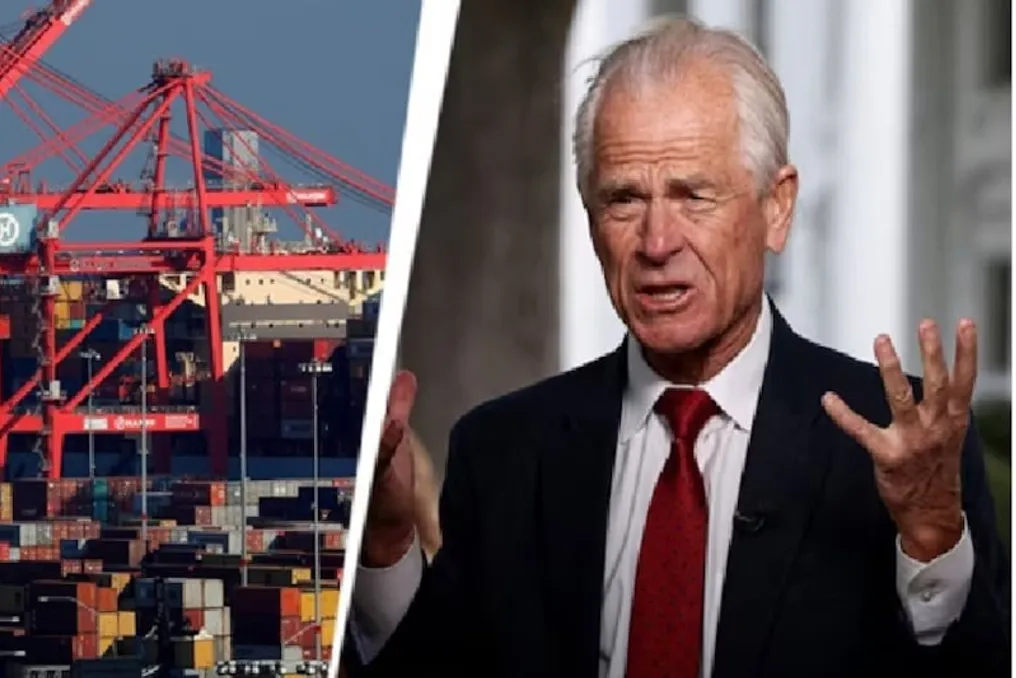
However, the US has recently leveled what appears to be an unassailable accusation: they have accused India of assisting China. Peter Navarro, trade advisor to US President Donald Trump, voiced serious allegations against India, citing a new White House report.
According to Navarro's statement, 'India is under the close scrutiny of the American surveillance radar.' This statement was made in the context of a US report that named about 40 countries, including India, as participants in China's 'network of secret transit shipments.'
According to Peter Navarro, China uses more than 40 countries to ship its products to the US to bypass American tariffs. The main channels for these supplies are Mexico and South Asian countries.
The White House report, titled 'Large-Scale Shipping Fraud,' states that Chinese goods are being sent to the US through third countries to avoid tariffs imposed by the US on China. Navarro claims that China exports its goods from these countries after minor processing, repackaging, relabeling, or rerouting, creating the appearance that the product was manufactured not in China, but in the exporting country.
According to Navarro, this illegal method results in annual losses for the US of between $19 billion and $26 billion in customs revenue. Amid current negotiations on mutual tariffs between India and the US, this accusation is viewed not merely as a statement, but as a signal to increase pressure at the negotiating table.
The report also mentions the cities of Gujarat, Chennai, and Pune in India, which are called 'sister cities to Seattle, Dayton, and Columbus' in the US. This term is applied to foreign production centers that redirect Chinese goods to the US, manufacturing pumps and compressors.
These officials assert that such illegal practices cause significant damage to local employment and industrial production in America.
The report asserts that besides India, many key US trading partners are involved in this Chinese network, such as Mexico, Canada, the European Union (EU), Japan, and South Korea. Navarro warned that under the Trump administration's new trade structures, strict rules will be implemented, providing for large fines or penalties for countries using themselves as transit channels.
In addition to trade tariff issues, Navarro once again raised the topic of India importing crude oil from Russia. He stated that the US administration is preparing to introduce additional fees for countries that continue to purchase energy from Russia despite new restrictions. It should be noted that India continues to import crude oil from Russia, having purchased about 50 percent of its total crude oil imports from Russia in July. Following this, the US announced the possibility of imposing a 100% tariff.
Apple is developing an exclusive language model for the Chinese market, with support from Alibaba, according to three sources informed to Reuters. This initiative signals a shift in the company's strategy to integrate artificial intelligence into both iPhones and other products sold in China.
Previously, Apple relied heavily on solutions provided by Chinese companies. Now, the company is investing in developing its own technology, simultaneously seeking to comply with local regulations and respond to competition from manufacturers like Huawei.
In the Chinese context, American services such as Anthropic's Claude and OpenAI's ChatGPT are unavailable. For this reason, Apple had been collaborating with local partners to incorporate generative AI features into its devices.
This new model has the potential to grant Apple greater autonomy over the experience provided to Chinese consumers. However, it has not yet been defined how it will be integrated with third-party technologies.
Apple Intelligence is expected to arrive in China in the coming months, following an update to the iOS operating system. The collaboration between Apple and Alibaba was made public in February 2025. At that time, Joe Tsai, Chairman of Alibaba, confirmed that Apple had analyzed several Chinese companies before formalizing the agreement.
Tsai stated: 'They talked to several companies in China. In the end, they chose to do business with us.' The launch of Apple Intelligence was postponed while Apple adjusted its resources to meet Chinese specifications. The regulatory process was completed last month when China's Cyberspace Administration approved the company's generative AI service.
In the version intended for the country, the Qwen model, developed by Alibaba, will be implemented in Apple Intelligence. Furthermore, Baidu's technology is also expected to be part of this service.
The central elements of this operation include the fact that China is a crucial market for Apple, although the company has lost market share to local producers. The absence of AI features in iPhones sold in the country was cited as a factor negatively impacting sales, as competitors offered devices with native artificial intelligence assistants.
The combination of proprietary technology and Chinese models positions Apple uniquely for a foreign corporation. This approach may help the company satisfy Beijing's requirements while maintaining a certain level of control over its AI resources.
One aspect still undefined in this equation is the exact role of the model created by Apple in conjunction with Qwen, Baidu, and other external tools. Defining this role will determine how Apple Intelligence functions on devices sold in China.
Peter Navarro previously demonstrated an aggressive stance regarding Indian trade policy, calling India the 'tariff king.' His recent statement clearly indicates that future trade discussions between India and the US may become even more tense.