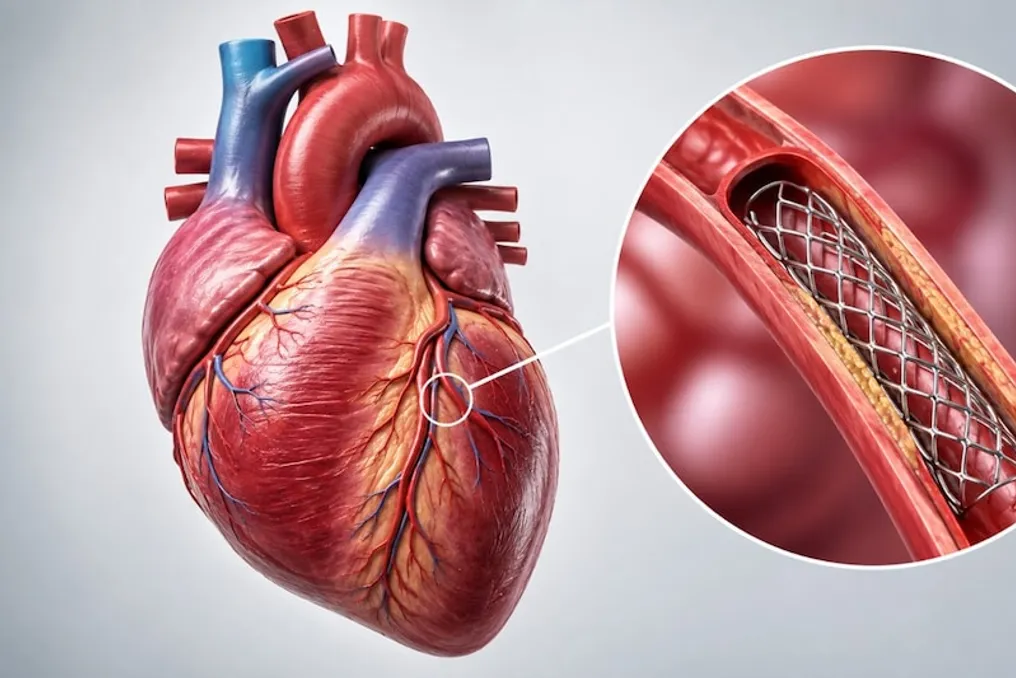
A stent is placed when there is a blockage in the heart arteries exceeding 70-80 percent or when blood flow suddenly stops during a heart attack. This process is called angioplasty in medical terminology. Although stent placement reduces the likelihood of a recurrent heart attack, there is a question about the possibility of its recurrence.
According to doctors, a recurrent attack does not happen in most cases, but the risk remains in certain situations.
Professor Dr. Tarun Kumar from the cardiology department of Medanta Mulchand Hospital explained that the danger of a recurrent attack arises if a blockage forms again inside the stent or if a blood clot forms in the stent. Another cause can be the premature discontinuation of antiplatelet drugs.
Dr. Tarun specified that the stent only opens the blockage in the artery where it was placed. The risk of an attack also increases if a new blockage develops in another coronary artery.
Dr. Tarun warns that if a person who has had a stent continues to smoke, suffers from diabetes, or high blood pressure, all these factors can trigger a new attack. Furthermore, there is a risk of the heart disease recurring if the patient does not take the prescribed medications on time.
In such cases, it is extremely important to follow the doctor's recommendations regarding medication intake and pay close attention to nutrition after stent placement.
It is necessary to immediately go to the hospital if signs such as chest pressure, shortness of breath, or cold sweats appear after stent placement. These symptoms may indicate a heart attack, although this does not guarantee that the attack will occur specifically after the procedure. Nevertheless, in some cases, this risk persists.