The exchange of mammals between the two continents of America began millions of years before the formation of a permanent land connection between them, according to a study published in the journal Science. This research indicates that animals could already move from one region to another via marine routes even before the Isthmus of Panama allowed for terrestrial crossing.
The study, conducted by a team led by Professor Jack Zeng from the University of California, Berkeley, suggests that this movement gained momentum approximately 10 million years ago. Most migrations occurred from north to south, while evidence of movements in the opposite direction is much rarer.
The situation changed drastically about 2.8 million years ago when a land connection between the Americas was presumably established. From that point on, the circulation of mammals in both directions became significantly wider, leading to the phenomenon known as the Great American Biotic Interchange.
For tens of millions of years, South America remained isolated from other major continental masses and developed its own fauna. North America, in turn, experienced periods of contact with Asia through the Beringia region, allowing cold-adapted species to reach the continent.
This difference helps explain the profound consequences of the unification of the two Americas. When the land passage appeared, animals that had evolved in different environments began occupying previously inaccessible territories.
However, the new research shows that this process did not begin with the opening of the land route. Analysis of fossils combined with data obtained from molecular clocks demonstrated that several families of mammals inhabiting the current region of the USA and Canada had already advanced toward Mexico between 10 and 7 million years ago.
Environmental changes during this period may have facilitated this advance. Geochemical data analyzed by the researchers indicate an increase in vegetation associated with drier conditions in Mexico between 10 and 7 million years ago. For the team, this transformation could have favored the expansion of mammal populations arriving from the north.
The possibility of moving into more southern regions does not, however, imply the existence of a continuous land route to South America. Approximately 7 million years ago, some small mammals apparently managed to cross the oceanic barrier.
The exact route remains unknown. Hypotheses include movements between Caribbean islands and random crossings on large pieces of vegetation carried by the sea. The evolutionary history of other animals proves that such oceanic crossings are possible, as primates managed to reach South America from Africa.
The characteristics gathered during the study point to a defining feature of this interchange preceding the formation of the land bridge: it was not uniform. The predominant flow went from North America to South America.
Sloths serve as an important exception. Some lineages were able to make the transition in the reverse direction before the continents merged. The ability of these animals to swim may have played a crucial role, and certain fossil groups were considered partially aquatic.
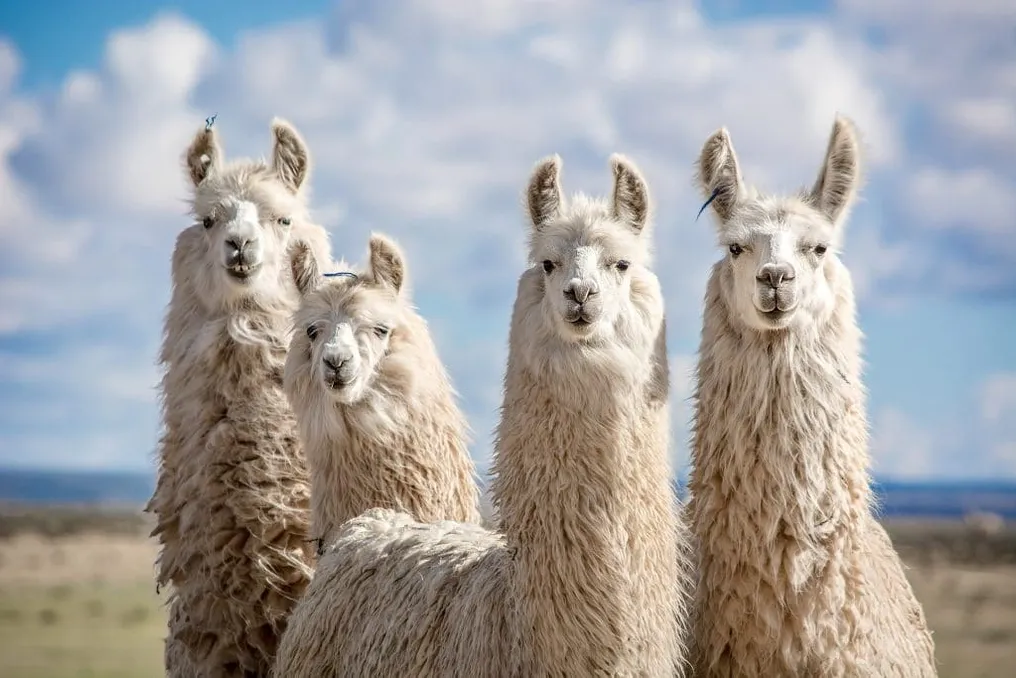
The difference between the two migration directions also helps to understand the subsequent outcome of the exchange. Once the land route finally appeared, animals such as armadillos and camelids, including ancestors of llamas, settled in South America, as did numerous rodents. Small groups were able to make the return journey with similar success.
One explanation considered by the researchers is the composition of mammal communities existing in South America. Among the dominant groups were marsupials, while placental mammals possessed a reproductive strategy that may have promoted their expansion in the face of competition. The hypothesis is that placentals, whose young achieve independence earlier, had an advantage in environments where they had to compete with marsupials. However, this interpretation is disputed by researchers studying the evolutionary history of marsupials.
Another possibility relates to the ecological experience of North American mammals. Since North America maintained regular contact with Asian species through the Bering Strait, its inhabitants faced more intense competition throughout their evolution. This trajectory may have prepared some of these animals for arrival in new environments. The interpretation presented by Zeng is that North American mammals that managed to move south already carried a long history of evolutionary competition.
The formation of the Isthmus of Panama about 2.8 million years ago radically changed settlement conditions. With the land connection in place, movements in both directions were no longer dependent on marine crossings and occurred with far fewer restrictions.
This process corresponds to the Great American Biotic Interchange—an episode that profoundly transformed the animal communities of both continents. The study, however, indicates that the exchange cannot be viewed solely as an event that began when animals could finally walk from one continent to the other.
Researchers advocate for a sequence of movements preceding this, which began at least 10 million years ago, marked first by terrestrial movements within North America, then by marine crossings, and finally by the opening of a continuous land route.
The phenomenon was not limited to mammals. According to Zeng, plants and flying animals, such as insects, birds, and bats, experienced fewer limitations due to the absence of a permanent land bridge.
Thus, the study presents the exchange between the Americas as a much longer process than just the opening of the passage in Panama. Even before a natural road existed between the continents, some species had already found ways to overcome geographical separation.