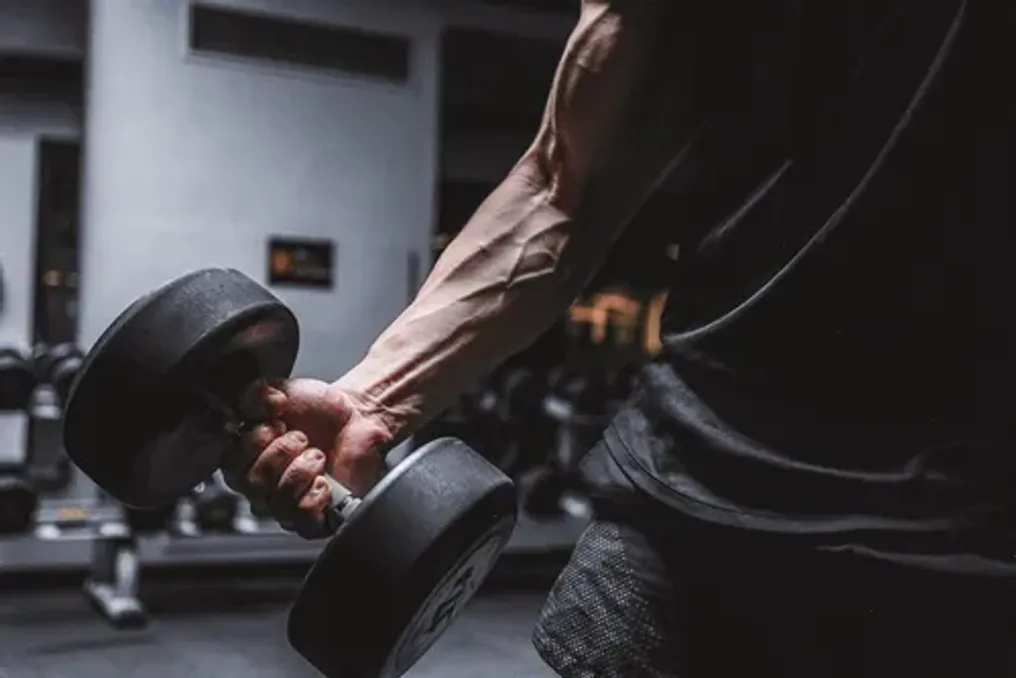
Bodybuilders striving for peak condition are increasingly resorting to prohibited peptides in the hope of achieving benefits such as improved skin condition and appetite suppression. However, experts warn of serious health risks associated with this practice.
Thomas, whose name has been changed, injects GHK-Cu daily and Retatrutide three times a week, administering them himself into his abdomen. He uses these substances to achieve 'beautiful skin' and reduce feelings of hunger. This process has become routine for him as he visits the gym almost every day.
He is part of a growing group of individuals attempting to 'optimize' themselves using peptides—a class of substances actively promoted online by influencers, celebrities, and the wellness industry.
Viral social media posts claim that peptides can provide numerous seemingly miraculous effects, including radiant skin, stronger muscles, deep sleep, clearer mind, and even slowed aging. Nevertheless, specialists note that there is little evidence to support these claims, and because these peptides are not sufficiently studied, they may pose a serious threat to health.
This is why these peptides remain banned in many countries, including France, where Thomas lives. In the United States, however, a commission recommended easing restrictions on several peptides last month.
This decision sparked outrage among many medical professionals, who accused Health Minister Robert F. Kennedy Jr., an open admirer and user of peptides, of filling the commission with people closely connected to the peptide industry.
Real Health Risks
Peptides are short chains of amino acids that assemble into proteins—the building blocks of the body. They occur naturally and help regulate processes such as tissue repair.
Laboratory-replicated peptides are active components of many common medications, including insulin and GLP-1 weight loss drugs. However, unauthorized forms of synthetic peptides sold online are increasingly advertised by influencers and fitness centers as a way to make workouts more effective.
Thomas previously used steroids before discovering peptides six months ago. In addition to GHK-Cu and Retatrutide, he occasionally injects Selank to combat anxiety and BPC-157, which promises faster soft tissue recovery, such as ligaments.
Since these peptides are not authorized for sale in France, there are no official guidelines for their use. On online forums like Reddit and Discord, communities primarily of men exchange advice on dosages and injection frequency.
Thomas claims that after studying research and lab tests, he observes all positive effects, believing that the risks are 'rare and insignificant.'
Self-Experiments Deemed Useless
Nevertheless, neurobiologist Armelle Ransiac from the French research institute INSERM warned that knowledge about the proper use of these peptides remains limited because they have 'often not been tested on humans.' Earlier this year, INSERM stated that 'no large-scale randomized controlled clinical trial has confirmed' the promised benefits of peptides, warning that some carry 'very real health risks.'
Ransiac emphasized that 'we are not giving science enough time to prove its worth,' adding that opinions based on self-experiments, which are 'scientifically useless,' receive too much trust.
Many countries have reported cases of hospitalization following peptide use. In June, the Australian government reported six cases of acute liver damage linked to products labeled Retatrutide.
Fabien Ol, a sports sociologist from the University of Lausanne in Switzerland, told AFP that while it is difficult to determine the exact number of peptide users, the recent rise in exposure is enough to 'raise an alarm.'
Ol criticized the 'biological view' circulating online, according to which the human body is 'capital' that can be exploited by taking chemicals to improve appearance. For example, one website selling peptides promised to provide 'chemical architecture for those seeking absolute biological optimization.'
Self-proclaimed experts online also sell advice promising to help men 'optimize' their physique. Ol criticized this view of masculinity as problematic, warning that it normalizes the idea of a 'biological man who is potentially more aggressive and cruel.'