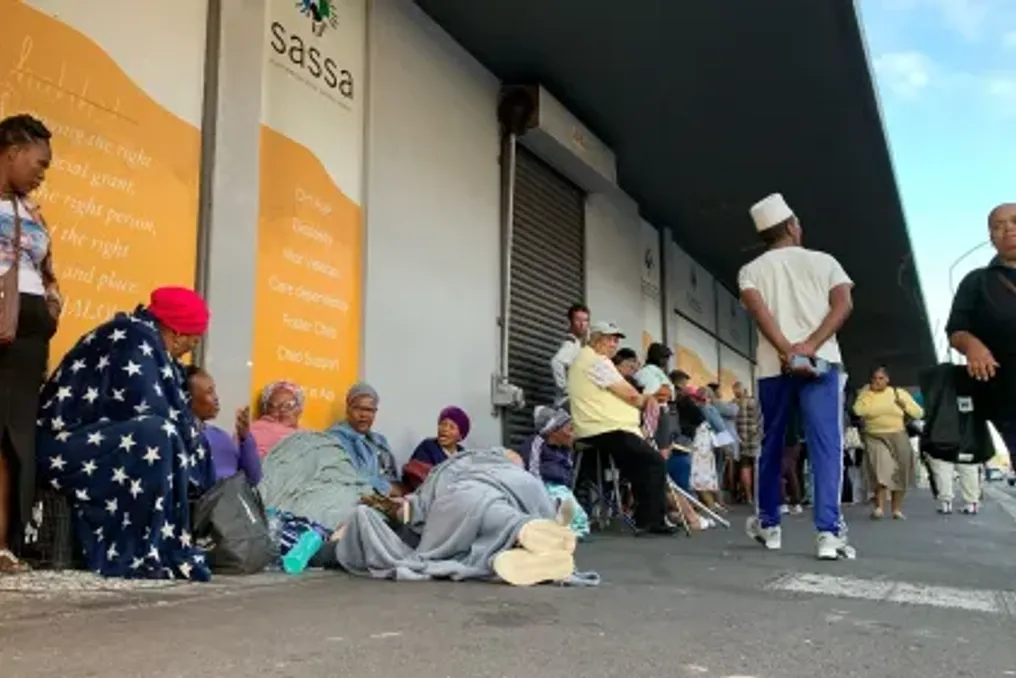
The verification process for social grants conducted by the South African Social Security Agency (Sassa) has caused anxiety among beneficiaries, leading to long queues and fears of losing essential income.
The verification process for social grants conducted by the South African Social Security Agency (Sassa) has caused anxiety among beneficiaries, leading to long queues and fears of losing essential income.
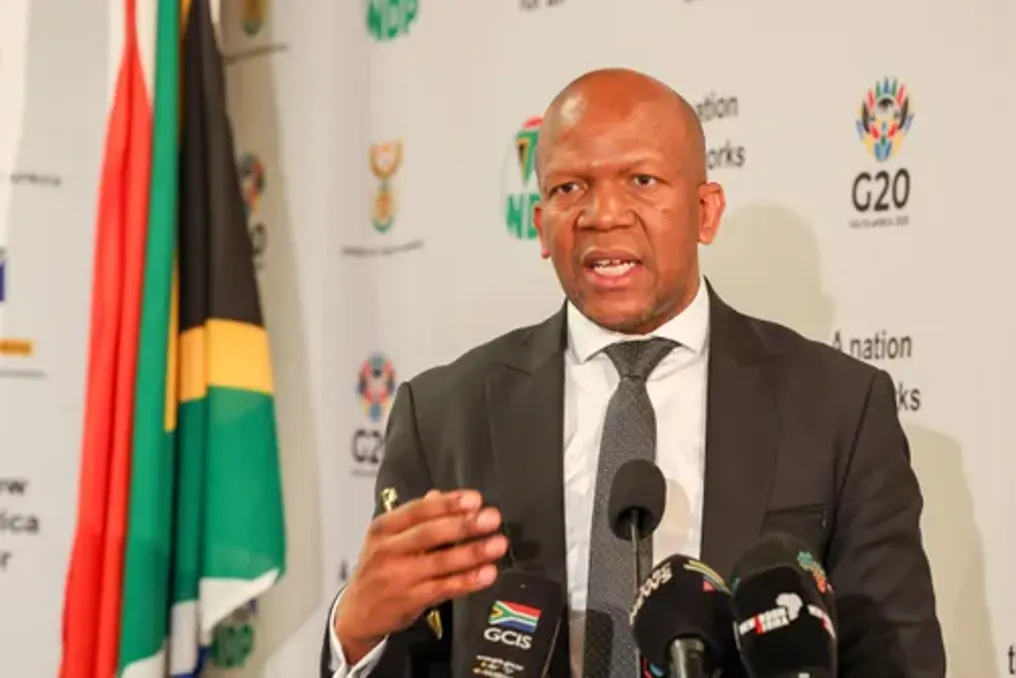
Thousands of recipients have been called in to confirm their eligibility for benefits. Minister of Social Development, Dineo Molefe, recently acknowledged the growing dissatisfaction among grant recipients. She described social grants as a 'lifeline' for millions of households, noting that the system has grown from serving 2.7 million beneficiaries in 1994 to approximately 19 million currently.
The Minister emphasized that behind every grant payment is a human story—whether it is a grandmother caring for grandchildren, a child attending school, or a family finding stability during difficult times. She stated that the true meaning of social welfare lies in restoring dignity and empowering people.
Molefe explained that the review process is a legal requirement under the Social Assistance Act, aimed at ensuring that payments continue to go to those who meet the criteria. She clarified that the checks help ensure that beneficiaries continue to satisfy the requirements for receiving grants, and that changes in financial, medical, or personal circumstances are correctly reflected in their records.
The Minister added that simply put, the checks help ensure that the right person receives the correct grant at the right time. Thanks to improved data verification systems, Sassa was able to identify over 420,000 grants for review in the 2025/26 financial year. Over 240,000 checks were completed, while about 160,000 beneficiaries failed to attend the review.
For the 2026/27 financial year, Sassa plans to review over 350,000 grants, with the government forecasting savings of approximately 1.5 billion rand. Furthermore, Sassa is improving its online platforms, including WhatsApp and the Mobile App, to facilitate remote grant applications and the provision of other services.
Dineo Molefe announced that over 1,000 contract workers are being hired nationwide to provide additional on-site support, assist with beneficiary matters, process applications and reviews, and reduce waiting times at service centers. This also includes extending the operating hours of Sassa offices to serve a larger number of clients.
Meanwhile, over 280,000 Sassa beneficiaries who are still using gold cards must replace them with new Postbank black cards by August 31st.
Rajesh Ramanan, a community leader in the northern areas of Pietermaritzburg, noted that residents understand the need for accountability but fear that innocent beneficiaries may suffer. He stated: 'While I understand the need for accountability, 350,000 reviews in one year is a colossal task. For many in our community, the Sassa grant is the only income.'
He agreed with the necessity of combating fraud but insisted that this should not happen at the expense of vulnerable households. Ramanan expressed great concern about the impact on legitimate beneficiaries: the elderly, disabled, and single parents who depend on these funds for food and transport. He called for the process to be humane first and foremost, suggesting that a request for documents should be sent via letter instead.
He also asked the minister to urgently provide clear timelines for the start and completion of the reviews so that beneficiaries know what to expect. Ramanan called for improved communication, better-trained staff, and a 30-day grace period for submitting missing documents before benefits are suspended.
Dr. Jonathan Annipen, an IFP advisor in Ekurhuleni, supported the validity of the reviews to secure public funds but questioned how the current process accounts for the realities of poor South Africans. He warned that compliance requirements create a heavy burden for vulnerable people such as pensioners, people with disabilities, and the unemployed.
Annipen noted that the success of the program cannot be measured solely by the projected savings of 1.5 billion rand. He stressed the need to determine how this saving is achieved and whether legitimate beneficiaries are being unfairly excluded in the process.
Among his recommendations were expanding mobile outreach programs, establishing temporary review centers in communities, implementing appointment booking systems, and improving the use of existing government databases to reduce bureaucracy.
Shontel de Boer, a DA representative in KwaZulu-Natal for social development, stated that the reviews are necessary, but Sassa does not have sufficient capacity to implement them effectively. She pointed out that staff shortages and inadequate accommodation for the elderly and disabled contributed to the growing dissatisfaction.
De Boer reported alarming reports from beneficiaries whose grants have been interrupted, which seriously affects them as they have no money for food or medicine. She urged beneficiaries to voluntarily comply with the process and those fraudulently receiving grants to stop harming others.
Sham Maharaj, a community leader from Phoenix, emphasized the importance of social grants reaching those who genuinely qualify. He noted that it is critically important to strike a balance between protecting public funds and the constitutional obligation to protect vulnerable citizens. Among his main concerns are long queues, long waiting times, transport costs, confusion over documentation requirements, and the fear of benefit suspension without proper explanation.
The Chief Executive Officer of the South African Social Security Agency (SASSA), Themba Matlu, issued a statement to alleviate concerns among benefit recipients caused by the process of verifying social payments. He emphasized that this procedure is aimed at confirming compliance with criteria, not at automatically terminating benefits.
In his address to beneficiaries, Matlu stated that SASSA remains committed to ensuring that eligible recipients continue to receive their entitled social assistance while strengthening the integrity of the social benefits system.
He explained that recipients selected for verification should not panic, as it is a routine administrative process whose goal is to ensure that recipients still meet the requirements for receiving social assistance. Matlu stated: 'Selection for verification does not automatically mean you have lost your benefit. Verification is an important process through which SASSA checks whether the beneficiary continues to meet the requirements for receiving social assistance.'
These measures are being taken against the backdrop of increased public scrutiny over benefit administration and efforts to enhance compliance within the social assistance program. Matlu also noted that the agency is focused on modernizing its operations to improve service delivery to millions of recipients across the country.
As CEO, he called this task one of his main priorities, stating: 'We are working to modernize SASSA, improve our systems, expand digital services, and increase the efficiency of our offices.'
Furthermore, Matlu clarified that SASSA's mandate goes beyond simply disbursing benefits; it includes ensuring that services are provided with honesty and respect. He stressed: 'Our duty is not only to administer benefits but to do so with integrity, compassion, efficiency, and respect.'
Affirming his support for recipients, the CEO assured that dignity remains at the heart of the agency's work, adding: 'Do not panic, serving you with dignity is our top priority.'
Matlu urged recipients to cooperate with the agency in the process of improving the social assistance system, noting: 'Together we can build a social assistance system that is more responsive, reliable, and worthy of the people it serves.'