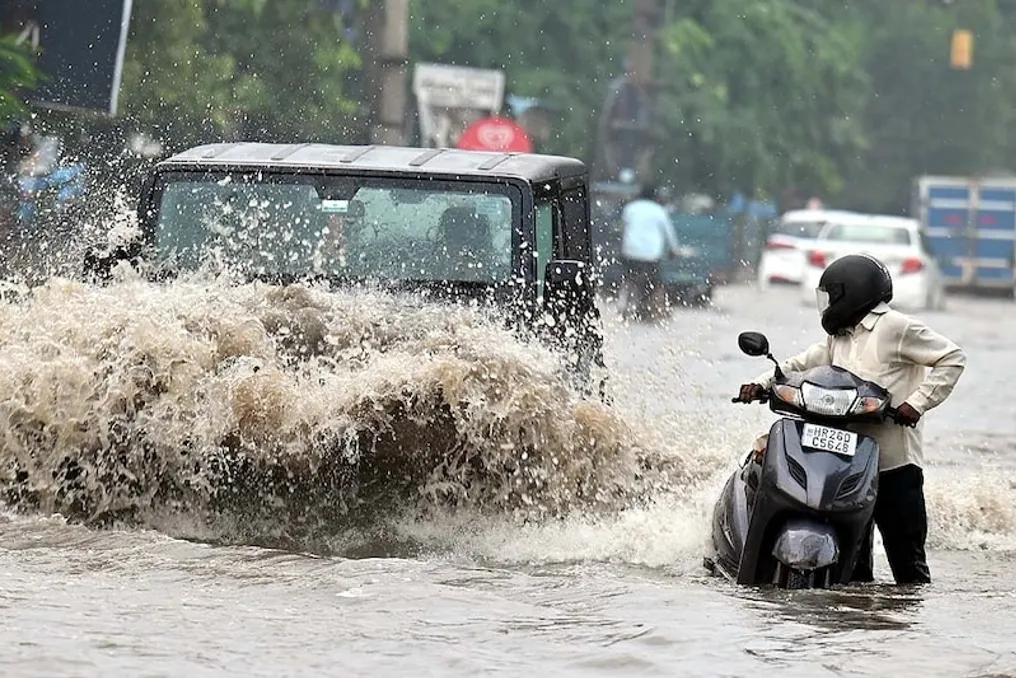
Rainfall across different parts of the country will vary in the remaining days of August. According to ECMWF forecasts for the period from August 14 to September 8, heavy precipitation is expected in several regions of Eastern India. At the same time, a decrease in rainfall is predicted in many areas of Western, Southern, and North-Western India.
This may affect territories such as Saurashtra-Kutch, Maharashtra, Telangana, Karnataka, Andhra Pradesh, Punjab, and Haryana. According to this forecast, good rains are expected in Jharkhand, Chhattisgarh, Odisha, and West Bengal for the rest of August. Precipitation corresponding to the average level for August is also possible in Madhya Pradesh.
In areas where rainfall has already been scarce, the lack of good precipitation in the near future could worsen the water deficit. Nevertheless, since this is a long-term meteorological forecast, further changes are possible.
Saurashtra-Kutch is already experiencing a rainfall deficit. If there is no heavy rain in the remaining days of August, the water shortage in the region may increase, and a drought-like situation could arise in some places. Therefore, the coming weeks are crucial for this region.
Attention should also be paid to Marathwada and Vidarbha in Maharashtra. The situation with rainfall recently improved here, but a renewed decrease in precipitation could lead some areas back to a state of moisture deficiency.
There are signs that several areas in Telangana, inland Karnataka, and Andhra Pradesh will also receive less rain. If low rainfall continues, it could affect agriculture and water supply.
The situation looks more favorable for Jharkhand, Chhattisgarh, Odisha, and West Bengal. In these states, the monsoon may remain active and bring good rains for the rest of August, which could partially compensate for previous rainfall deficits.
Madhya Pradesh is also expected to receive precipitation around the average level for August. However, there are concerns about reduced rainfall in East Uttar Pradesh and Bihar. Nevertheless, if the monsoon trough remains on the northern side in the second half of August, rains in these areas may intensify.
Based on this ECMWF forecast, it cannot yet be stated that the monsoon will leave the country after September 1. According to IMD data, the date of normal withdrawal of the monsoon from North-Western India is September 17. The monsoon is not considered returned before September 1.
The return of the monsoon is determined not only by the date; it also takes into account the continuous decrease in precipitation, reduction in air humidity, and other weather conditions. Currently, models indicate that the rainfall distribution across the country will be uneven for the rest of August: rains may be good in Eastern India, while a rainfall deficit may increase in several areas of Western and Southern India. The situation will become clearer with new updates from IMD in the coming days.