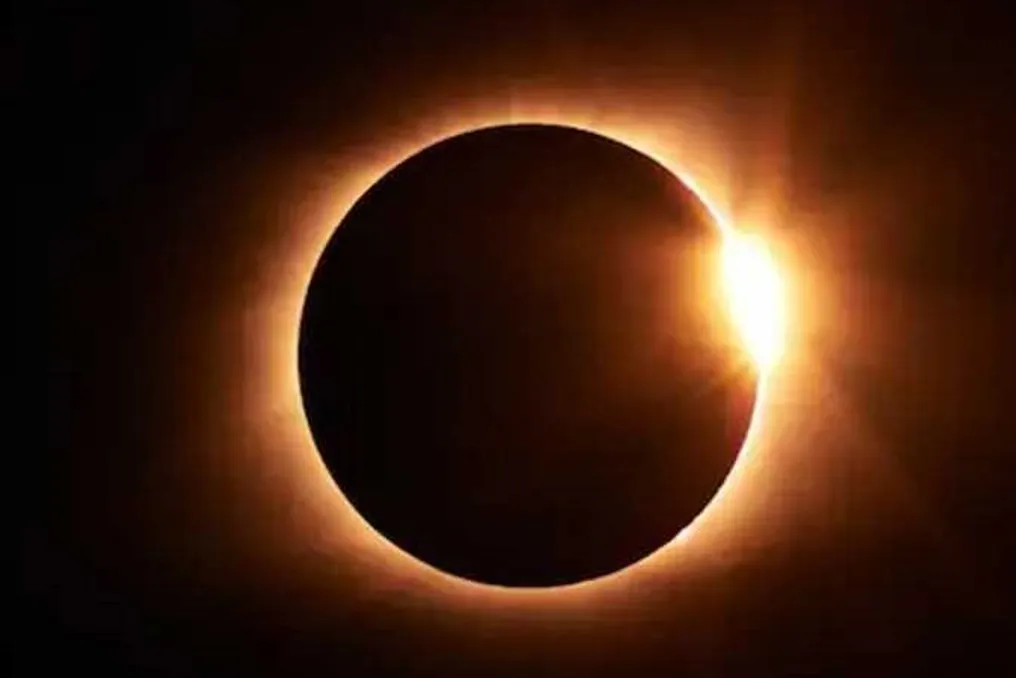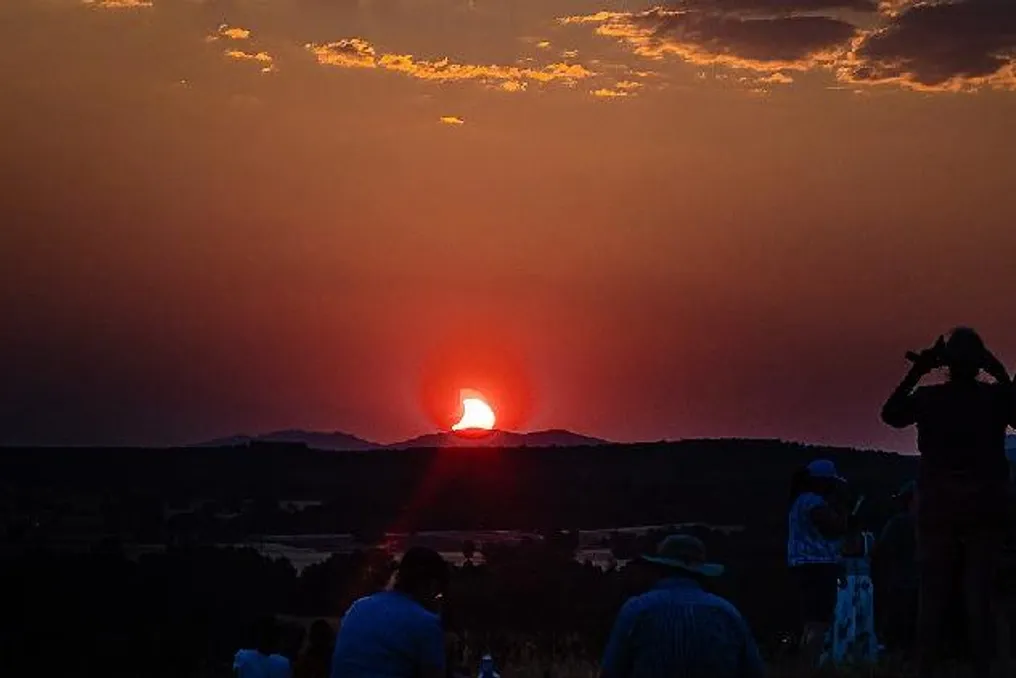
A rare total solar eclipse swept across Europe on Wednesday, gathering millions of viewers who came to witness one of nature's most impressive astronomical phenomena.
This was the first total solar eclipse visible in Europe in 27 years. The previous event took place in August 1999, when the eclipse crossed countries such as France, Germany, and Austria.
The trajectory of the total eclipse passed over Greenland, Iceland, Spain, and a small part of Portugal, before concluding over the Mediterranean Sea. During the total phase, when the Moon completely covered the Sun, daylight suddenly gave way to darkness, and the glowing corona of the Sun became visible. The period of complete darkness lasted for more than two minutes in some places.
Spain was one of the key destinations for eclipse enthusiasts, as the path of totality passed through the northern and central regions of the country before reaching the Balearic Islands. According to the country's National Geographic Institute, this was the first total solar eclipse observable from the Iberian Peninsula in over a century.
Observation events were organized throughout Spain, attracting local residents, tourists, and astronomy enthusiasts from all over the world. Nearly a hundred visitors gathered in Molina de Aragón, including travelers from Germany, Poland, and Italy. When the Moon covered the Sun, crowds greeted the moment with applause and recorded it with cameras and phones. After about 90 seconds, sunlight returned, and the viewers cheered approvingly.
In Madrid, observers described the experience as exceptional, spectacular, and unique. Many noted that the sharp transition from day to night seemed unreal to them.
Portugal also witnessed the eclipse, although only a narrow area in the northeastern municipality of Bragança fell within the path of totality. Local media reported that this was the first time since 1912 that a total solar eclipse could be observed in the country. Thousands of people gathered at Bragança airport, while residents of other cities, such as Lisbon, watched a partial eclipse, including the famous Belém Tower.
Iceland also provided an opportunity to see the total phase, despite the cloud cover; a break in the clouds allowed some viewers on the west coast to see the darkened sky. The sky became completely dark for approximately two minutes and 13 seconds, creating a dramatic impression for those who managed to see it.
On the same day, a partial solar eclipse was visible in places such as France, the United Kingdom, Germany, and Croatia, attracting a large number of viewers.
A solar eclipse occurs when the Moon is positioned between the Sun and the Earth. A total solar eclipse happens when these three bodies align perfectly, allowing the Moon to completely cover the Sun. A partial solar eclipse occurs when they are not perfectly aligned.
Special sunglasses are required for safe observation, as direct sunlight can damage the eyes. These glasses contain filters designed to block harmful solar radiation.
Beyond the visual spectacle, the eclipse offered valuable opportunities for scientific research. Teams supported by NASA planned to follow the Moon's shadow on high-altitude jets and scientific balloons to study the dynamics of the Sun and how the temporary darkening affects the Earth's atmosphere.