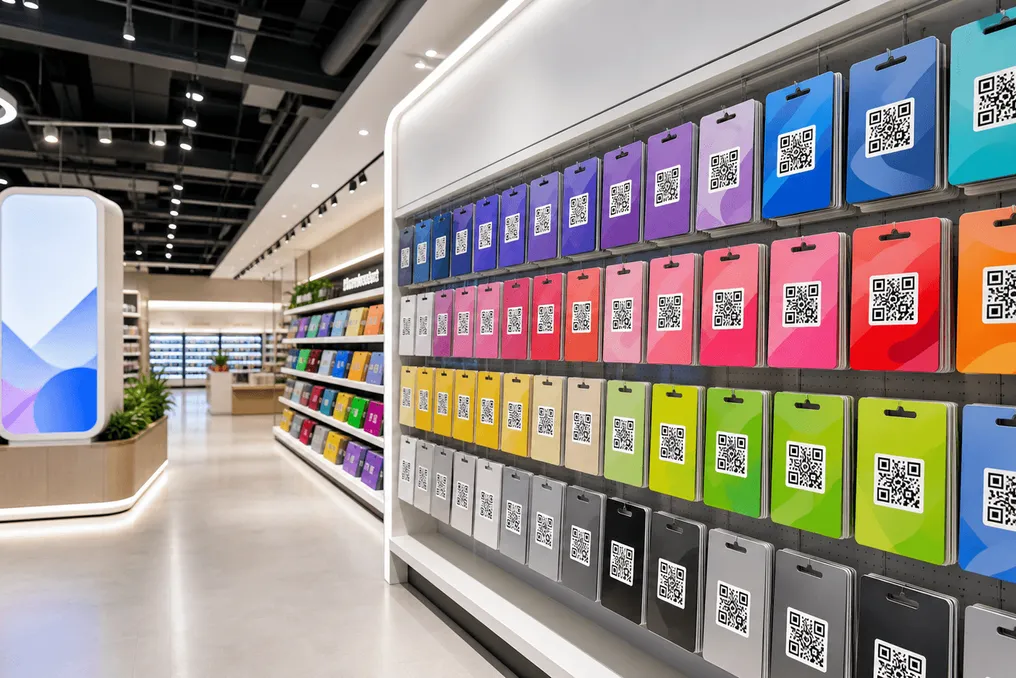
The Shenzhen Institute of Advanced Technology of the Chinese Academy of Sciences has introduced the country's first supermarket of technological achievements, which displays the results of deep research on shelves, similar to consumer goods. Over a thousand advanced developments are presented in colored sections classified by direction: blue for medical devices and scientific instruments, green for artificial intelligence and robotics, orange for advanced electronics and energy materials, and purple for synthetic biology.
Each technology is accompanied by a simple card with a unique QR code. Scanning this code allows users to learn about the technical advantages, application scenarios, and the type of suitable enterprise. Thus, entrepreneurs can obtain this card instead of studying extensive research archives independently.
This supermarket relies on an extensive supplier base, which includes 10 research institutes, 4 national key laboratories, and 2 national innovation centers, ensuring a constant replenishment of the assortment. The platform creates a direct bridge between technology-owning teams and companies needing modernization, forming a closed loop where enterprises state their problems, and science provides solutions.
Lin Zhanbin, Secretary of the Party and Vice President of SIAT, characterized this system as demand-driven scientific innovation. Statistical data demonstrates its effectiveness: since its launch in 2025, the supermarket has accumulated 18,500 patent applications, and the average conversion rate of SIAT's scientific achievements in 2025 exceeded 29%. Thanks to this supermarket, the percentage of successful technology matching has increased by approximately 10–20 percentage points, and signed corporate contracts have reached nearly 250 million yuan.
According to Huang Xiaohua, Deputy Executive Director of SIAT's Industrial Development Center, over the past five years, the average buyer concluded a cooperation agreement with SIAT daily, with the average value of such contracts being about 1.4 million yuan.
The model demonstrated its viability through the example of Shanghai Aipu Medical, which had long been treating pain and seeking a breakthrough in non-invasive deep brain stimulation. In 2025, this company found a match with SIAT's non-invasive brain modulation technology in the supermarket. At the beginning of 2026, both parties formed a joint brain-computer interface team aimed at stimulation via temporal interference. This method provides targeted deep brain stimulation using two high-frequency currents without the need for skull surgery, holding potential applications for epilepsy, Parkinson's disease, Alzheimer's disease, and mood disorders.
The supermarket model is actively spreading. In addition to Shenzhen, similar achievement supermarkets or technology service supermarkets operate in Zhuhai and Jianmen in Guangdong province, Quanzhou in Hunan, Nindai in Fujian, Wenzhou in Zhejiang, Wuhan in Hubei, and Ordos in Inner Mongolia; various versions of this system have been launched in more than ten cities.
In Jianmen, there is a special zone featuring 216 SIAT achievements, forming the Shenzhen R&D corridor plus Jianmen production. There, a local computer company signed a contract for anti-counterfeiting ink technology intended for mass production over several months. In Quanzhou, the technology service supermarket integrates university laboratories, large precision equipment, and scientific personnel, helping a local new energy company find common testing equipment in just three days and avoid multi-million yuan equipment purchase costs.