Initially, in 2017, the idea of 'gentrification' of Akkurganskaya Street (formerly known as Novomoskovskaya) in Tashkent was discussed as part of the 'My City' pilot project. The goal was to make the street more attractive for investment and increase real estate value by creating pedestrian and bicycle infrastructure, which was intended to attract artisanal coffee shops, restaurants, galleries, and theater studios into a comfortable environment.
Similar stories
Popular
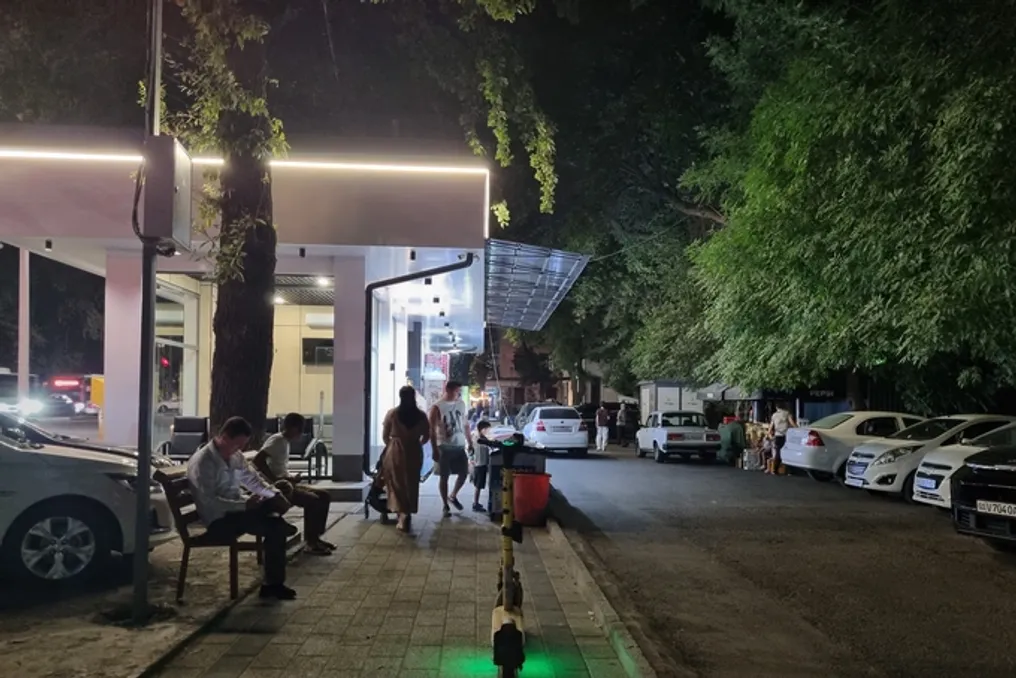
Almost nine years have passed since the discussion. Although many establishments and shops have appeared on Akkurganskaya, and some old trees retain a pleasant appearance, the street has not turned into a comfortable place for walking; instead, it is gradually losing its status as a pedestrian zone. The main reason for this phenomenon, as in many other parts of Tashkent, is the inability to prioritize human care in urban management at all levels.
Features of Akkurganskaya Street
Akkurganskaya was developed in stages. The earliest structure, according to data from the Age Tashkent project, dates back to 1936 and is located at the very end of the street. This is followed by buildings in the 'Stalinist' style from the 1950s and early 1960s, and houses closer to Mustakillik Avenue (formerly Pushkinsky) appeared mainly in the 1970s.
Tashkent's 'Stalinist' buildings, characterized by brickwork, thick walls, high ceilings, and spacious apartments, are popular among both local residents and businesses. Despite the fact that later buildings on Akkurganskaya have lost their 'Stalinist Empire' decorative elements, opening a business in a historic building near the center remains attractive. Most ground-floor apartments are occupied by commercial premises—shops and offices—while residential apartments are few.
From the 1970s, a tram line ran along Akkurganskaya, which was closed in 2008. After the removal of the rails, the freed-up lanes were allocated for vehicle traffic. It was the elimination of the tram route that allowed this relatively short street, one kilometer long, to have an unusually wide coverage—eight lanes.
Sidewalk Destruction: From Breakage to Waiting
Despite the presence of many mature trees with sprawling canopies on the street, walking under them is becoming increasingly difficult and even dangerous due to the increase in the number of cars. This year, the situation reached a critical point: a significant section of the sidewalk on Akkurganskaya was deliberately destroyed.
The sidewalk near house No. 21A was in acceptable condition, allowing pedestrians and wheelchair users to move freely during the day and evening. However, in mid-May, special equipment, specifically an excavator, began breaking up the old dense asphalt, raising a large amount of dust. Residents and local entrepreneurs received no explanation regarding the reasons for the work or the completion deadlines. A temporary passage was also not organized.
Since then, pieces of broken asphalt, large gravel, and stones have accumulated in the place of the sidewalk, and in dry weather, a light wind lifts clouds of dry clay. Entrepreneurs who rely on pedestrian traffic note a decrease in customers.
A correspondent from 'Gazeta' sent an inquiry through the Xalq Nazorati service to find out the reason and timeline for sidewalk restoration. In July, the application chat reported that the issue would be 'positively resolved' by the Hokim of the Mirzo-Ulugbek district within the framework of a comprehensive program for the improvement and landscaping of mahallas between 2026 and 2027, by the end of the second quarter of 2027. Other citizens who inquired about similar issues received a response about the temporary lack of funds for repairs.
Thus, the sidewalk was intentionally destroyed, and local residents are instructed to wait for more than a year for its restoration. During this time, dust will spread by the wind, entering windows and lungs, and precipitation will render the pedestrian area completely impassable. Questions arise about the advisability of destroying the sidewalk without a preliminary project and funding, as well as the logic of imposing costs on those who made such a decision. Such cases demonstrate a clear disregard for citizens' interests in other districts of Tashkent.
Parking Problem on Sidewalks
The problem of parking on sidewalks, common throughout Tashkent, has also affected Akkurganskaya Street. The situation is most noticeable near the 'Yoshlik' stadium (formerly 'Start'), where cars park both along the curb and directly on the sidewalk. The presence of 'parkers' who organize parking and charge fees indicates the organized nature of this parking.
Access to this parking lot is gained directly through the pedestrian crossing at the intersection of Akkurgansk and Osiyo streets. This forces pedestrians waiting for the green light to step aside in front of a car moving across the crosswalk directly toward them to enter the sidewalk. Moreover, after the recent modernization of traffic lights at this intersection, the pedestrian signal was installed not at the edge of the roadway but behind the sidewalk. This creates the impression that the space between the road and the traffic light is a parking zone, although in fact, it is a sidewalk intended for the safe waiting of pedestrians.
'Gazeta's' correspondent notified the bot of the Traffic Organization Center (TOCD) in May about this problem, requesting the relocation of the traffic light to the beginning of the crossing, fencing off the sidewalk from parking, and separating the 'zebra' stripes from car entry. No response was received to this appeal.
The sidewalk near the stadium is wide enough to create a full public space in the shade of the trees, rather than just an open area in front of the stadium. However, most of this area is occupied by cars, leaving pedestrians with only a narrow path about 1.5 meters wide. This narrow strip is sometimes used to place ice cream coolers, and sometimes for parking cars. Charging stations for electric vehicles are also installed in the area occupied by cars, but this does not make the sidewalk a legal parking area.
A similar situation is observed across the street, from the intersection of Akkurganskaya and Osiyo to Mustakillik Avenue. Cars periodically occupy the sidewalk, which also functions as a bus stop. The situation has slightly improved after one of the shops installed barriers preventing cars from entering the sidewalk, while organizers painted a 'pedestrian crossing' along the sidewalk, i.e., where it is already intended for pedestrians.
However, people's safety cannot depend on the initiative of a single business. A unified engineering solution is needed to organize the entire Akkurganskaya sidewalk, free from traffic, rather than an isolated island near one shop. Further down the street, the sidewalk is regularly occupied by cars belonging to visitors and employees of cafes, pharmacies, and shops. The situation is particularly difficult near the entrance to the residential block, where cars are often parked in several rows, completely blocking the passage along the sidewalk, forcing pedestrians, including those with strollers, to squeeze between the cars.
How It Should Be
Any urban project must prioritize the interests of residents over drivers, since every driver is a pedestrian before and after driving. International recommendations for designing urban streets suggest physically separating the pedestrian zone and the roadway using curbs, bollards, trees, and paving stones.
Such elements do not require convincing motorists; they physically exclude the possibility of driving onto the sidewalk while ensuring a continuous and accessible passage for people. Such solutions can be implemented with minimal cost, without the need for a complete reconstruction of the street. As noted by the National Association of City Transportation Officials (NACTO), well-designed streets contribute to increased business revenue because they function not only as transport arteries but also as public spaces, transit points, and places for potential customers to linger.
Although commercial development does add extra value to the street and increases the demand for parking spaces, satisfying this demand at the expense of pedestrians is unacceptable. Akkurganskaya has a sufficiently wide roadway, which allows for the option of organizing paid parking along the curbs, based on the experience of Poytaxt Parking.
The main principle is that sidewalks must be safe and well-maintained, and they must belong to pedestrians on Akkurganskaya, as well as throughout the city and country, without any compromises.
Mayor's Comment
The Tashkent Mayor's Office informed 'Gazeta' that the sidewalk destruction was related to laying an electrical power cable, and repairs are planned for the coming weeks. A budget has been allocated for the reconstruction of the street for the period 2026–2027 to create conditions for pedestrians, and the project will be presented to local residents for review.
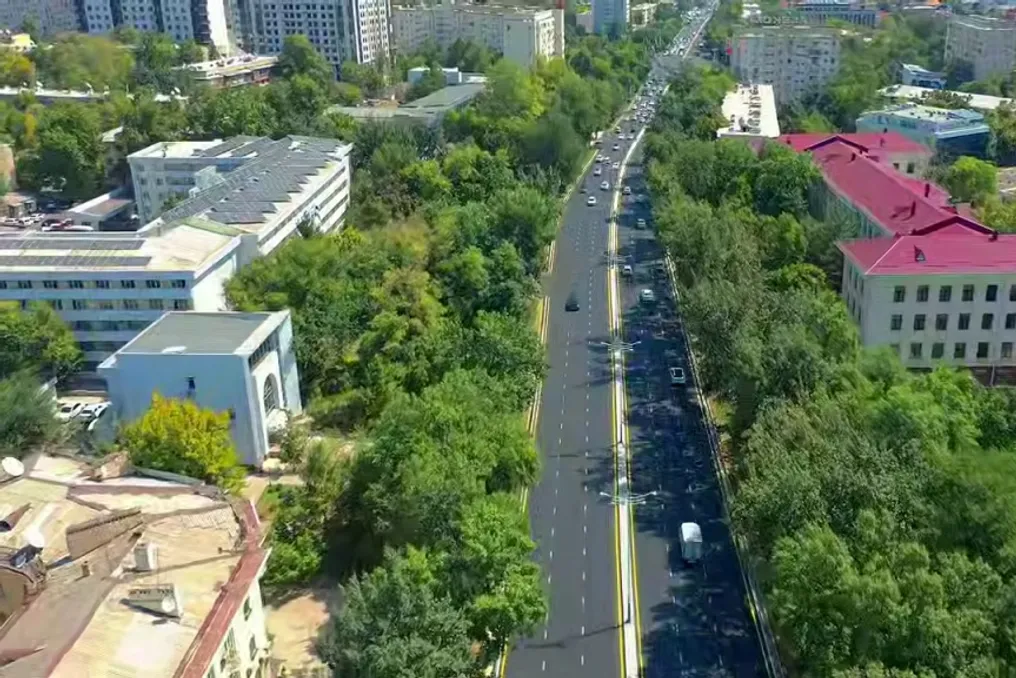
A large-scale reconstruction project has been completed on a 1.7-kilometer section of Mustaqillik Avenue in Uzbekistan. The work included updating numerous infrastructure elements, such as asphalt, sidewalks, drainage systems, traffic lights, bus stops, and the creation of new green areas. This avenue is now ready for use in its renovated form.
The road surfacing work covered an area of over 46 thousand square meters. The process began with the complete milling of the old asphalt, followed by strengthening the base. Subsequently, a 9-centimeter layer of coarse-grained asphalt concrete was laid. To ensure additional strength between the layers of the road surface, a basalt geogrid covering nearly 58 thousand square meters was used. The final layer was a 5-centimeter thick polymer-gravel-mastice asphalt concrete (PSHMA-20), which also covered 46 thousand square meters, after which new road markings were applied.
Changes also affected traffic organization: new traffic lights have been installed on this section, and intersection regulation has been modernized. Six modern bus stops were equipped for public transport users.
Underground and pedestrian improvements
A separate complex of work was carried out underground to improve the rainwater and sewage drainage system. 1.8 thousand meters of existing drainage troughs were replaced, and 1.6 thousand meters were added where none previously existed. Additionally, a line of 111 linear meters of metal pipes was laid, and the existing system was updated over 500 meters.
Special paths and crossings were established for pedestrians, and a curb measuring 3.4 thousand meters was installed. Furthermore, 1.7 thousand meters of pipes for the irrigation system were laid, and green spaces were landscaped along the street.
As a result of all the transformations, Mustaqillik Avenue has been transformed into a modern city thoroughfare, equipped with a new road, convenient stops, landscaped sidewalks, and green zones. Previously, the traffic light at the intersection of Fitrat and Gaidar Aliyev streets was reconfigured, which allowed for an increased duration of the 'green' signal.
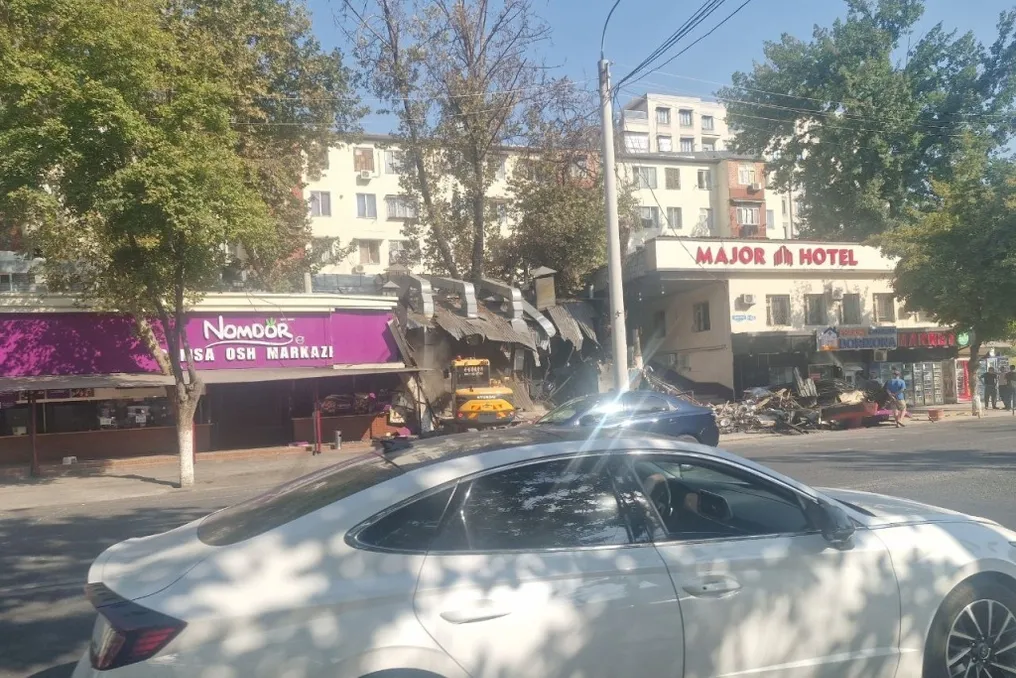
Videos showing the dismantling of trade objects on Katartal Street in the Chilkazar district of Tashkent circulated on social media. These footage prompted questions among local residents, to which the district hokimiyat provided explanations regarding which specific objects were demolished and the reasons for these works.
According to information provided by the district hokimiyat press service, the structures were built on sidewalks and along the road surface without the required permits. The administration clarified that the goal of these measures is to free up the pedestrian zone near the Katartal market, as a large number of illegal constructions created obstacles for pedestrian movement.
Comments on the demolition of the 'Nomdor' cafe
Furthermore, the hokimiyat commented on the demolition of the 'Nomdor' cafe. Authorities reported that the dismantling began based on a court decision because this establishment was built without appropriate permits. The owner of the object was offered the opportunity to consider relocating their business to another location compliant with the law, and employees were promised assistance in finding new jobs.
The administration also emphasized that all entrepreneurs are obliged to obtain the necessary permits before starting construction of any objects. If this requirement is not met, such structures may be demolished by court order.
There was also previous information about planned repair and improvement works at the Sergeli automotive market in Tashkent. The capital authorities denied rumors about the possible demolition of this market.