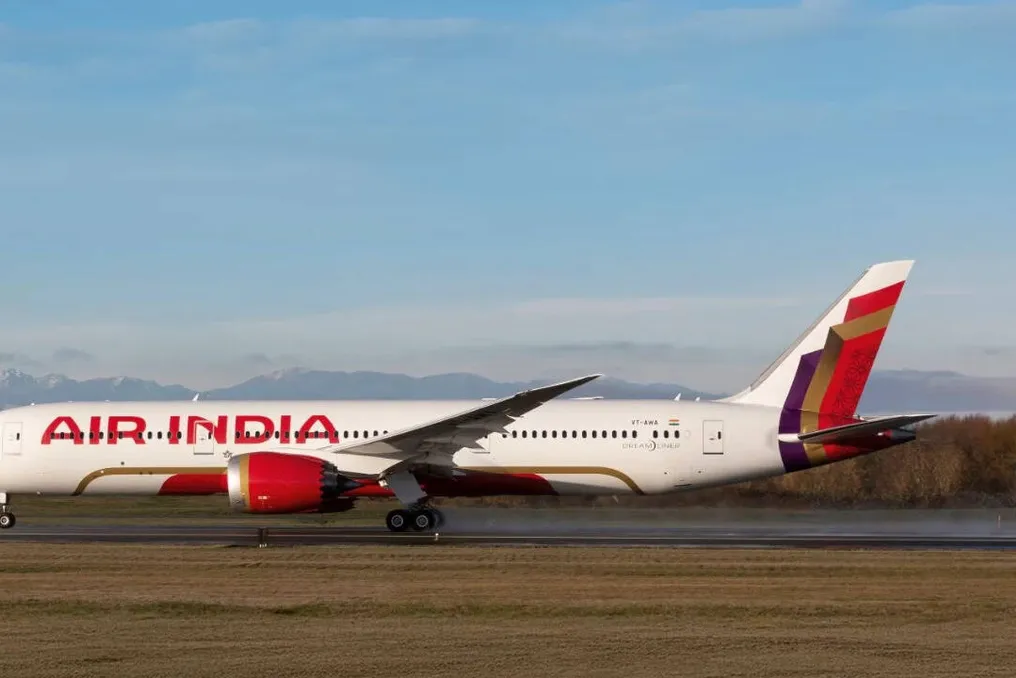
Since Thursday, over 5000 pilots from Air India and Air India Express have begun undergoing 'mandatory substance screening'. The airline has taken this step with the aim of 'protecting and maintaining' passenger trust.
Since Thursday, over 5000 pilots from Air India and Air India Express have begun undergoing 'mandatory substance screening'. The airline has taken this step with the aim of 'protecting and maintaining' passenger trust.
Passenger trust suffered after the accident in Ahmedabad last June and was slowly recovering, but it was shaken again after the crew commander of a flight from Phuket to Delhi on August 4 failed a drug test.
Following this large-scale one-time check, AI will conduct tests in accordance with regulatory requirements, which currently mandate testing at least 10% of the crew annually. The DGCA is reviewing its rules and may introduce stricter consequences for those who test positive due to addiction issues, as well as adopt a different approach to those who test positive after taking medication for pain, allergies, and other ailments.
The Senior Vice President of AI for Flight Operations, Captain Manish Uppal, wrote to all pilots on Thursday, emphasizing that AI has 'earned the trust of millions of passengers and the general public' over decades: '...This trust is our most important asset, and it is vital that we do everything possible to protect and preserve it.'
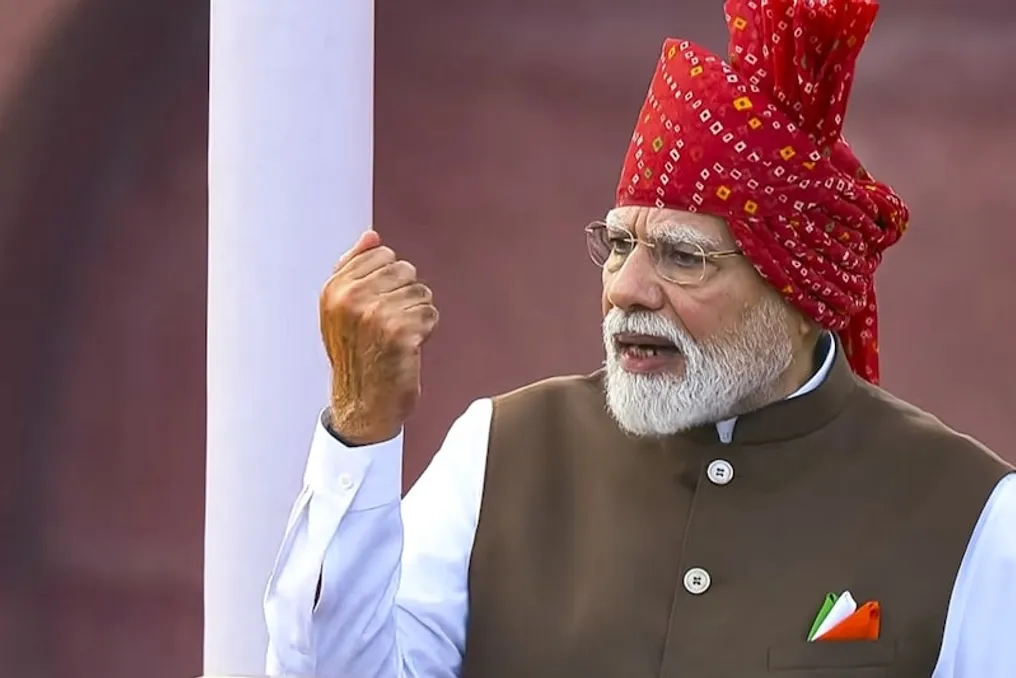
During the Independence Day celebrations, addressing the Red Fort podium, Prime Minister Narendra Modi mentioned the concept of 'Seven Streams of Power' (Saptadhara) in the context of India's economic growth. He emphasized that the time is not for slowing down but for changing the pace of work by rethinking approaches. According to him, what took seventy years to achieve must be accomplished in seven years.
The 'Seven Streams of Power' concept includes areas such as Manufacturing, Food Processing, Digital Innovation, and Green-Blue Economy.
In Narendra Modi's view, the first pillar of this concept is the country's manufacturing potential. It is necessary to become highly competitive globally in terms of quality, scale, and cost to meet global standards. The Prime Minister stated that the country should present itself to the world as a reliable partner in the global supply chain, covering processes from design to production, which requires achieving world standards in cost, quality, and scale.
Regarding the second element, PM Narendra Modi noted that it is related to agriculture and the food industry. The goal is to make Indian products a global brand by boosting agriculture and food processing. He added that world markets are opening up to Indian farmers, and through Free Trade Agreements (FTAs), various Indian products, from spices to bajra, gain access to new large markets. India must ensure direct movement of produce from farm to export market.
The third strength, according to Prime Minister Modi's presentation, is technological innovation. He highlighted the need for digital and communication technologies, noting that today is the era of robotics, artificial intelligence, quantum technologies, space, and data centers. India needs to become a global hub for innovation. The Prime Minister mentioned India's growing successes and experience in UPI and Digital Public Infrastructure (DPI), stating that the goal should be to disseminate such technological solutions to other countries worldwide, as well as advance India in next-generation communication technologies.
The fourth strength, pointed out by PM Modi, is 'Gati-Shakti'. He stressed the need for rapid and unimpeded development in the coming years. This includes the necessity for high-speed rail connections, modern highways, inland waterways, airports, and multimodal logistics hubs. He also emphasized the importance of port-led development, which will give an impetus to the pace of development.
The fifth element of the 'Seven Streams of Power' is India's defense potential. Speaking from the Red Fort podium, PM Narendra Modi reported that defense sector production has increased by approximately four times in the last 12 years, and the focus remains on self-reliance in defense. He stressed that the country's defense sector should not remain merely a market but should become a major supplier of defense goods. The Prime Minister insisted on striving for global leadership in sectors ranging from next-generation technologies to hypersonic systems, as well as achieving self-sufficiency in defense production.
Narendra Modi's concept also includes the green and blue economy. He stated that the country possesses all the necessary resources to achieve this goal. He specifically highlighted the need for India to achieve global leadership in green hydrogen, renewable energy, and energy storage. Regarding the blue economy, he noted that the fisheries, coastal tourism, and ocean technology sectors can become new avenues for growth for India.
The seventh stream of 'Seven Streams of Power' is India's soft power, which includes yoga, Ayurveda, holistic healthcare, creative resources, and tourism, on which attention must be focused. Prime Minister Modi noted that yoga has helped connect the entire world with India, and Yoga is becoming a source of energy for the whole world.
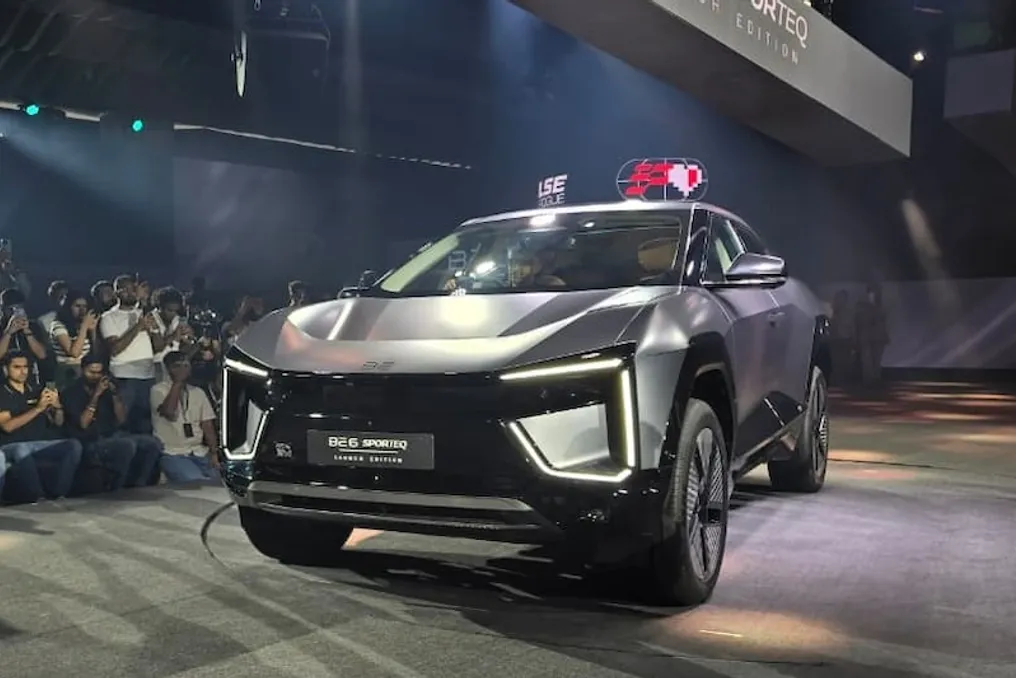
Mahindra has introduced its powerful SUV model—the Mahindra BE 6 Sporteq Edition. This version is the flagship product of the BE 6 lineup and features an updated dashboard design, a three-screen configuration, new connectivity features, and a refreshed interior.
The existing powertrain options are retained in this model. The Sporteq Edition will be priced higher than the standard BE 6. Currently, the vehicle starts from 18.90 lakh rupees, including export duties, and reaches 26.90 lakh rupees, including export duties.
The BE 6 is a coupe-style crossover, and Mahindra has not made changes to the overall design in the Sporteq Edition. The car is equipped with LED lighting, sharp body lines, 'flush' door handles, and 20-inch alloy wheels. The main difference lies in the application of the Sporteq emblem on the vehicle.
The most significant changes concern the interior. In the Sporteq Edition, the dual-screen system has been replaced by a triple-screen system, which includes three 12.3-inch screens. This configuration was previously seen in the XEV 9E and XEV 9S models. Furthermore, the dashboard has been completely redesigned.
The new dashboard offers improved access to USB Type-C ports and wireless charging support, as well as additional storage space. The interior is finished in a combination of black and taupe colors, and the upholstery has been updated. The BE 6 SportEQ offers a range of new connectivity features.
Mahindra has introduced six new TEQ technology packages that provide personalization, connectivity, and vehicle operation-based functions. Additionally, the SUV is equipped with a panoramic glass roof, a Harman Kardon audio system, ventilated front seats, dual-zone climate control, wireless Apple CarPlay and Android Auto support, a 360-degree view camera, an ADAS system, and multiple driving modes.
The Mahindra BE 6 Sporteq uses the same electric powertrain as the current model. The vehicle comes with 59 kWh and 79 kWh batteries and features a rear-mounted electric motor. This car is capable of producing 286 hp and 380 Nm of torque. The claimed range with the larger battery is 682 kilometers. There have also been no changes to the charging options.