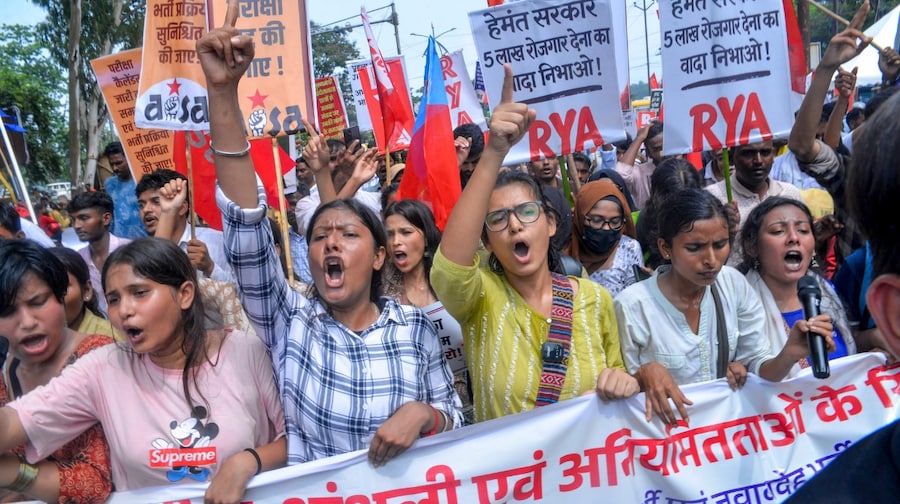
Prior to the visit of the Chief of Army Staff of the Indian Army, General Diraj Seth, former Gurkha soldiers and their supporters held a protest in Pokhara, Nepal. Their main demand is the resumption of recruitment of Nepali youth into the Indian Army under the 'Agnipath' program.
Nepali citizens served in the British Indian Army and the Indian Army after India gained independence, but the recruitment of Nepali youth was suspended in 2020. According to the Nepali news portal Ratopati, the demonstration took place on Wednesday, August 12, and was organized by the Indian Ex-Military Gurkha Brigade in Pokhara.
The group submitted a bilateral petition to the federal government through the District Administration office. The document contains a demand to immediately resume recruitment and also to extend the registration of former servicemen associated with the word 'soldier'.
The Chairman of the Gurkha Brigade, Lieutenant Colonel Krishna Bahadur Khatri, told Ratopati that the recruitment of Nepali youth into the Indian Army had been ongoing for 207 years since the Sugauli Treaty. However, after the introduction of the 'Agnipath' program, the Nepali government denied this opportunity to Nepali youth, citing various reasons. He emphasized that the halt in recruitment deprived Nepali youth of employment opportunities and jeopardized the long-standing tradition of Gurkha soldiers.
The petition notes that young people earn about 45–50 million rupees over a four-year service period in Agniveer and receive various benefits. This profession is significantly better than working for minimum wage in 50-degree heat in the Gulf countries. The Nepali government had previously expressed uncertainty regarding this issue.
India launched the 'Agnipath' program in 2022, under which Agniveers serve for four years, and a maximum of 25 percent of them can be directed to long-term service. The Indian armed forces insist on increasing this retention percentage. The recruitment suspension occurred in 2020 due to the COVID-19 pandemic. Later, after the implementation of the 'Agnipath' program, the Nepali government refused permission for the recruitment of Gurkha soldiers, citing a lack of clarity regarding the future of youth after the four-year service period. Former Chief of Defence Staff General Anil Chauhan also stated that the decision must now be made in Kathmandu, as separate plans cannot exist for Nepali and Indian citizens.
According to available information, the Chief of Army Staff of the Indian Army, General Diraj Seth, will visit Nepal for five days starting August 16. During this visit, in accordance with the long-standing tradition between the two armies, President Ramchandra Paudel will confer the honorary title of 'General of the Nepali Army' upon General Seth.
According to The Kathmandu Post, there is a possibility that an official meeting with Prime Minister Balendra Shah will take place during General Seth's visit. The Kathmandu Post, citing Brigadier General Rajaram Basnet of the Nepali Army, noted: 'When a new Chief of Staff takes office in any country, there is a tradition of conducting high-level visits during which both chiefs are awarded the honorary title of general.'
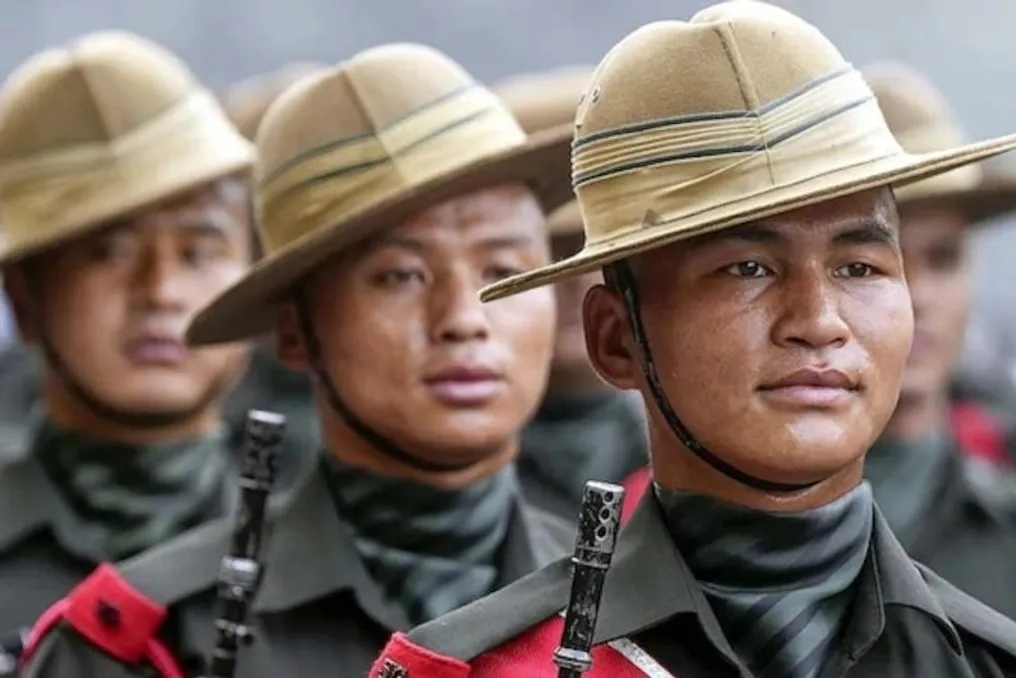
The history of Nepali Gurkha soldiers dates back to 1815, when the East India Company began recruiting them after the Anglo-Nepalese War. In 1947, six Gurkha regiments became part of the Indian Army under a tripartite agreement between India, Britain, and Nepal. The former soldiers protesting in Pokhara warned that if their demands for the resumption of recruitment into the Indian Army are not met soon, they will intensify their protests.
Former Chief of Defence Staff (CDS) General Anil Chauhan told The Print on August 3 that the responsibility for deciding the deployment of their soldiers to serve in the Indian Army under the 'Agnipath' program now lies with Kathmandu. General Chauhan (retired) also stressed that there cannot be a separate program for Nepali citizens and another for Indian citizens. It should be noted that General Chauhan and his predecessor, the late General Bipin Rawat, began their military careers in the 11th Gurkha Infantry Regiment.