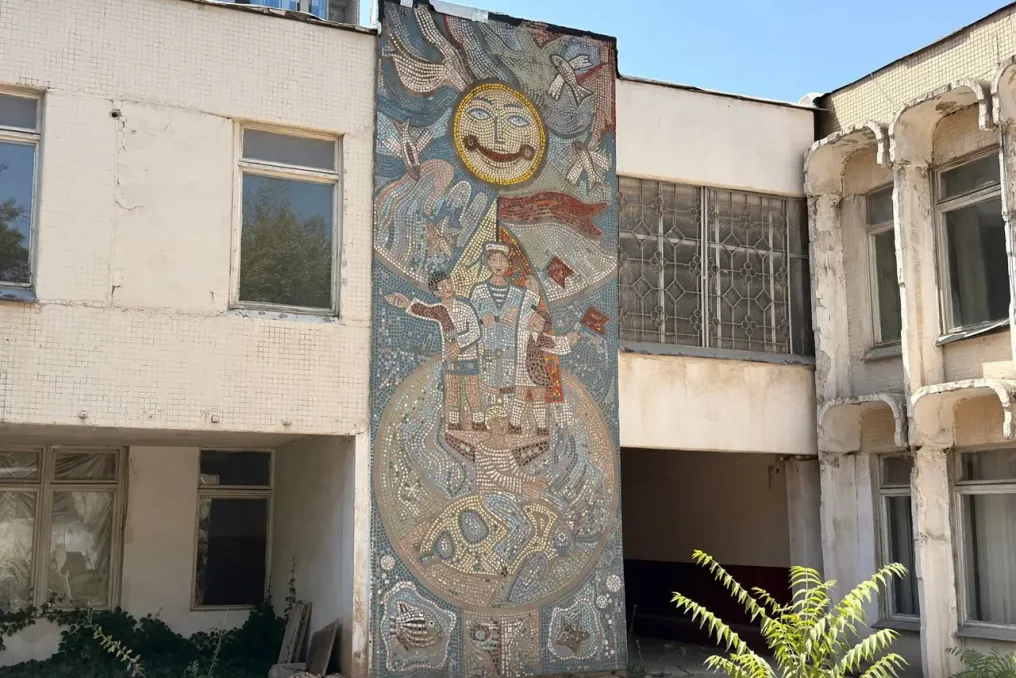
Work has started in the Yunusabad district of Tashkent to carefully dismantle and relocate rare mosaic compositions located on the exterior walls of a former tuberculosis dispensary.
Work has started in the Yunusabad district of Tashkent to carefully dismantle and relocate rare mosaic compositions located on the exterior walls of a former tuberculosis dispensary.
These mosaics are located at the address: Niyozbek Yuli street, 3rd passage, house 6, and are being considered by the Cultural Heritage Agency as potential candidates for inclusion in the National Register of Intangible Cultural Heritage Objects.
The former tuberculosis dispensary was built in 1972. Due to planned demolition work on the facility, it was decided to move the mosaic compositions to another location to preserve their historical and artistic value, as well as their integrity.
According to the Cultural Heritage Agency, these mosaics represent rare examples of monumental art from the second half of the 20th century. Their artistic significance is determined by the features of the composition, the use of color, and the themes.
The mosaics depict themes such as people, nature, labor, creation, science, and peace. Colored smalt and other mosaic elements were used to create these images.
The relocation of the compositions aims to preserve them as examples of monumental art from that era and ensure they can be passed on to future generations.
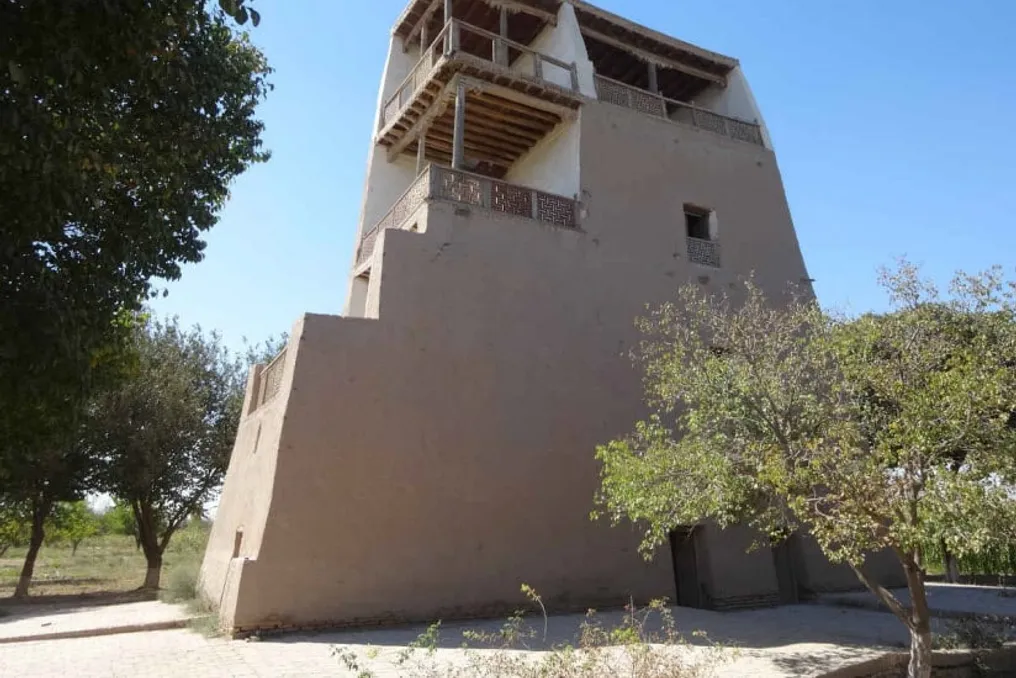
The Cultural Heritage Agency issued a comment regarding information circulating on social media concerning the condition of the historical site 'Chodra Hovli'.
This monument is located in the Khiv district of the Khorezm region of Uzbekistan. The agency clarified that extensive restoration work was carried out on the site from 2022 to 2023 to preserve its historical and architectural appearance.
The restoration project was implemented by the Khiv Regional Restoration Center under the commission of the Cultural Heritage Agency and was financed by state budget funds.
As part of the work, specialists repaired and reinforced the aiwans and stairs, and covered the exterior walls with adobe plaster, while the interior surfaces were finished with ganch. During the restoration, maximum deviation from modern construction methods was avoided, strictly adhering to the traditional architectural style.
In addition, the complex's territory was landscaped, including the laying of pedestrian paths and the installation of a night lighting system.
Currently, this site is under official state protection, and plans include further development of tourist infrastructure in its vicinity. It should be noted that the historical complex was built in 1871 and served as the summer residence of the Khivan Khans. The name 'Chodra' has Persian origins: it is derived from the word 'chordara', where 'chor' denotes the number four, and 'dara' denotes a steep depth.