Several innovative devices were launched or highlighted in August 2026, ranging from pet trackers to artificial intelligence peripherals and virtual reality equipment.
Several innovative devices were launched or highlighted in August 2026, ranging from pet trackers to artificial intelligence peripherals and virtual reality equipment.
The Fi Ultra locator represents a significant advancement, being the first device capable of establishing a direct connection with the Starlink satellite network. This allows dogs to be located anywhere, including in remote areas where cellular network coverage is nonexistent. This gadget weighs 68 grams, is water-resistant, and can be attached to any collar. Its rechargeable battery offers five days of autonomy. Currently, the use of this device is restricted to the United States, not functioning in other countries, even if Starlink signal is present. The cost of the device is US$ 219, plus an annual fee of US$ 189.
In response to the difficulties in sanitizing reusable bottles, which can accumulate contamination, a study conducted with metal bottles used by students at Purdue University in the USA revealed that 25% of them contained fecal bacteria. To solve this problem, Sans launched a model for US$ 80 that incorporates a UV-C lamp in the cap. By pressing a button, the feature is activated, eliminating 99.9% of microorganisms present in both the water and inside the bottle. The bottle weighs 316 grams, holds 500 ml, and uses a rechargeable battery lasting two weeks.
OpenAI acquired io Products, a company belonging to the British Jony Ive, who previously held the position of Vice President of Design at Apple and was instrumental in the development of iconic products such as the iMac, iPod, and iPhone. There are speculations that Ive and OpenAI are developing a new artificial intelligence-based artifact. However, the first piece of hardware launched by the company associated with ChatGPT is a compact keyboard called Codex Micro, sold for US$ 230. This keyboard was designed in collaboration with the design studio Work Louder and includes keys intended to operate Codex, an AI agent assisting in software writing.
Valve surprised the market by introducing the Steam Machine, a hybrid console and gaming PC, with a high price ranging between US$ 1,049 and US$ 1,428, depending on the chosen configuration. Subsequently, the company presented the Steam Frame, a virtual reality headset. This equipment can be used connected to a PC to run games from the Steam platform, or independently, as it has its own processor, a Snapdragon 8 Series, and 16 GB of RAM. However, due to the sharp increase in memory costs, Valve has postponed the launch of the Steam Frame and has not yet disclosed its final price.
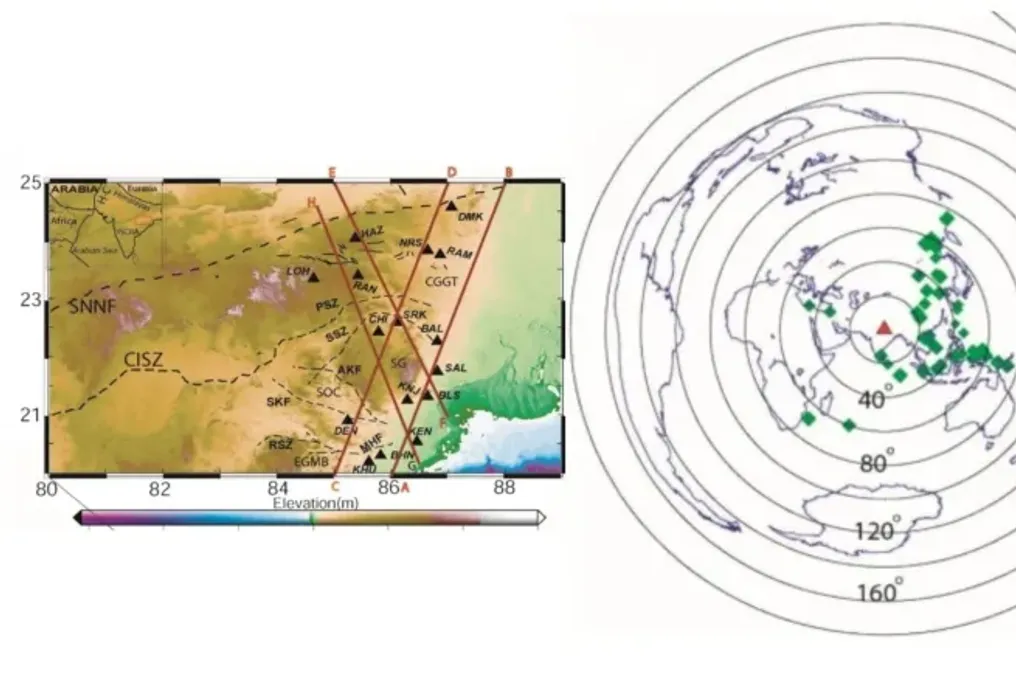
A new scientific study has provided the first detailed overview of the Earth's interior directly beneath the East Indian Craton—an ancient fragment of the Earth's crust that has remained stable for over three billion years. Using a network of 16 broadband seismic stations located in the states of Odisha and Jharkhand, Dr. Prantik Mandal from CSIR-National Geophysical Research Institute (CSIR-NGRI) in Hyderabad mapped the enigmatic region known as the Mantle Transition Zone (MTZ).
The results showed that this deep layer is about 235 kilometers thick and contains evidence of ancient water and reworked oceanic sediments, offering a rare insight into the planet's internal processes.
The Mantle Transition Zone functions as a key passage between the upper and lower mantle of the Earth, situated at depths of approximately 410 to 660 kilometers. To study these depths, Prantik applied the P-wave visualization method, which is similar to medical ultrasound. When earthquakes occur in other parts of the world, seismic waves pass through the Earth's interior. When these waves reach major boundaries, such as the upper or lower boundary of the transition zone, they change their speed and direction.
By recording 666 such wave transformations, Prantik was able to calculate the depth and composition of the structures beneath the East Indian Craton with unprecedented accuracy. At depths below the upper mantle, immense pressure and temperature cause changes in common elements and compounds. At the 410-kilometer mark, the mineral olivine transforms into a denser form called wadsleyite, and at 660 kilometers, it changes again into bridgmanite. The speed of seismic waves changes sharply at these points, creating discontinuities.
The study found that although the thickness of the MTZ under East India is close to the global average, there are significant low-velocity layers directly above these boundaries. These layers act as dampeners, reducing the speed of seismic waves, which strongly suggests either the presence of partially molten rock or water-saturated minerals.
From a geological perspective, the data obtained represents a time capsule. The study suggests that the transition zone under India contains 0.1 to 0.3 percent of water by weight. Although this may seem like a small amount, at these depths and on this scale, it represents a huge reservoir of volatiles. This water likely infiltrated the Earth's interior during the formation of the supercontinent Gondwana about 550 million years ago, or more recently during the ongoing collision of India and Asia, which led to the formation of the Himalayas.
Furthermore, evidence of stagnant material at the base of the zone indicates that remnants of ancient oceanic floors, submerged millions of years ago, are currently accumulating beneath the Indian Plate. By using a denser network of seismographs specifically in the Singbhum-Odisha region, this study provided the first detailed constraints on the deep structure of the East Indian Craton. This allowed the scientific discussion to shift from general assumptions to specific measurements of mantle temperature and chemistry variations in different parts of the country.
Nevertheless, the study also highlights the inherent difficulties of observing through hundreds of kilometers of solid rock. Prantik notes that while low-velocity layers are a compelling explanation for the data, they are not yet an absolute truth. Seismic velocity drops can also be explained by the alignment of minerals in the rock, a phenomenon known as anisotropy, or potentially artifacts created during complex mathematical processing of seismic signals. To confirm whether this is truly a deep-sea water reservoir, scientists will need to conduct further research using other methods, such as magnetotellurics, which measures the Earth's electrical conductivity.
This work contributes to the understanding of the long-term stability and evolution of the land we live on. Cratons like the East Indian serve as anchors for continents. Understanding their deeply rooted structure helps geologists predict the continent's response to tectonic stresses and determine areas of seismic activity. Moreover, studying the global water cycle of the Earth is critical for understanding the long-term climate and habitability of our planet, as the movement of water between the surface and the deep mantle regulates everything from volcanic activity to atmospheric formation. By mapping the deep foundations of the land, scientists help understand the ancient forces that shaped the earth beneath our feet and the processes that continue to support it.
Chinese company Z.ai announced on Friday (the 14th) that its artificial intelligence model GLM-5.3 demonstrated slightly higher scores than Anthropic's Mythos 5 in a test aimed at identifying software vulnerabilities. This result places Chinese technology among AI systems capable of performing complex tasks in the field of cybersecurity.
Within the CyberGym assessment, which measures the ability to analyze code, find errors, and confirm their exploitability, GLM-5.3 scored 84.5% compared to 83.8% for Mythos 5. However, these figures were published by Z.ai itself and have not yet undergone independent verification.
The Chinese model's advantage disappeared at a stage closer to practical attack execution. In the ExploitBench test, the Z.ai model scored 54.4%, while the Anthropic system achieved 78%, indicating that Mythos 5 maintains a significant advantage when the task requires converting identified vulnerabilities into actual exploits.
Z.ai plans to make GLM-5.3 publicly available in about two weeks. Before then, the company claims it will complete security assessments and improve mechanisms designed to prevent malicious use. The most sensitive functions will initially be restricted to users who have passed verification through a trusted access program.
This strategy represents a significant shift for the model the company intends to release openly. The main concern is that systems capable of finding vulnerabilities can also facilitate attacks, especially if their weights can be downloaded, modified, and linked with other tools.
The company states that it has developed various barriers to mitigate this risk. These include filters for potentially dangerous prompts, model activity tracking mechanisms, and specialized training to make the system refuse requests deemed harmful.
According to Z.ai, these protective measures are intended to separate offensive actions from legitimate uses, such as troubleshooting, digital security research, and authorized system audits. Critics point out that some of these controls may lose effectiveness once the model begins to spread freely and can be altered by third parties.
Concerns about model openness became one of the reasons the company cited for establishing a limited access period. The initial launch will be intended for a selected group of partners, followed by an expansion based on a process that Z.ai describes as gradual and responsible.
Gabriel Wagner, an AI governance researcher from Concordia AI, assessed that this decision is significant for the Chinese scenario of open security models. In his opinion, delaying the launch for security considerations is a sign of maturity in managing risks associated with the distribution of AI system weights.
This strategy also draws a parallel with Anthropic's Project Glasswing, which restricts access to Mythos 5 only to pre-assessed organizations. However, in the Chinese case, Z.ai attempts to present the openness of the model as a central part of its offering, rather than a commercial or security vulnerability.
Z.ai argues that cutting-edge digital defense systems should not be concentrated in the hands of a few closed model providers. The company advocates the view that developers of open-source projects and small security teams should also have access to such resources.
As part of this offering, the company announced Open Source Shield—an initiative designed to evaluate certain open-source projects, provide the ability to use the model for defensive purposes, and integrate code auditing features into ZCode, its programming-oriented product.
The performance of GLM-5.3 must also be analyzed in tasks requiring greater duration. In a separate assessment, Z.ai reported that the system completed 105 attack development tasks in two hours and 130 in six hours. Mythos 5 completed 181 and 247 tasks over the same periods.
Anthropic adopted a more restrictive strategy regarding Mythos. The company released a system based on Claude Fable 5 with remote cybersecurity features, exclusively for organizations that have undergone preliminary assessment.
GLM-5.3 was not created solely as a security tool. Z.ai presents it as a general programming model that has undergone additional fine-tuning and reinforcement learning to expand its capabilities in the field of cybersecurity. The company claims it started from the same base as GLM-5.2 and expanded the training using more extensive and diverse task environments.
This move came after the growing popularity of GLM-5.2 among developers from various countries. The previous model gained traction due to its programming and agent capabilities, with users and analysts noting performance close to leading North American systems but at a significantly lower cost.
Competition also includes other Chinese companies. In June, the cybersecurity company 360 stated that its Tulongfeng system achieved equivalent capability to Mythos by combining AI models, security intelligence, and automated tools. This statement, like the figures presented by Z.ai about GLM-5.3, has not been independently verified.
Last month, Hugging Face reported using GLM-5.2 to defend against an intrusion attributed to an OpenAI AI agent. This incident strengthened interest in using Chinese models in defensive operations and showed that the technology was already being applied in real security scenarios.