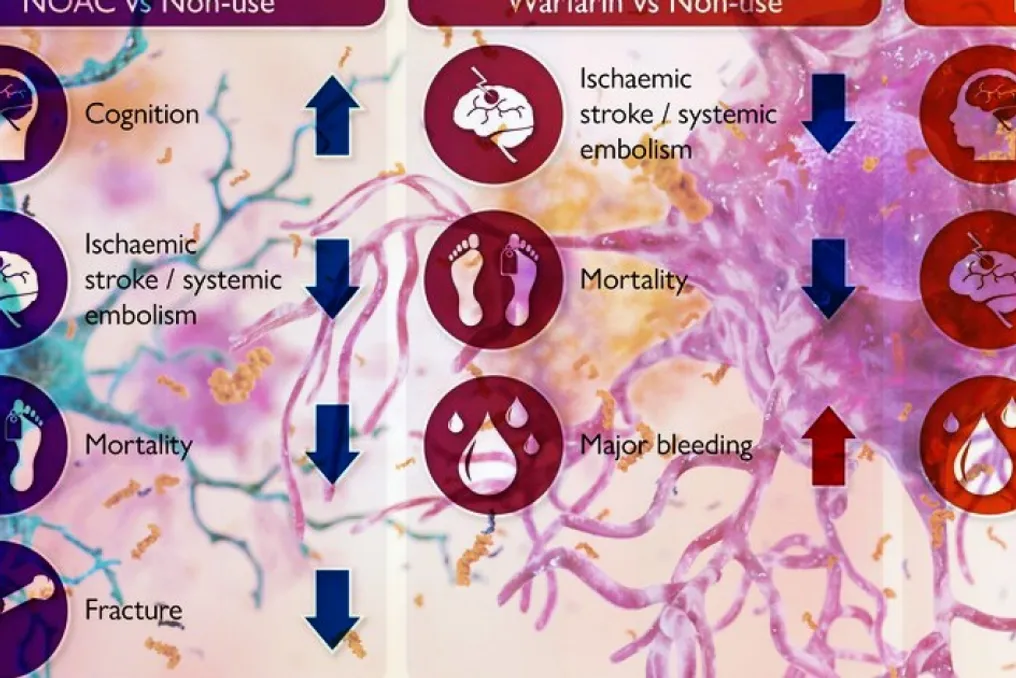
Swedish researchers have completed a national cohort study and concluded that in people suffering from Alzheimer's disease, taking modern anticoagulants to treat atrial fibrillation leads to a significantly slower decline in cognitive abilities.
Swedish researchers have completed a national cohort study and concluded that in people suffering from Alzheimer's disease, taking modern anticoagulants to treat atrial fibrillation leads to a significantly slower decline in cognitive abilities.
According to the study results, patients taking these modern drugs demonstrate improvement in other clinical indicators, while the risk of serious bleeding remains unchanged.
This scientific work was published in the European Heart Journal.
Colleagues of Jacob Shaw from Johns Hopkins University conducted a cohort study that revealed a link between taking monocomponent estrogen replacement therapy during menopause and lower levels of clinical and pathomorphological signs of Alzheimer's disease in women.
The study utilized data from two clinical cohorts consisting of women aged 50 and older, obtained from academic medical centers.
In the NACC cohort, autopsy data were available for 258 women whose average age at autopsy was 81.9 years who were taking replacement therapy, while 2701 women (average age 82.2 years) were not.
For participants in the ADNI cohort, neuroimaging and biomarker data were used: 110 women (average age 76.5 years) were taking hormonal medications, while 1948 women (average age 73.2 years) were not.
The results of this analysis were officially published in the scientific journal Neurology.