Every day, millions of liters of contaminated water flow through numerous rivers in South Africa, eventually reaching the sea. The Stibeuwel River in Franschhoek, a small tributary located about 75 kilometers east of Cape Town, is heavily polluted. This pollution stems from inadequate sewage and drainage systems serving the nearby informal settlement of Langrug, where wastewater and contaminated rainwater are discharged.
Langrug is home to approximately 26,000 people living in densely populated housing, where outdated and overloaded infrastructure cannot cope with the demand. A water resources researcher from the University of Cape Town's Institute for Future Water and the director of the Water Hub research center in Franschhoek are part of a group of scientists who work more closely with nature, studying its methods for water purification and reuse.
Research at Water Hub takes place at an old, abandoned treatment facility. This site is being transformed into a living laboratory to demonstrate ways to convert highly contaminated water into a safe resource without using chemical additives.
In a recent scientific paper, the authors described the results of a project to install natural filtration systems to clean the Stibeuwel River. Old drying beds, previously used for sludge dewatering at the former treatment plant, were utilized. These beds were filled with fine gravel, biochar (a wood byproduct heated at 800 degrees Celsius), and coarse sand.
The contaminated river water slowly passes through these filtration beds, allowing for the removal of pollutants such as bacteria and nutrients. After about five days, the water becomes clean enough for irrigation. The study demonstrated the high efficiency of this method: the naturally purified water consistently showed no E. coli bacteria, indicating the absence of human or animal waste contamination.
Furthermore, the system removed between 85% and 95% of ammonia and phosphorus, which pollute rivers and reservoirs. These contaminants remain in the filtration beds, where naturally present microbes feed on them and break down most of the pollution. Plants also absorb excess nutrients, such as ammonia and phosphorus, aiding in water purification before it is returned to the river or used for irrigation.
Nature-based systems cannot entirely replace fully functional treatment plants due to the large volume of urban runoff. However, the findings are significant because they show that natural water purification systems, which do not require electricity or expensive equipment, can assist municipalities facing rising energy costs, deteriorating infrastructure, and limited technical skills.
Natural wastewater treatment helps communities utilize limited water resources more effectively. In regions affected by drought and climate change, it provides a local source of clean water that can be reused for agriculture and other needs.
Natural Purification of Polluted Water
The Stibeuwel River, studied by researchers, is so polluted that local residents can no longer use it. The area, once suitable for swimming in its upper reaches, has turned into a solid waste dump. The river also carries excessive levels of E. coli bacteria; its concentration exceeds 400,000 colony-forming units per 100 ml. According to South African water quality guidelines, people should not come into contact with water where E. coli levels are above 130 units per 100 ml.
The water also contains high levels of ammonia and phosphorus from household cleaning products, which can trigger massive algal blooms. These algae turn lakes and slow-moving rivers green and deprive them of oxygen. Additionally, microplastics and traces of pharmaceuticals have been detected. The result is a slow but steady decline in water quality, increased municipal costs for treatment, and growing pressure on already scarce freshwater reserves.
Water contaminated with sewage is typically treated using energy-intensive methods, including chemical disinfection. However, the large biofiltration system constructed by the researchers does not require this. Water is pumped from the Stibeuwel River into a 10,000-liter reservoir and then fed into two holding tanks that supply the biofilter—the natural filtration system.
The design used in the project mimics the natural process of water purification found in healthy wetlands. The study showed that this system:
- consistently reduces ammonia and phosphate concentrations by 90%
- removes 99% of harmful bacteria
- achieves over 90% removal of certain pharmaceutical compounds and microplastics.
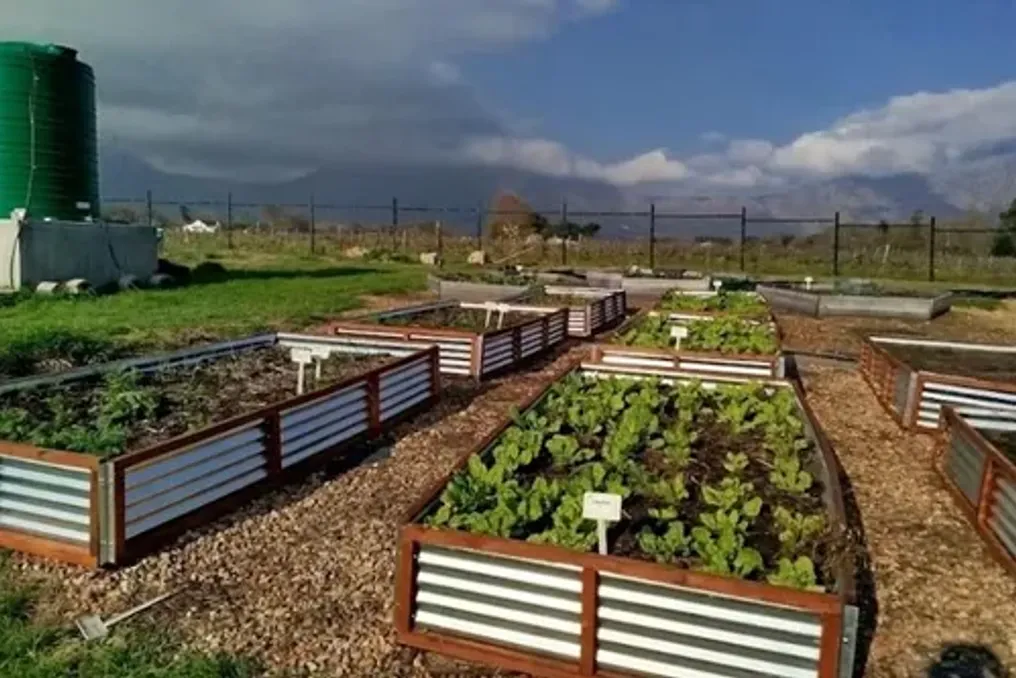
Approximately 50,000 liters of contaminated water are cleaned daily. About 3,000 liters per day are used to irrigate vegetable gardens managed by young women from the informal settlement. These gardens provide opportunities for skill development, food production experience, and small business creation. The remaining water is discharged back into the river, which plays a vital role as clean water sustains the life of river ecosystems and vegetation, which in turn purify the water flowing downstream.
What Needs to Be Done Next
Water Hub demonstrates how wastewater can be treated and reused near its source, rather than relying on large centralized treatment facilities. This localized approach can be replicated in other communities. Decentralizing water treatment facilitates improved water quality in areas where municipal services are declining.
Creating such a natural system is relatively inexpensive. Maintenance costs and the skills required for basic operation are minimal. Nevertheless, the system requires personnel for regular water quality monitoring and adjustments when necessary, such as slowing or speeding up water flow or responding to changes in weather or pollution levels.
The research indicates that combining science, engineering, and community involvement can lead to the creation of productive assets capable of supporting food production, generating income, and strengthening water security. It also demonstrates how decentralized water infrastructure can simultaneously support livelihoods, showing that wastewater should no longer be viewed merely as waste, but as a valuable resource that needs restoration and reuse. In African countries, where clean and safe water is becoming one of the most precious resources, learning to work with nature, rather than against it, may prove to be one of the wisest investments.
}, 3.