Starting September 1, 2026, citizens of Uzbekistan aged 18 or older who are present in Moscow or the Moscow Region without a visa for more than 90 days for purposes other than employment will be required to register through the Amina application.
Starting September 1, 2026, citizens of Uzbekistan aged 18 or older who are present in Moscow or the Moscow Region without a visa for more than 90 days for purposes other than employment will be required to register through the Amina application.
The new regulations also apply to students and adult family members of migrant workers.
For migration registration purposes, a foreign citizen is obliged to register in the application, consent to the processing of personal data and the transmission of geolocation information, and notify the Ministry of Internal Affairs of their actual place of residence.
If the address of residence changes, this information must be updated within three working days. If the application stops transmitting geolocation data for more than three working days, the foreign citizen may be excluded from the migration register.
If a foreign citizen does not have legal grounds for staying in Russia, their information may be entered into the registry of controlled persons.
This requirement does not apply to persons under 18 years of age, citizens of Belarus, diplomats, employees of consulates and international organizations, as well as their family members.
Seventy years after the march to the Union buildings, women have achieved better representation in education and the economy, but they remain underrepresented in top corporate positions.
Seventy years ago, over 20,000 women marched to the Union buildings in Pretoria to protest the expansion of pass laws for Black women. The march on August 9, 1956, was organized by the Federation of South African Women and involved women of various races. Leaders of the procession included Lillian Ngoyi, Helen Joseph, Rahima Musa, and Sophia Williams-De Bruyn, who presented a petition to the government of Prime Minister J. G. Strijdom.
The women's demands went beyond pass laws. Their previous appeal to the Congress of the People included requests for childcare, housing, education, equal pay, as well as equal rights regarding property, marriage, and child custody. On the day of the march, the women stood silently for thirty minutes, singing the songs Nkosi Sikelel’ iAfrika and the protest song Wathint’ abafazi, Strijdom!
Seventy years later, women are better represented in education and the economy, but they still lack representation in senior corporate roles. Women constitute 46% of South Africa's economically active population. Nevertheless, a Just Share study published in BDO South Africa's Women's Month 2026 edition shows that in 2025, women held 38% of board seats and 27.4% of executive positions in companies listed on the JSE Top 40—an increase from 35% and 25% respectively in 2023, but this is still not enough to achieve parity. Only three companies on the JSE Top 40 list had a woman as CEO, and six had a woman as chairperson of the board.
BDO's own data demonstrates that the firm still has work to do: women make up 23% of BDO partners in South Africa, which is below the global average of 25%, although the firm claims that women are well-represented at the director level, which influences partnership. World Economic Forum data cited in the publication reflects a similar picture globally: women now surpass men in higher education, but account for only 29.5% of senior managers with higher education.
For the women mentioned in the report, progress is linked not only to representation but also to access. One participant, Tuto Masasa, a national consulting lead, distinguishes between mentorship and sponsorship. According to her, sponsorship means putting someone's name forward when they are absent, assigning them tasks that make their abilities visible, and using one's own authority to support that person. Masasa wrote: 'Many talented people do not lack ability. They lack access.'
Taraneh Rahimian, an audit partner, drew a similar conclusion based on personal experience. She advised: 'Seek mentors who will guide you, but also seek sponsors—people who will advocate for you when you are not in the room.'
Fayaz Mohammed, head of BDO's International Offshore Centre, stated that women need to put themselves forward for opportunities even before they feel completely ready. She noted: 'Confidence often develops after we take the leap, not before it. Do not let self-doubt convince you that you are less capable than you actually are.'
In 2025, women held 38% of board seats and 27.4% of executive positions in JSE Top 40 listed companies, higher than 35% and 25% respectively in 2023, but still short of parity.
Elzanne Lombard, head of BDO's finance department, provides one of the clearest examples of how sponsorship can change a career. When Lombard was studying, her family could no longer afford her education. She applied for a BDO scholarship, and the firm sponsored her third and final year. She joined as an intern in 2010 and advanced within the organization.
When the Head of Finance position opened in 2022, the then CFO, Daniel Botha, advised her to apply. Lombard wrote: 'He saw potential and strength in me that I myself struggled to see. For me, this is the main point: BDO believed in my potential, no matter who I was, and nurtured me into the Head of Finance I am today.'
Chan-re Petersen said that the people who influenced her career were those who invested their time, knowledge, and belief in her. She described receiving this support as gaining confidence and courage, adding that those who receive such support have a responsibility to pass it on. The report also points to practical aspects of sponsorship: giving a junior colleague the opportunity to present work, including them in a meeting, or sharing undocumented knowledge.
Bonga Mokoena, CEO of BDO South Africa, stated that the 70th anniversary of the Women's March should be seen as a call to action. He noted: 'Seventy years after the women of 1956 marched, BDO's global #GiveToGain theme challenges each of us to use our influence, sponsorship, and opportunities to lift others up.'
Mokoena added: 'This is how we build sustainable economies for all in South Africa: by removing barriers and ensuring that women are not just present in the economy, but have the power to lead, make decisions, and shape its future.'
In our country, respect for human value and the protection of public health are among the main directions of state policy. In particular, large-scale reforms are being carried out aimed at fundamentally improving the quality of medical care provided to mothers and children, who are considered the most vulnerable part of society.
As Cyril Ramaphosa assumes the chairmanship of SADC, South Africa intends to prioritize migration management, critical minerals, regional trade, infrastructure, and human capital development, striving for closer regional cooperation.
South Africa will insist that SADC countries adopt a more orderly approach to migration and sign a protocol allowing free movement of people, as President Cyril Ramaphosa leads the regional bloc.
Krispin Phiri, a representative of the Department of International Relations and Cooperation (Dirco), stated that migration management will be one of South Africa's priorities during its chairmanship. This comes against a backdrop of growing discussions on irregular migration, border integrity, access to economic opportunities, and pressure on local communities and state institutions.
Phiri noted that South Africa recognizes the legitimate concerns of its citizens but rejects vigilantism and human rights violations. He emphasized that solving issues related to irregular migration must be done within an orderly and legal system.
He added that the movement of people across the region is often linked to broader issues of employment and economic opportunities, and it should not be viewed solely as a security issue. Phiri expressed hope for a joint search for comprehensive and long-term solutions to the region's migration problems.
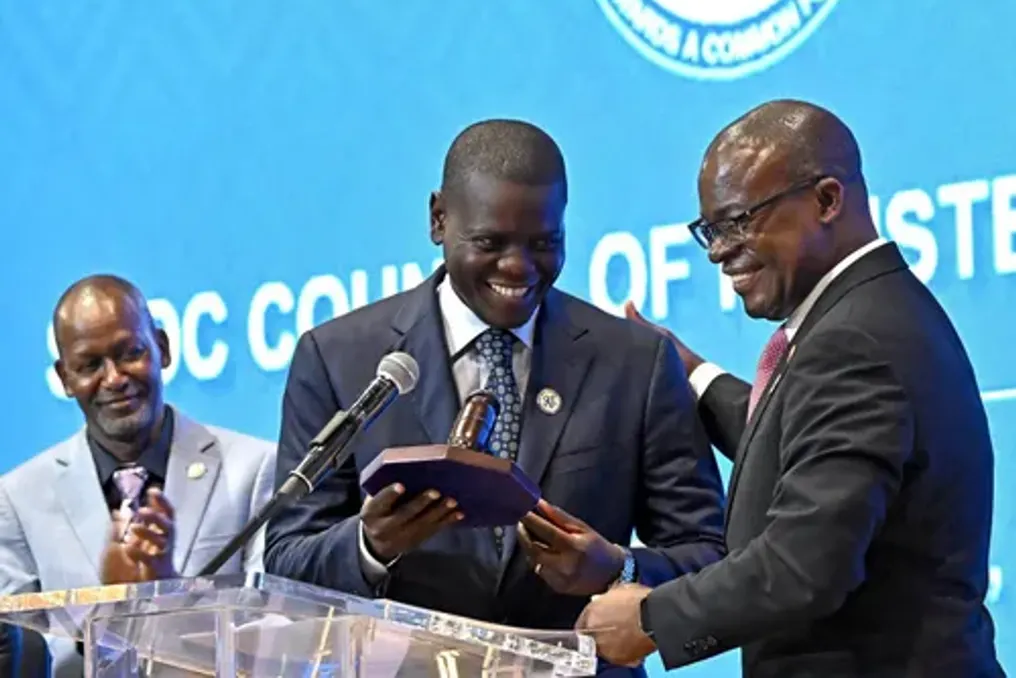
Minister of International Relations and Cooperation Ronald Lamola called on the bloc's countries to sign a protocol on the free movement of people to ensure regular and orderly migration, Phiri reported.
The migration agenda will be part of a broader program that South Africa will implement during its tenure as SADC chair. Key priorities of this program are peace and security, industrialization, infrastructure, and human capital development. Phiri clarified that South Africa's primary task will be to promote peace, security, and stability in the region, as he believes that the security of one state is inextricably linked to the security and stability of the entire Community.
He recalled that SADC has experience in collective response to threats to peace and security, and regional solidarity remains its greatest strength in addressing emerging political and security challenges.
Furthermore, South Africa will focus on accelerating industrialization through agricultural transformation, processing of critical minerals, increasing regional trade, and developing regional value chains. Phiri reported that nearly 30% of global proven critical mineral reserves are located in the region, which also holds about 50% of global cobalt reserves and 20% of graphite reserves.
He noted that the region's mineral wealth has historically benefited economies far beyond its borders, while local economies remained trapped in extractive models. To change this situation, resources must be processed, regional value chains created, and trade between countries in the region increased.
South Africa aims to realize the goals agreed upon at the Scucuce meeting, including achieving 50% intra-regional SADC trade and ensuring local processing of critical minerals. Infrastructure development will also be an important area. Phiri stated that South Africa will advocate for the expansion and modernization of regional connecting infrastructure, including energy, transport, ports, digital networks, and water systems. He stressed that reliable energy, efficient transport corridors, modern ports, integrated digital networks, and stable water systems are indispensable for regional connectivity, industrialization, and the movement of goods and services.
It was noted that regional production currently accounts for only 10% of GDP and is incapable of generating the required volume of jobs. South Africa will also prioritize social development and human capital development, especially considering Africa's young population. Phiri pointed out that Africa has the youngest population in the world, with an average age of 19 years, and almost 60% of the population is under 25. He predicts that by 2030, one of four young people in the world will originate from Africa.
South Africa's program in the region will also cover gender equality, climate change resilience, and disaster risk management. Phiri stated that these aspects will permeate every aspect of the regional program, as development cannot be comprehensive if it ignores gender issues, leaves youth behind, or fails to prepare communities for climate and other shocks.
The 46th Ordinary SADC Summit is taking place in Durban, which Phiri described as historically significant for South Africa and the region. The Inkosi Albert Luthuli International Convention Centre is named after former ANC General President Albert Luthuli, who was the first African to win the Nobel Peace Prize. Phiri recounted that Luthuli's life reflects the interconnected history of South Africa. He was born in Solusi Mission near Bulawayo in present-day Zimbabwe into a family originating from what was then Natal, and later returned to the province where he worked as a teacher, became a traditional leader, and served as ANC General President.
Durban also hosted the first United Nations Conference on the Elimination of Racial Discrimination, Xenophobia, and Other Intolerances 25 years ago. A year later, in July 2002, the Organisation of African Unity transformed into the African Union in this city. Phiri noted that Durban's history also reflects the economic ties between South Africa and the region. He concluded that this marked a decisive transformation of a continental body, born out of anti-colonial struggle and the pursuit of African unity, into an institution designed to promote the common development and political integration of a free continent. He added that Durban's history shows that his country's industrial development significantly benefited from a large labor pool from the region and beyond.