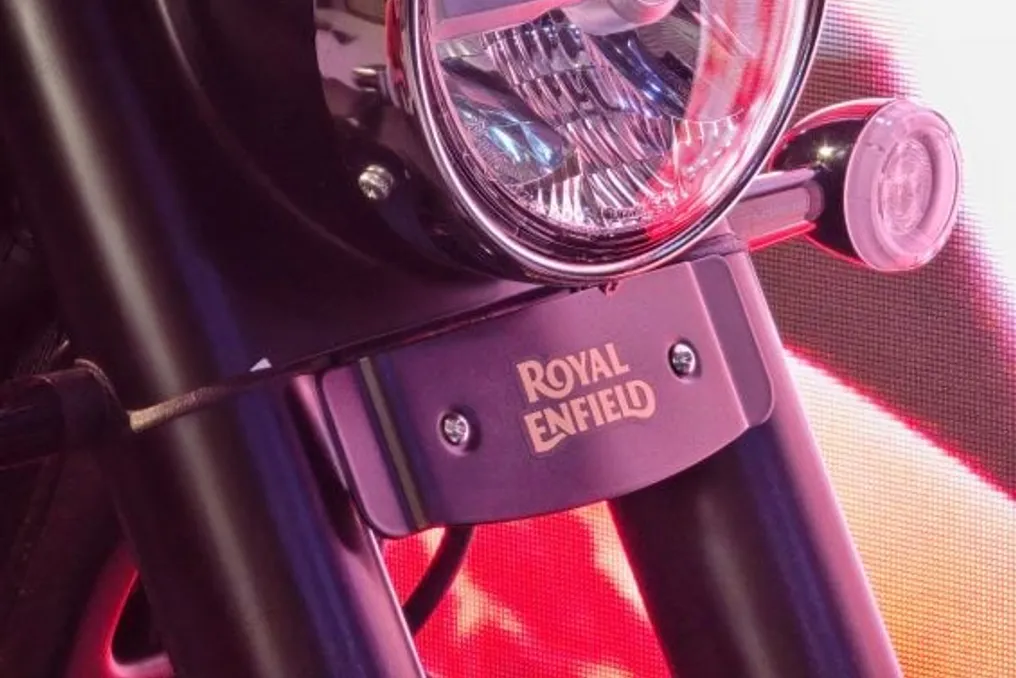
Royal Enfield used the Interlagos Festival as a platform to showcase three new concepts and various designs. The event featured the presence of global executives from the manufacturer.
Royal Enfield used the Interlagos Festival as a platform to showcase three new concepts and various designs. The event featured the presence of global executives from the manufacturer.
Among the new offerings for the local market, the Goan Classic 350 stood out, incorporating the vibrant style of the 1950s. This model is built on the structure of the traditional Classic 350 and features a 20.2 hp engine.
The new Royal Enfield Goan Classic 350 is available in Trip Teal, a light blue shade with orange, or in Shadow Black, entirely black, with starting prices from R$ 26,490.
For consumers seeking a more modern and sporty look, Royal Enfield introduced the Guerrilla 450 Apex. This version enhances the roadster's appearance with modifications frequently requested by the public. One of its distinguishing features is the lower handlebar, measuring 56 mm, which provides a more sporty riding posture. Furthermore, it has an exclusive front fairing and is offered only in black with red details.
The Royal Enfield Guerrilla 450 Apex is equipped with a 452 cm³ engine that generates 40 hp, and its curb weight reaches 185 kg. Its official price is set at R$ 30,490.
Finally, the third novelty presented at the Interlagos Festival was the Mana Black edition of the Himalayan 450. This version gives the Royal Enfield adventure motorcycle a darker aesthetic, priced at R$ 33,490.
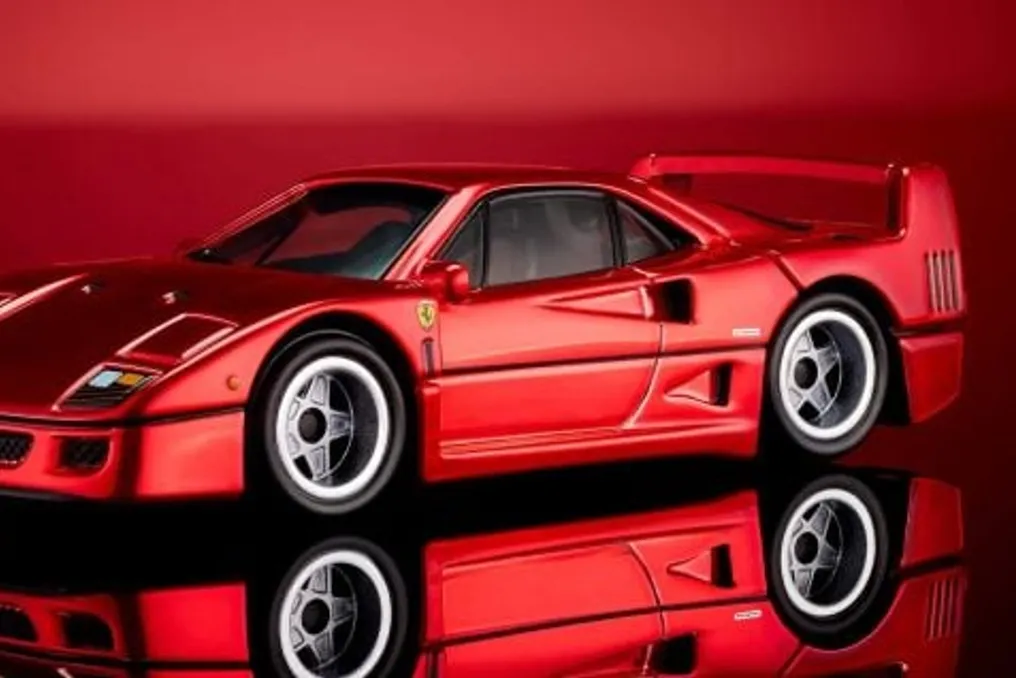
Mattel announced that the Ferrari F40 miniature will be available for sale on August 18th. This model is considered one of the most sought-after by Hot Wheels collector enthusiasts and is part of the exclusive Red Line Club (RLC) collection, the brand's premium segment.
The sale will take place at 1 PM Brasília time on the Mattel Creations portal, with an estimated price of R$ 259 (equivalent to US$ 50), excluding taxes and additional fees. Acquisition is restricted to club members.
This vehicle represents one of the first Ferraris to return to the RLC after Mattel renewed its licensing agreement with the Italian company. The resumption of this partnership began in 2025, featuring a set that included the 312 P and 499P Modificata miniatures, also exclusive to the club.
The high value of the piece is justified by its detailing. The miniature features functional front hood and rear lid, a feature rarely seen in 1:64 scale cars. Upon opening the rear lid, a replica of the engine can be viewed. The body is constructed from ZAMAC and features vibrant red Spectraflame paint, applied over a silver coating that covers the entire model.
Other attributes follow the standard of the club's most expensive editions: it has five-spoke Real Riders wheels with a silver rim, a fully metallic chassis in matte black, lightly smoked windows, and a black interior.
The packaging was designed by the manufacturer to also function as a display case and is housed in an outer box with a soft finish.
The selection of the F40 carries symbolic meaning, as it was conceived to celebrate Ferrari's 40th anniversary. Mattel describes this model as the last Ferrari to receive personal approval from Enzo Ferrari, featuring a 2.9L twin-turbo V8 engine capable of reaching speeds exceeding 320 km/h.
Access to purchase depends on Red Line Club membership; non-members will not see the option to add the item to the cart when the sale begins. Furthermore, the company imposes a limit of two units per customer, a measure adopted to curb reseller activity.
Even after securing the miniature at the start of sales, buyers must wait, as Mattel has communicated that shipping processes will only begin in late November or December 2026, meaning a waiting period of three to four months after purchase. The total quantity of units to be produced has not been disclosed by the company.
Instagram announced on Thursday, the 13th, a complete overhaul of its visual identity, marking the platform's first major redesign in a decade. This update covers modifications across various aspects, such as typography, colors, graphic elements, animations, and the logo.
Adam Mosseri, Instagram's director, presented this change as part of a new phase for the social network. The stated goal is to maintain references linked to the app's creative origins while adopting a more modern and versatile aesthetic.
The redesign affects the brand's visual system, keeping the camera as the focal point of the symbol. The company emphasizes that the update aims to highlight community creativity and keep pace with the various formats and experiences offered by the application.
One of the most notable changes lies in how the name Instagram is presented. While the previous version had more elaborate strokes, the new approach employs a typographic construction perceived as cleaner and more contemporary. The camera icon has also been redesigned, preserving the association with photography, a central element since the platform's inception.
The color palette has received adjustments to increase the dynamic feel of the identity. Furthermore, the system has gained a specific language for movements and animations, along with graphic elements designed for various applications within the service.
According to Instagram, the renewal transcends just the logo's appearance, encompassing a broader range of visual resources, including colors, typography, and movement, all intended to give cohesion to the brand. The company associates this new stage with the app's strong historical creative character, seeking to recover artisanal aspects of its roots without compromising compatibility with its continuous evolution.
The transformation of greatest impact occurred in 2016, when Instagram abandoned the representation inspired by old cameras to adopt a minimalist symbol accompanied by the colorful gradient that characterized the network during the following decade. The platform was launched on October 6, 2010, by Kevin Systrom and Brazilian software engineer Mike Krieger, and in its early days, its visual directly referenced old photographic cameras.
Thus, the current reformulation once again alters the visual presentation of the service, but without completely breaking from its origin. The camera symbol remains present, now integrating into a more comprehensive and flexible brand system.
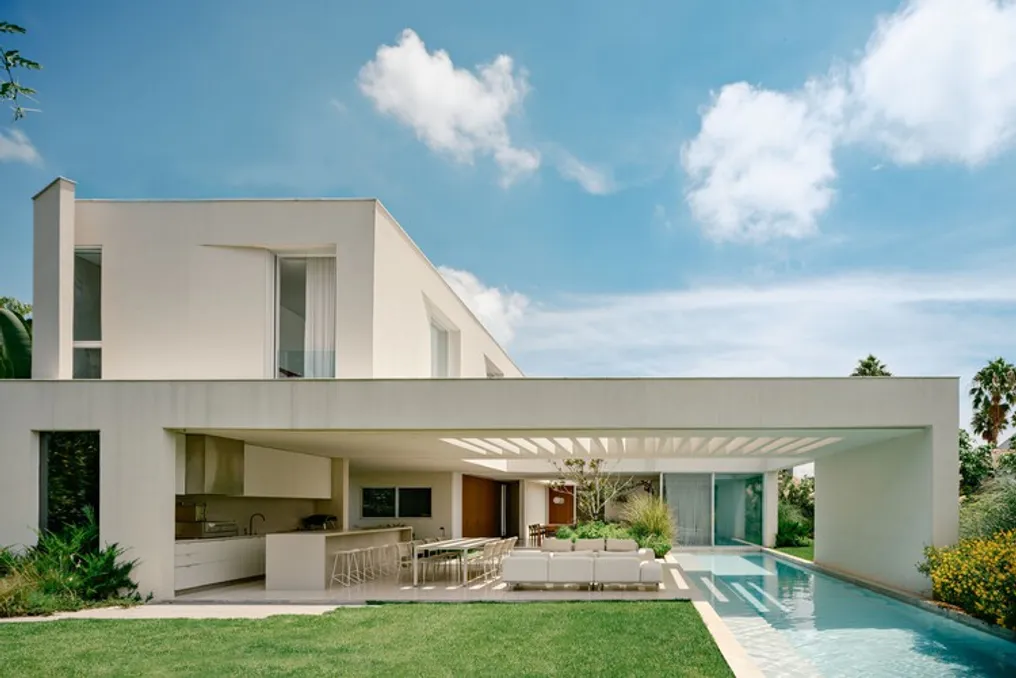
The Casa SJC project, executed by the firm Felipe Hess Arquitetos, was implemented in an already established urban condominium in the city of São José dos Campos. This lot had previous constructions, and its facade was influenced by the proximity of neighboring properties.
The conception of the project was structured based on these specific conditions, utilizing an orthogonal volume characterized by its geometry. The design opted not to use additional cladding beyond paint, with the overall reading of the set being defined through punctual subtractions in the volume.
Information about the project was provided by the development team.