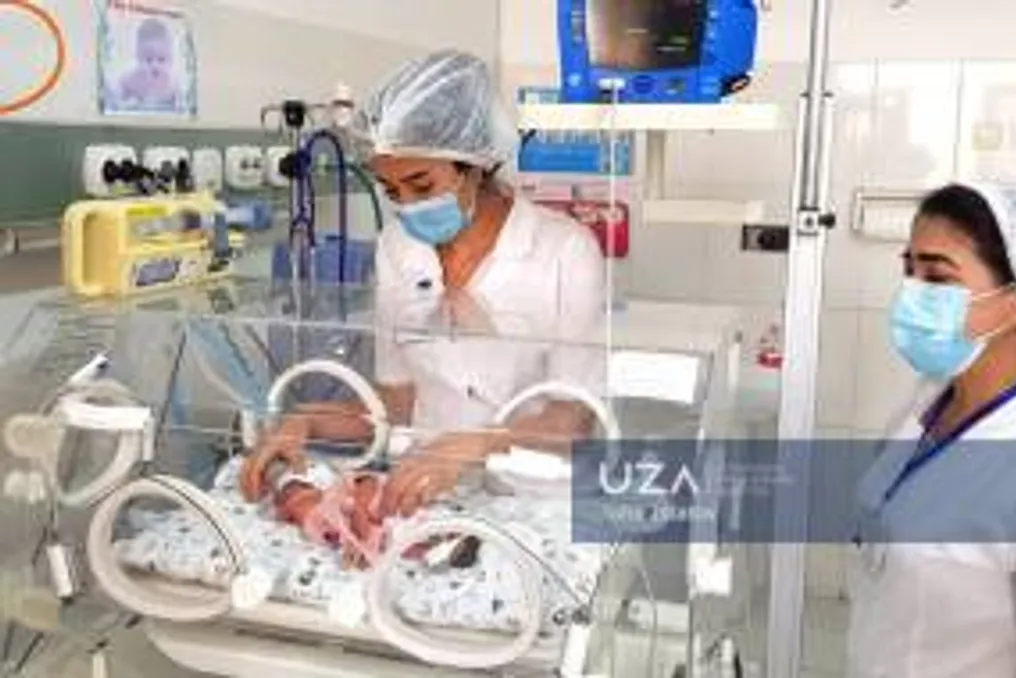
In our country, respect for human value and the protection of public health are among the main directions of state policy. In particular, large-scale reforms are being carried out aimed at fundamentally improving the quality of medical care provided to mothers and children, who are considered the most vulnerable part of society.
Similar stories
uza.uzAugust 12, 15:24
350-year-old white mulberry tree specimen in Yakkasaroy recognized as a state natural monument
The preservation of rare and long-lived trees and their fruits is important in modern ecological conditions. A decision was made following a petition from citizens to the Tashkent City Council, which was sent to the Ecological Party of Uzbekistan.
According to the resolution of the People's Deputies of the Tashkent City Council dated July 22, 2026, the 350-year-old white mulberry tree specimen (Morus alba), located on 'Blue Domes' Street in the Yakkasaroy district, has been declared a state natural monument.
uza.uzAugust 12, 15:21
Attention to ensuring openness and transparency in state structures is increasing
Systematic work is being conducted within the Ministry of Economy and Finance to prevent corruption offenses, improve the legal knowledge and practical skills of employees, as well as to prevent conflicts of interest and ensure openness and honesty in public procurement.
Detailed information about this activity was presented during a briefing attended by Toʻlqinbek Ismoilov, a senior specialist from the Compliance Department of the Ministry of Economy and Finance.
uza.uzAugust 3, 13:21
Water Supply Problems for the Population: Report on the Work of JSC 'Uzsuvta'minot'
Information was presented at the Senate Committee meeting on agrarian issues, water management, and ecology regarding the work done to review appeals from individuals and legal entities to the Joint Stock Company 'Uzsuvta'minot', conduct meetings with the public, and organize public hearings to resolve raised issues and problems.
It was noted that in the first half of 2026, over 7.8 thousand appeals related to the activities of the Joint Stock Company 'Uzsuvta'minot' were received by the Presidential Virtual and Public Reception offices. This figure decreased by 24% compared to the same period last year. Of the total number of appeals, 4,911 cases were resolved positively.
The main part of the appeals is related to accidents in drinking water networks, interruptions in water supply, and low water pressure; 2,408 appeals were registered on this issue. Additionally, 1,788 appeals were received regarding payments for drinking water, debt, and recalculation, and 1,067 appeals concerned connection to centralized drinking water networks.
Furthermore, during the past year, 1,400 repeat appeals were received, which is 36% higher than the figure for the same period last year. By region, the highest number of repeat appeals came from residents of Surkhandarya region (136 appeals), Tashkent city (126 appeals), Tashkent (93 appeals), Fergana region (86 appeals), and Kashkadarya region (81 appeal).
During the discussion, it was emphasized that the presence of repeat and collective appeals indicates the persistence of certain shortcomings in the appeals handling system. In particular, it was noted that problems that could have been resolved at the local level are not being considered in a timely manner, and meetings and explanatory work with the public on issues requiring additional time, funds, and resources are not being conducted sufficiently, which is the reason for the increase in repeat and collective appeals.
Attention was also drawn to deficiencies in the quality of appeal consideration, control of execution, and on-site problem resolution in some districts. Following the meeting, relevant recommendations were given to responsible persons to eliminate the identified shortcomings in appeal consideration, solve on-site problems, prevent repeat appeals, and further improve the system of interaction with the public.