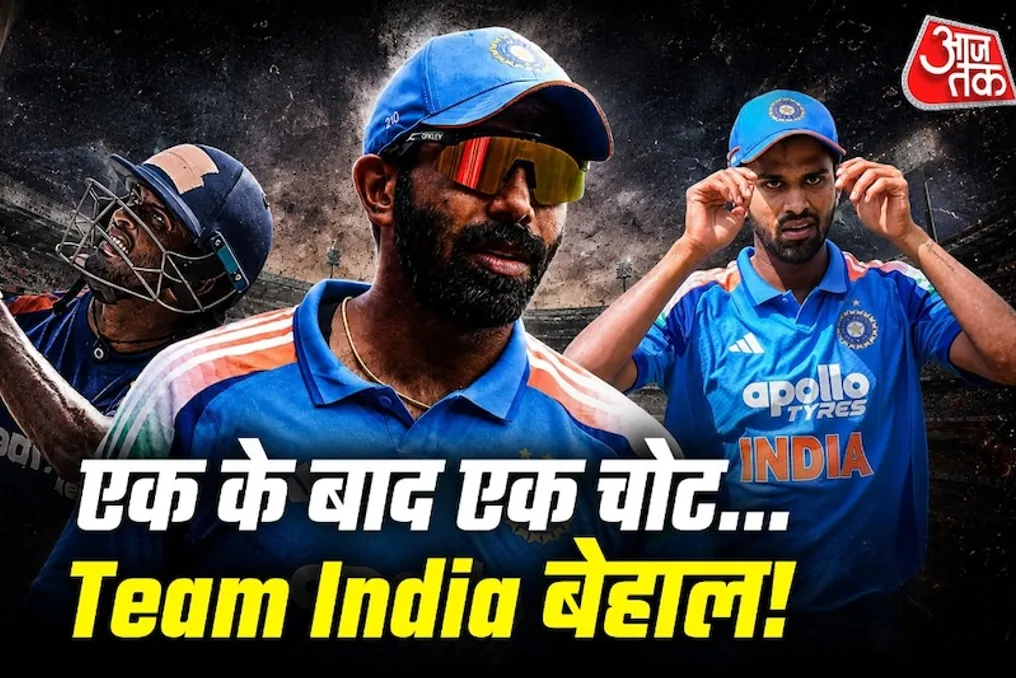
In Indian cricket, the injury crisis is beginning to seriously affect the preparation of the Indian squad. Players are getting injured one after another and are being sent to the BCCI's Centre of Excellence (CoE) in Bangalore for rehabilitation. This directly impacts squad selection, team composition, and preparation for upcoming series.
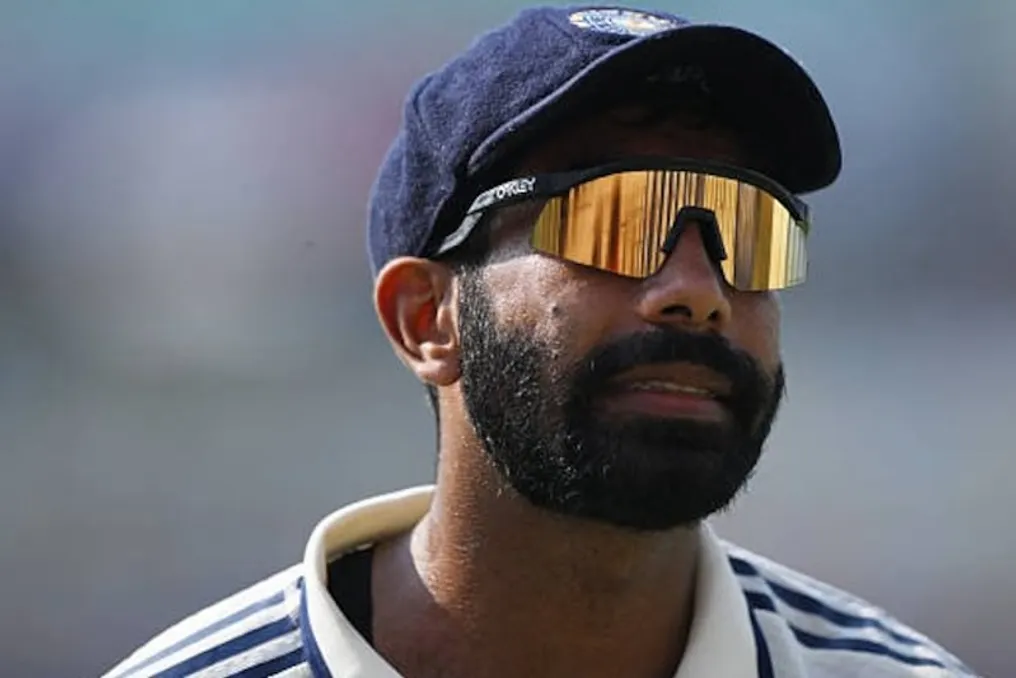
A recent example is the difficulties India faced before the Test series against Sri Lanka. Jasprit Bumrah and Sai Sudarshan were initially included in the main Test squad, but both were ruled out of the series due to injuries. Bumrah could not recover in time from a knee injury sustained during a one-day tour against England, while Sudarshan suffered an injury during the Rad-ball series against India-A in Sri Lanka last month.
The list of injured players is not limited to this. Harshit Rana is battling hamstring issues, Nitish Kumar Reddy has also been sidelined due to a hamstring injury, and Washington Sundar is suffering from a muscle injury (quadriceps). Akash Dip is also recovering from a stress fracture in his lower back and has been out of the team for a long time.
Thus, the team, which was supposed to prepare for a long test season with its key players, is facing questions of fitness and availability.
Amid the rising number of injuries, a source associated with the BCCI CoE expressed serious concern about the pressure placed on players during the IPL. According to the source, the workload in cricket is constantly increasing, and the body has its limits. It is difficult to determine the recovery timelines after overexertion and stress-related injuries.
Nevertheless, due to fundraising and financial pressure in the IPL, players continue to play despite injuries. The problem is that after the tournament ends, the same players arrive at the CoE, where physiotherapists and the medical team work on their recovery.
The source noted that the CoE's physiotherapy team prioritizes player safety, but this situation has created difficulties for coaches, captains, and selectors regarding player availability. That is, having a player in the IPL is important for the franchise, but if a player plays while injured, it can affect the Indian team's plans later.
The pressure of injuries is not limited to the Test team. The CoE is currently also dealing with many players in limited-overs formats. Hardik Pandya is at the CoE due to a quadriceps issue, Varun Chakravarthy is there because of a hamstring injury, and Prince Yadav is also suffering from hamstring problems. This demonstrates that the circle of injuries has spread across various formats and players.
For this reason, BCCI Secretary Devdutt Saxya recently visited the CoE in Bangalore. He reviewed the current rehabilitation program and met with the CoE head, Vivs Laxman.
Against the backdrop of growing criticism, Vivs Laxman clearly stated that the CoE's responsibility is not limited only to treating injured players. He emphasized that the scope of the CoE's activities is much broader, and the monitoring system is crucial for preventing and managing player injuries. Laxman also noted that injuries are part of any player's career, and no one should be unduly punished for it.
His emphasis was on the fact that injury prevention and constant player monitoring are more important than treatment after an injury occurs.
The CoE's problems are not limited to player injuries. The position of Head of Sports Science and Medicine has also remained vacant for a long time. After Nitin Patel's departure in early 2025, the BCCI is looking for a suitable candidate for this role. According to Laxman, this position requires more than just experience and prestige; the candidate must understand Indian cricketers and their specific needs.
Laxman reported that negotiations for the appointment of Andrew Lips are almost complete, but he decided to decline due to family circumstances.
The growing number of injured players in the CoE points to a broader issue. If players play in long and intense tournaments like the IPL despite injuries, and then end up in the CoE for rehabilitation, it naturally affects their availability in international cricket.
The problem for the Indian team is not just about how many days it will take for a player to recover. The real challenge is which player will be available in which series, who needs rest, and what combination the team will field. From the absence of Bumrah and Sudarshan to the presence of Hardik, Varun, and other players in the CoE—this long list of injuries constantly affects the preparation of the Indian team. Now, the BCCI faces an obvious task: how to manage the growing workload of players, how to balance the pressure of the IPL and international cricket, and how to prevent injuries before they reach the rehabilitation stage.