The South African coast possesses such a diversity of life beneath the surface that it is easy to forget. The country's marine protected areas safeguard vital coastal ecosystems, including coral reefs, kelp forests, whale breeding grounds, and penguin habitats.
These protected zones extend far beyond beaches and well-known viewpoints, protecting reefs, kelp forests, rocky shores, islands, estuaries, and breeding sites for animals such as turtles, penguins, whales, and dolphins. Currently, there are 41 marine protected areas in the country, preserving key marine and coastal ecosystems.
Some of these locations are well-known, while others remain unnoticed. However, if you want to understand the value of conserving South Africa's coastline, it is worth starting to explore these locations.
Exploring Marine Reserves
Arriving at the mouth of the Storms River makes a distinct impression: forest descends directly to the cliffs, the Indian Ocean crashes against the rocks, and an entirely different landscape unfolds beneath the surface.
The Tsitsikamma Marine Protected Area is the oldest in Africa. Established in 1964, it covers about 60 kilometers of coastline and extends 5.6 km into the open sea. It is part of the Garden Route National Park and protects an exceptionally rich area of tidal life, reefs, and deep-sea fish.
The history of this area also demonstrates the evolution of conservation approaches. Initially, Tsitsikamma was managed as a no-take zone. Today, management has been changed to achieve a balance between marine environment conservation, access, and the needs of neighboring communities.
For visitors, the main attraction is the opportunity not just to observe the reserve, but to experience it. Near the mouth of the Storms River, scuba diving and snorkeling tours are available to explore reefs and search for fish and sharks underwater. Kayaking and paddle adventures offer an alternative way to get on the water, while the surrounding park provides some of the best opportunities for coastal hikes in the country.
The famous Otter Trail runs along the coast for 42 kilometers over five days, while shorter walks around the Storms River make the area accessible even to those not planning a multi-day trek. Keep an eye out for dolphins, southern right whales, Cape gulls, and the elusive coastal otter.
De Hoop: Whale Watching and Wildlife
For a rare combination of ancient forest, dramatic coastline, and truly wild underwater beauty, De Hoop is worth visiting. If your trip involves whale watching, this reserve deserves a high spot on your list.
The marine reserve is part of the larger De Hoop Nature Reserve, where the coast serves as an important breeding and feeding ground for southern right whales. Approximately 120 whales return annually for mating and calving, and from June to November they can often be seen very close to the shore.
To enjoy this spectacle, you don't necessarily need a boat. One of the advantages of De Hoop is the ability to find a vantage point along the coast and watch the ocean. Koppie Allen is particularly good for this, offering panoramic views of the vast beaches and turquoise waters of the reserve.
But De Hoop offers more than just whale watching. This reserve is characterized by its seamless integration of marine and terrestrial landscapes. In the morning, you can walk along the coast, exploring rock pools and limestone formations, and in the afternoon, watch bontebok, eland, Cape mountain zebra, or other wildlife species in the reserve.
For more ambitious travelers, there is the 55-kilometer Whale Trail, which takes hikers from Plettenberg Bay to Koppie Allen through fynbos, beaches, and dramatic coastal terrain.
iSimangaliso: A Tropical Marine Adventure
Northern KwaZulu-Natal is a region where the South African coast takes on an almost tropical appearance. The water here is warmer, coral reefs thrive, and the list of marine life encountered in the open sea is truly extraordinary.
The iSimangaliso National Park Marine Protected Area is the largest in South Africa and is part of the country's first World Heritage Site, inscribed in 1999. Its marine protection was significantly expanded in 2019 after more than ten years of planning, creating a protected marine landscape linked to the protected waters of Mozambique.
The biodiversity of this place is the main reason to visit. The protected waters of iSimangaliso include coral reefs, turtle nesting beaches, and habitat for whales, dolphins, sharks, and the ancient coelacanth. The Sodwana Bay section is internationally recognized as a major diving spot; the park reports approximately 1200 fish species and 100 types of warm-water corals.
Sodwana Bay is an obvious base if you want to dive underwater. Snorkeling and diving allow you to see coral gardens and impressive marine diversity, and boat trips can lead to encounters with dolphins and seasonal whales. From November to April, turtle watching tours offer a chance to see seals and leatherback turtles laying eggs along the coast.
However, diving is not a prerequisite. The beaches, coastal forests, lakes, and wetlands of iSimangaliso make it a destination in themselves. Marine cruises, birdwatching, and wildlife tours allow you to plan a trip around the park without even putting on a wetsuit.
Aliwal Shoal: Encountering Marine Predators
Near the southern coast of KwaZulu-Natal lies Aliwal Shoal—an ideal spot for those whose idea of a marine experience includes full immersion underwater.
This reef was officially declared a marine protected area in 2004. Its regulations are designed to protect the marine environment and reef biodiversity, conserve associated fish stocks, and promote regulated ecotourism and research.
Today, Aliwal Shoal is most known among divers for its impressive underwater habitats and large marine animals. Hammerhead sharks are one of the iconic sightings, and the entire area is also known for encounters with other shark species, rays, turtles, and seasonal marine life.
The reef can be explored through organized diving tours; permits are required for recreational diving in the marine protected area. For experienced divers, this is a place where the anticipation begins long before the dive. Local dive operators can offer introductory courses and training for beginners.
The southern coast also offers many above-water activities. You can organize a diving tour around the beaches and small coastal towns or use it as a base for exploring the KwaZulu-Natal coast.
Addo: Where Land Meets Sea
Addo Elephant Park, known for its elephants, also meets the ocean. The Addo Elephant National Park Marine Protected Area was proclaimed in 2019 after many years of planning and negotiation. At the time of proclamation, it covered an area of about 1127 sq km and protects a remarkable combination of sandy beaches, rocky shores, reefs, estuary, and islands in Algoa Bay.
Its conservation history is particularly important due to the seabirds dependent on the waters around the islands. The marine protected area safeguards feeding grounds for endangered African penguins and Cape gannets, and its reefs and estuary are vital for marine species and the recovery of valuable fish stocks.
The appeal for visitors lies in the ability to combine two completely different types of safari in one trip. In the morning, you can observe elephants, lions, or rhinos in the land parts of Addo, and then head to Algoa Bay and the coast. Marine fauna can be seen from the water, and the wider Algoa Bay area offers opportunities for birdwatching and coastal exploration. Boat trips to the islands have historically provided opportunities to see penguins, gannets, seals, dolphins, and whales, although access to the protected islands is regulated, and visitors should check current conditions before planning their trip.
Cape of Good Hope: Familiar, Yet Underrated
You probably know Table Mountain. You may have heard of Boulder's. But the marine protected area stretching around the Cape of Good Hope peninsula is a whole different story. It was declared in 2004 and protects an incredible stretch of coastline and ocean around the peninsula. Its waters support dolphins, several whale species, Cape fur seals, and numerous seabirds, and Boulder's serves as an important habitat for African penguins. It is also one of the easiest marine protected areas in the country to visit without needing to plan an expedition.
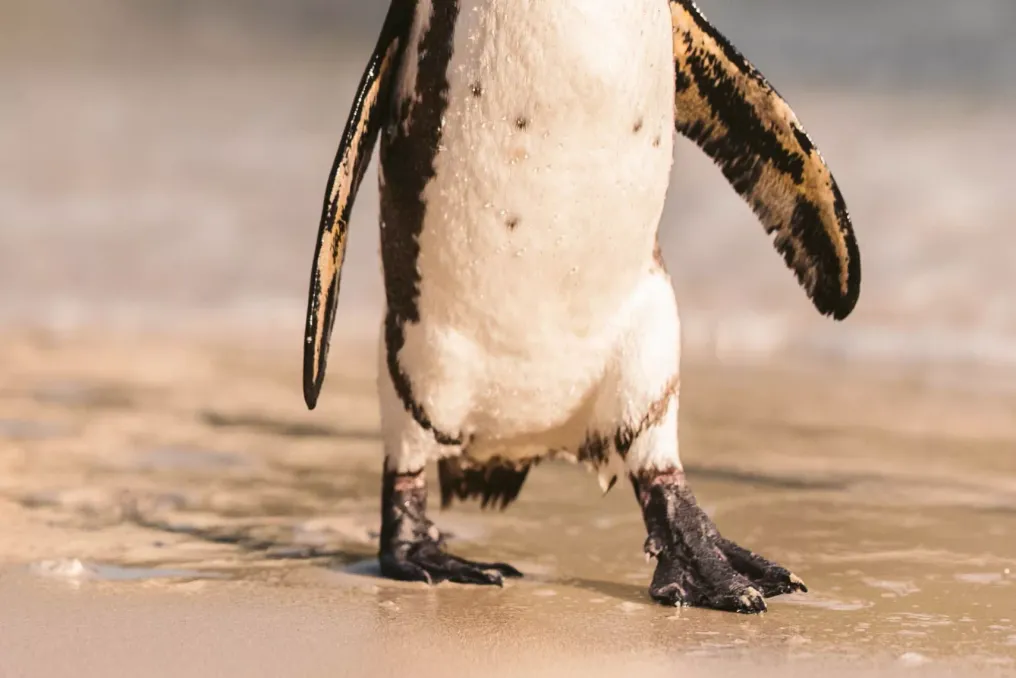
You can start at Boulder's, where visitors can see African penguins on the promenade without entering their breeding zone. Then, you can move towards the Cape of Good Hope to admire the cliffs, beaches, hiking trails, and spectacular views of the Atlantic and Indian Oceans. The park also offers opportunities for diving, snorkeling, fishing, whale watching, and other water activities, provided that appropriate rules and permits are followed.
The penguin colony itself has a fascinating conservation history. Boulder's became home to a colony in 1983, but since then, the population of African penguins has sharply declined. The species is now classified as endangered, making responsible viewing particularly important.
It might be the easiest marine protected area on the list to overlook precisely because it is so familiar. But that is also why it is worth returning. Next time you travel around the Cape of Good Hope peninsula, look beyond the mountain. There is an entire protected ecosystem beneath the waves.
The Importance of Marine Protected Areas
A marine protected area is not just a patch of ocean where going is forbidden. Different marine protected areas have their own zones and rules: some areas are completely protected from resource extraction, while others allow carefully controlled activities. Their broader goal is the preservation of ecosystems, the protection of marine species, and assisting in the recovery of fish populations supported by appropriate recreation, tourism, and coastal livelihoods.
This distinction matters when visiting. The best experience is not necessarily the one where you see the most animals. It is the one where you understand that the animals exist here because this place has been allowed to function.
This might mean watching a whale and its calf from a cliff in De Hoop. It might mean seeing a penguin on the promenade in Boulder's or spotting a dolphin cutting through the waves in Tsitsikamma. Or sometimes it simply means standing on the beach and looking at the ocean, which functions just like it has for thousands of years.
South Africa's marine protected areas prove that some of the country's best natural experiences do not require a safari. These are places where the landscape changes dramatically within a few kilometers, where forests meet the sea, whales pass by the cliffs, turtles return to the beaches, and coral reefs lie beneath the warm waters of the Indian Ocean. They also show how much of our natural heritage exists beyond the coastline.
So choose the coast and spend a weekend there. Drive further to De Hoop. Stay for a few nights in Sodwana. Make a stop at Storms River on the Garden Route. Dive at Aliwal Shoal. Or simply spend a day exploring the Cape of Good Hope peninsula.