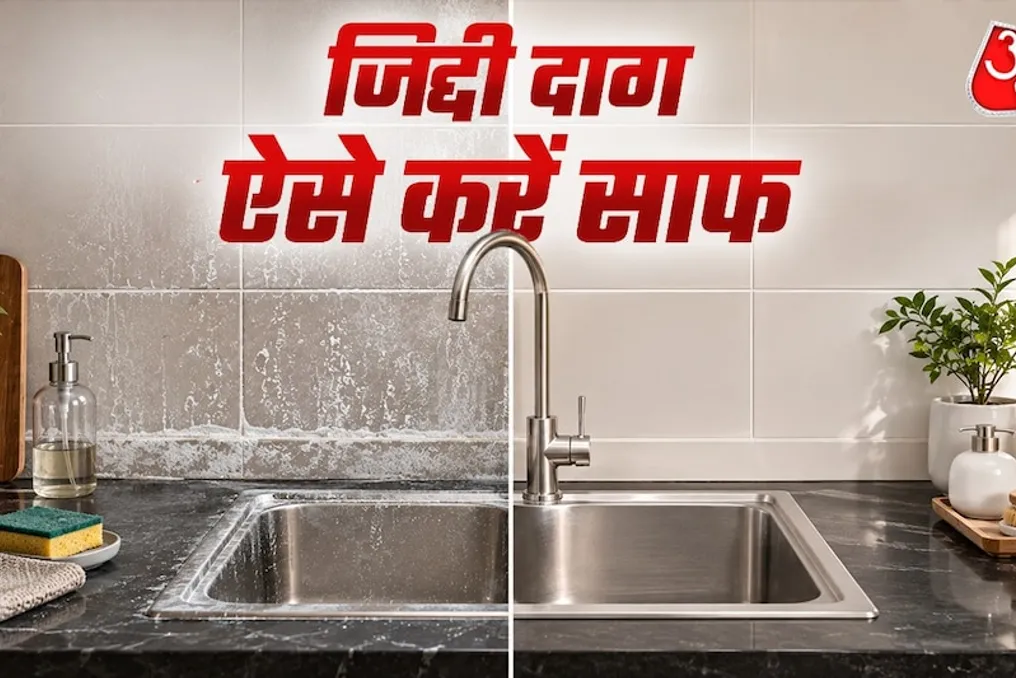
After washing dishes in the kitchen sink and on faucets, water marks often remain, drying to form white and dull spots. Similar deposits are also found on bathroom fixtures, including sinks, faucets, and tiles.
If your home receives hard water from the tap or well, minerals such as calcium and magnesium present in it form a hard and persistent scale on sinks and faucets. These marks cannot be removed by a regular dishwasher or water and gradually strip the plumbing of its shine.
If you are concerned about these stubborn white spots and want your stainless steel sink to always look new and shiny, you do not need to spend money on expensive chemical products. With vinegar, baking soda, and lemon, which are available in the kitchen, you can clean these hard water stains 100% without extra effort.
White vinegar contains mild acid that immediately dissolves calcium deposits from hard water. Soak a cotton pad or paper towel in vinegar and wrap it around the affected areas of the faucet and sink. Leave this for 10–15 minutes. Then remove the cloth and gently wipe with a sponge, followed by rinsing with water. The faucet will shine again like glass.
Take half a lemon and sprinkle it with one teaspoon of baking soda. Rub this mixture onto the areas of the sink and faucets where white marks have accumulated. The slight abrasiveness of baking soda combined with the acidic properties of lemon helps remove even the most stubborn deposits. After five minutes, simply rinse with clean water.
If hard water residue has formed on the joints or edges of the faucets, apply regular white toothpaste there. Using an old toothbrush, scrub this area for two minutes. The cleaning components of the toothpaste instantly restore the lost shine of stainless steel faucets.
After thoroughly cleaning the sink and faucets, be sure to dry them with a dry cloth. Then apply a little oil—two drops of coconut oil, baby oil, or wax—to a cotton ball and lightly spread it over the faucets and sink. This creates a waterproof layer that prevents water droplets from lingering on the sink after washing dishes, thereby preventing the formation of hard water stains.