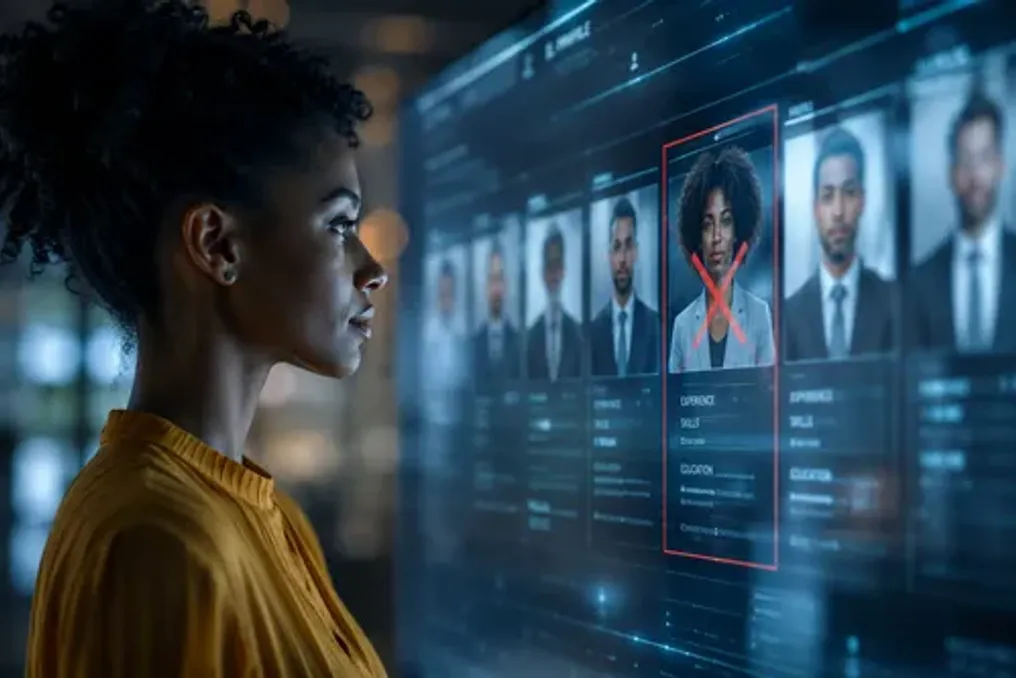
Researchers found that nearly half of the analyzed artificial intelligence systems exhibit gender bias, raising concerns about the potential for increased inequality in hiring, finance, healthcare, and other sectors.
Gender bias is a deeply rooted social problem that affects many aspects of life, including education, employment opportunities, and political representation. However, in a world increasingly managed by AI systems, many expected that modern technologies would help level the playing field and overcome the prejudices that have long shaped human decisions.
Unfortunately, reality proved more complex. Researchers who studied 133 AI systems across various sectors found that 44.2% displayed gender bias, and about 27.5% showed both gender and racial bias. This study was commissioned by the Haas Center for Justice, Gender, and Leadership.
This bias could potentially affect a wide range of things—from credit card limits to recruitment, online advertising, medical research, and image generation. A well-known example involves Jamie Hanson, wife of tech entrepreneur David Hanson, who claimed in 2019 that her husband's credit limit was twenty times higher than her own, despite joint financial management.
SAPICS, the South African supply chain industry organization, warns: 'While AI itself is not biased, it is a mirror. When it is trained on historical data, AI tools reflect existing gender biases. This is a classic supply chain rule: garbage in, garbage out. If unchecked, AI will not just reflect past inequalities; it will amplify and accelerate them on a larger scale.'
The organization raised this issue during a panel discussion at the recent SAPICS Conference in 2026, where leaders emphasized the need to combat AI gender bias not as a technical problem, but as a priority in culture and leadership.
Conference panelists noted that many hiring algorithms favor male candidates because they are trained on decades of historical data that reflects and reinforces existing inequality. SAPICS added that 'although algorithms do not create bias, their input data shapes the outcome, and this issue may be linked to only 22% of AI and data science specialists being women.'
The rise of AI could also create difficulties for women seeking to enter the supply chain sector, as automation begins to transform entry-level positions. A Gartner study showed that 55% of supply chain executives expect AI advancements to lead to reduced entry-level hiring in the coming years. Since these positions are often the first step toward future leadership roles, narrowing the pipeline at the entry level could limit women's opportunities for advancement.
SAPICS stressed that 'in a profession like supply chain management, which is transforming under the influence of AI at an incredible speed, the impact of this technology on gender equality represents a threat that industry leaders cannot ignore.' It continued: 'While AI is becoming an integral part of modern supply chain operations—including demand forecasting, inventory optimization, warehouse automation, and predictive analytics—it can also negatively affect how women enter and develop in the supply chain profession.'
Supply chain specialist Katrina Tyson believes that the true value of AI should lie not in staff reduction or cost-cutting, but in upskilling and strengthening existing employees. Tyson noted: 'When routine tasks are automated, managers reclaim their most valuable asset: time for reflection, contemplation, and approaching complex problems with creativity and nuance.'
She concluded that AI, when used intentionally as a thinking partner rather than an outsourcing tool, strengthens current leaders by combining deeply human qualities such as empathy, intuition, and consensus with the scale, speed, and power of technology. 'Good AI strategy does not aim to replace talent, but to give exceptional leaders space to truly lead.'
Nevertheless, despite serious concerns about AI's impact on industries, the SAPICS Survey on Women's Leadership in Supply Chains for 2026 revealed some encouraging changes. For instance, the percentage of women facing discrimination decreased from 62% in 2025 to 44% this year, and the percentage of women experiencing resistance when managed by men dropped from 59% to 48%.