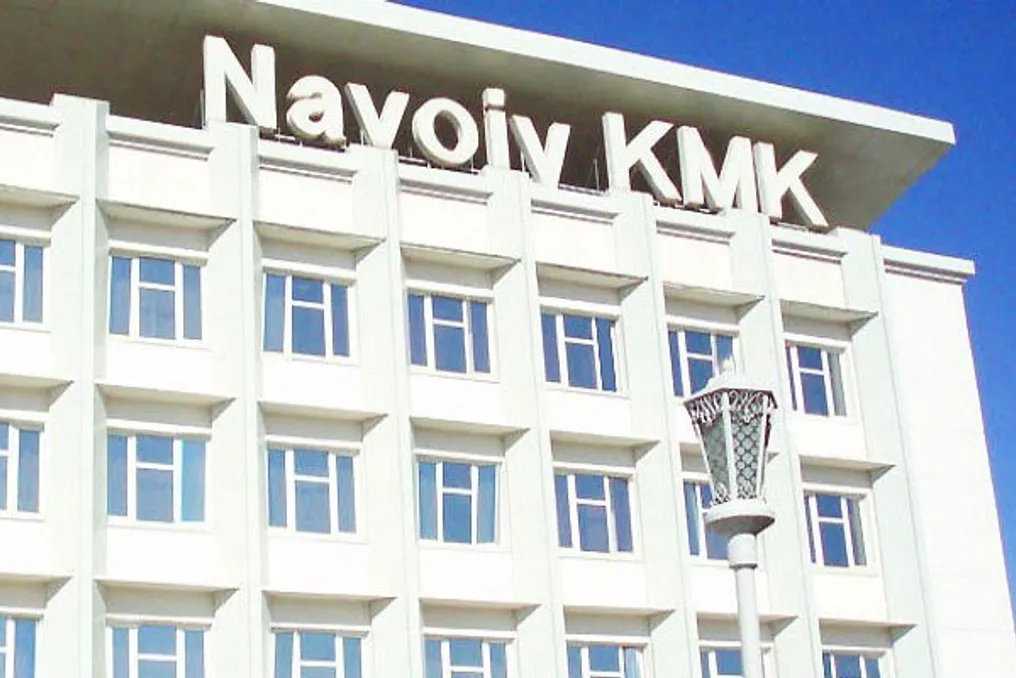
Navoiy Mining and Metallurgical Combine (NGMK) held a tender for the audit of its procurement system and the assessment of the effectiveness of anti-corruption measures. A contract worth over 1.16 billion soums was awarded to Ernst and Young Advisory. However, questions arose because, according to the state register of legal entities, this company does not have the status of an auditing organization, even though the tender documentation required this status from the contractor.
The Association of Public Procurement Participants drew attention to this situation. According to the association, the technical specifications for the tender contained a number of mandatory qualification requirements. One of these requirements was the inclusion of the contractor in the register of the Ministry of Economy and Finance as an active auditing organization. The documentation clearly stated that this requirement was established by the ministry itself, and the procurement customer had no right to change it. Furthermore, the procurement procedure stipulated automatic rejection of the application if the participant could not provide confirming documentation of compliance.
During the competition, one of the three participants, RSM Uzbekistan, was excluded from the process due to non-compliance with mandatory documentary requirements. The commission disqualified this company because it failed to provide the founders' decision on the appointment of the head, professional liability insurance policy, and confirmation of experience in forensic projects for the mining industry. Thus, the commission effectively conducted a detailed document check and was ready to reject applications based on formal deficiencies.
Regarding the two remaining candidates—Ernst and Young Advisory and KPMG Audit—the published protocol contains the general phrase: 'complies, proceeds to the next stage.' Nevertheless, this document lacks information on what specific document confirmed Ernst and Young Advisory's compliance with the requirement of having the status of an active auditing organization. This discrepancy prompted a cross-check of data with the open state register of legal entities.
According to the extract as of July 31, SP LLC Ernst and Young Advisory, established on August 6, 2018, carries out its main activity under code 73200, which corresponds to 'market survey and public opinion research.' Auditing activities are not listed as the main activity in this extract. Although the company is related to auditing through the founder Ernst Young (MCZH), whose share is only 1%, the main founder, CCA Limited, owns 99% and has no relation to auditing. Consequently, the tender winner and the auditing organization Ernst Young are different legal entities. The use of a common brand or the presence of an auditing company among the founders with a minimal stake is not equivalent to including the winner itself in the Ministry of Finance register as an active auditor.
On three technical criteria—forensic assessment methodology, project team qualifications, and team stability—Ernst and Young Advisory and KPMG Audit received identical maximum scores: 1.6666 points for each criterion and 5 points in total. Ernst and Young Advisory won due to price: it offered to perform the work for 1,035,714,286 soums excluding VAT, while KPMG Audit's offer amounted to 1,459,973,351 soums, which secured it the maximum score on the price criterion.
Six members of the commission voted to approve the results of the competition, while one member abstained. However, the available procurement materials do not clarify how the commission verified Ernst and Young Advisory's fulfillment of the mandatory requirement to have the status of an active auditing organization. If it later turns out that the company did not meet this requirement at the time of submitting the application, it may raise questions about the legality of concluding a contract worth over 1.16 billion soums.
In this regard, the Association of Public Procurement Participants sent a request to the authorized bodies asking them to verify compliance with the tender documentation. The request includes a demand to establish whether the winner met all qualification conditions, what documents the commission used to confirm this compliance, and to provide a legal assessment of the entire selection procedure for the contractor. At the time of publication, NGMK made no comments regarding the circumstances of selecting the contractor, other than the information presented in the procurement commission's protocol.