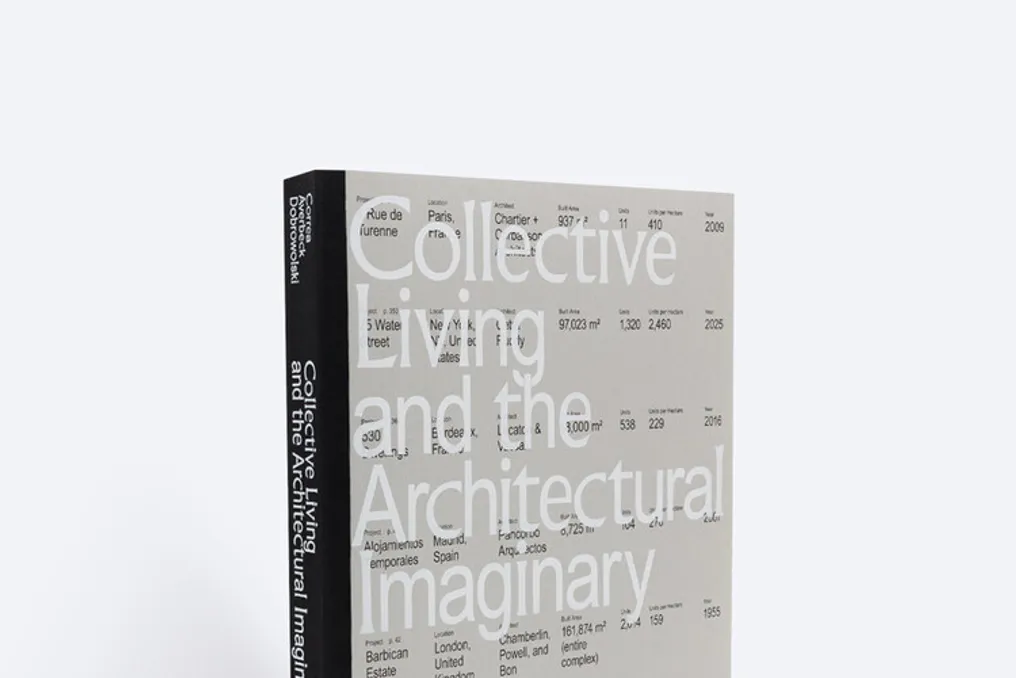
In an era characterized by housing instability, social fragmentation, and ecological urgency, the book 'Collective Living and the Architectural Imaginary' analyzes how architects have rethought and can continue to rethink ways of cohabiting.
Tracing the history of collective housing projects—from early 20th-century experiments to contemporary proposals that challenge dominant market paradigms—the publication presents sixty projects from around the world. These projects have been reworked by the authors and structured into ten different approaches to residential design.
By uniting the past and the future, built forms and experimental sketches, the work prompts readers to view housing not merely as shelter, but as a critical foundation for rethinking domestic life, civic identity, and urban existence.
This volume invites architects, urban planners, and researchers to embrace collective living as a key platform for designing the modern city and re-examining the conditions of shared habitation.