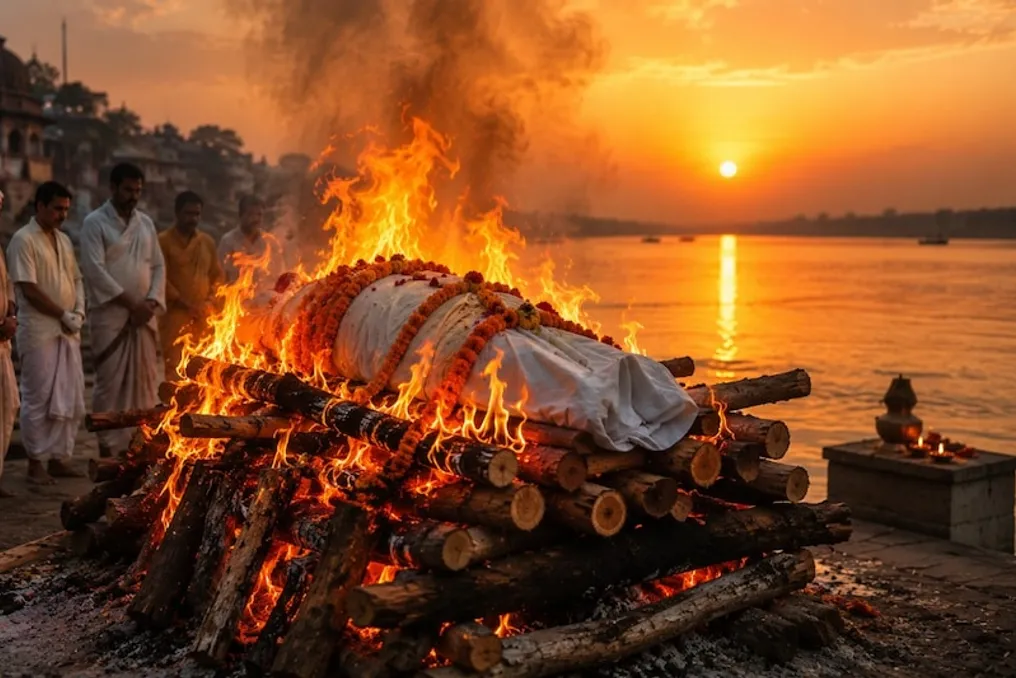
In traditional Hindu culture, after a person's death, regardless of gender, a burial rite is performed, which involves cremating the body. However, there are special rules and beliefs regarding the funerals of pregnant women and young children.
The Garuda Purana contains numerous rules and beliefs concerning death and subsequent rituals. It also mentions specific procedures for the funerals of pregnant women and young children who died at an early age.
When a woman is pregnant, a child develops in her womb. According to religious traditions, if such a woman dies, it is first necessary to extract the child from the womb. If the child is alive, it should be raised like an ordinary infant. But if the child in the womb has already died, there are separate religious norms regarding its burial.
What are the views on the funeral of a pregnant woman?
According to the Garuda Purana, before conducting the funeral of a pregnant woman, the fetus must be extracted. After this, the process of the woman's funeral is completed. Religious traditions also place great importance on acts of charity and sacrifice after death, so the practice of performing such deeds is mentioned depending on the condition of the deceased.
Furthermore, if the husband of a pregnant woman dies, she should remain patient and take care of her child. In old social traditions, there were various rules and beliefs about a woman's life after her husband's death. Nevertheless, practices such as Sati have been legally abolished and are not considered part of the modern religious or social system.
How are the funerals of young children conducted?
The Garuda Purana and Hindu religious traditions also have various rules regarding the funerals of children who died at an early age. There is a belief that very young or newborn children are not buried the same way as adults, and in some traditions, they are buried. The tradition of wrapping the child's body in white clothing and burying it in a proper place is mentioned. Some religious beliefs also speak of placing Tulsi leaves and using other religious items in the final moments of life.
The religious justification for this is that a child at such a young age has not yet attained the state of karma and merit that an adult achieves, so different rites are established for them.
How does the funeral rite change with age?
Religious scriptures indicate a difference in funeral rites and post-death actions depending on the child's age. While the tradition of burial is prescribed for very young children, other rites are mentioned for older children. These rules may vary depending on different traditions and regions.
Some religious beliefs stipulate the performance of special acts of charity after the death of young children. Traditions of donating milk, placing a pitcher of water, or offering sweets or food are mentioned.
What should be done after a child's death?
According to religious beliefs, various rituals are provided for children who die at an early age, depending on their age. Some traditions speak of feeding and charity by Brahmins or children. For children of a certain age group, there are also special rules regarding the performance of eleventh and twelfth rites after death.
However, the method of performing these rites may differ depending on grammar, sect, region, and family tradition. Therefore, in a real situation, it is recommended to consult a local priest or a specialist in the relevant religious traditions.