Sergey Brin, one of the founders of Google, has transferred a sum of $102 million to counter Proposition 40 in California, which proposes taxing the ultra-wealthy.
Sergey Brin, one of the founders of Google, has transferred a sum of $102 million to counter Proposition 40 in California, which proposes taxing the ultra-wealthy.
Brin's latest donation to this group, named Building a Better California, amounted to $20 million. This organization positions itself as a non-partisan entity focused on 'supporting forward-thinking ideas to improve the accessibility and quality of life for all Californians.'
Despite its stated goals, the group is using these large sums to fund two ballot initiatives that could block Proposition 40. This proposition calls for a one-time five percent state tax on billionaires, with 90 percent of the collected funds going to healthcare, and 10 percent to education and food assistance.
The group declined to comment on Brin's donations. However, Deborah Cartan, Vice President of the Service Employees International Union United Healthcare Workers West, issued a statement condemning Brin's actions. She stated that 'billionaire Sergey Brin chose to spend $100 million funding a questionable opposition campaign instead of simply paying his fair share of taxes so that millions of Californians would not lose their healthcare. This is a disgrace. Billionaires already pay much lower tax rates than working families do from every paycheck.'
Brin's group supports Propositions 41 and 42. If they receive more votes of approval than the proposed billionaire tax (Proposition 40), it will lead to the nullification of the wealth tax.
Consequently, billionaires have begun reducing ties with California and are threatening to move. Brin himself moved to Nevada and purchased new real estate in other locations, such as Florida, noting that his family fled socialism in the 70s, and he does not want 'California to end up in the same situation.'
The Central Government has accelerated the procedures for granting property rights and legalizing housing for residents of informal colonies in Delhi. A decision was made to legalize 1511 out of a total of 1731 informal colonies based on the 'as-is' principle.
Under this initiative, the use of land plots and houses will be fully recognized as residential, which will bring significant relief to millions of residents.
To simplify the legalization process for informal colonies, the Municipal Corporation of Delhi (MCD) has launched a new online portal called 'Swagam' (SWAGAM). This portal is intended for property owners who have already received ownership rights under the 'PM UDAY' program (PM UDAY).
Users can utilize this portal to complete the next step toward the official legalization of their property. This opportunity is available only to residents of the 1511 relevant colonies who possess a PM UDAY case ID. Specifically, those who have already been issued a conveyance deed or an authorization slip under the PM UDAY program can apply through this portal.
First, the resident must select their colony on the portal, after which details regarding the area and zone will be automatically filled in. Then, the applicant must enter their PM UDAY case ID. If a conveyance deed or authorization slip has already been obtained, the legalization procedure can proceed. For those whose cases are still under review, the portal provides a link to the PM UDAY website to track the status of their application.
Under the PM UDAY program, residents are provided with property ownership documents based on their Power of Attorney (GPA), sale agreement, and record of ownership. If the property is built on government land, a conveyance deed is issued by the government. Whereas, if the property is located on private land, an authorization slip is issued.
As of now, approximately 40,000 such documents have been issued as of March 31, 2026. A key feature of this decision is the complete waiver of the requirement for an Approved Layout Plan for colony legalization. This means that constructed properties will be legalized without the need for complex layout plan approval. This will provide greater security and relief for people who have been awaiting the legal status of their homes for years.
After obtaining these documents, the second step requires submitting an application through the MCD's 'Swagam' portal, after which the municipality will issue the official legalization certificate.
Centricity, a technology-driven wealth management company, announced on Thursday that it has raised 280 crore rupees in a Series A funding round. SMBC Asia Rising led this round.
According to Centricity's statement, existing investors also participated in the round, including Lightspeed India Partners, Burman Family Office, RAAY Investments, Stride Venture, and Innoven Capital.
The raised funds will be used to strengthen the company's proprietary technology base, expand its B2B2C wealth distribution platform, accelerate growth in private wealth and global NRI client services, and deepen its presence in domestic and international markets.
Centricity was founded in 2022 and manages assets totaling over 15,000 crore rupees in Assets Under Management (AUM). Previously, the company raised $4 million in seed funding in 2022, followed by $18 million in a seed round in 2024.
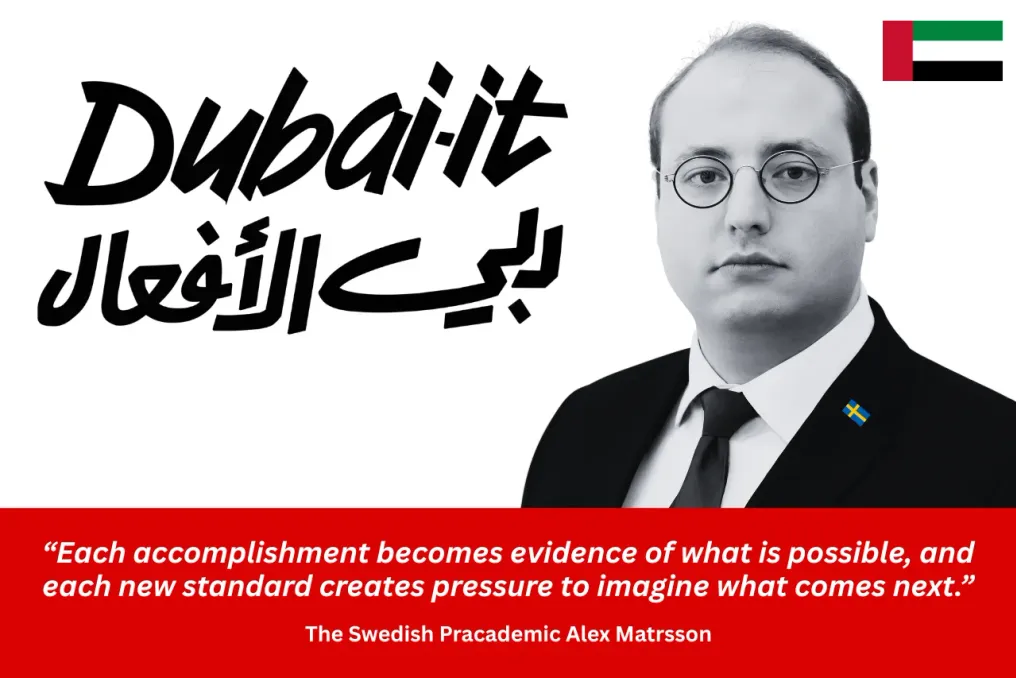
In an exclusive interview, Swedish academic and international business strategist Alex Mattson analyzes the strategic significance of the Dubai-it initiative, its foundational philosophy, and the potential of the Dubai-it award as a tool for cementing principles of execution, excellence, innovation, and measurable impact.
Mattson argues that Dubai-it should be viewed not merely as a traditional promotional campaign, but as a strategic philosophy of action. In his view, the importance of this initiative lies in deliberately elevating the level of execution from an administrative function to a defining indicator of institutional effectiveness. This initiative reflects the guiding philosophy of His Highness Sheikh Mohammed bin Rashid Al Maktoum, Vice President and Prime Minister of the UAE and Ruler of Dubai, and is built on transforming ambitious ideas into tangible results.
Mattson emphasizes that this is particularly relevant in an era where governments, corporations, and institutions are becoming increasingly sophisticated in developing strategies, visions, and declarations. However, the most challenging aspect remains implementation. Dubai-it sets a higher standard: ambition must lead to action, action must lead to results, and results must demonstrate significant impact. The initiative's philosophy unites exceptional ambition, perfect execution, and timely achievement within a single operational structure.
Mattson notes: 'The strategic question is never simply whether an institution has a vision. The question is whether that vision survives contact with reality and becomes something tangible, valuable, and lasting.' He adds that this is where Dubai-it gains meaning beyond language. The initiative calls for a culture where people and organizations directly solve problems, make targeted decisions, and maintain quality while moving with urgency. The goal is not speed for speed's sake, but the disciplined reduction of the distance between intention and achievement.
The Dubai transformation provides context to this philosophy. Mattson places the initiative within the context of Dubai's outstanding transformation into a global hub for trade, logistics, aviation, finance, investment, tourism, real estate, and innovation. The city's development is marked by a series of decisions that have expanded its economic reach and strengthened its ability to connect regions, markets, capital, and talent.
According to Mattson, Dubai's significance cannot be viewed solely within the emirate. Within the UAE, Dubai functions as one of the country's main international commercial and connecting platforms. In the Gulf Cooperation Council (GCC) region, it has become a major gateway for business and investment. Across the Arab world, its transformation has become a benchmark for urban ambition and international competitiveness. Globally, it serves as an interface between markets that were historically very far apart.
Mattson cites projects such as the Burj Rashid, Dubai International Airport, Dubai International Financial Centre, Burj Al Arab, Dubai Metro, Palm Jumeirah, Burj Khalifa, Infinity Bridge, and the Meydan racetrack, as well as Fareej Al Murar. These landmarks allow one to understand different dimensions of transformation: they cover connectivity, finance, mobility, architecture, tourism, urban development, sporting aspirations, and heritage.
Mattson concludes: 'Dubai's achievement is not contained in any single landmark. Its deeper achievement is the creation of a culture of development capable of repeatedly producing landmarks, institutions, and systems that change the city's relationship with the world.' He notes that this cumulative effect is strategically important. A global hub is created not only by infrastructure; airports require commercial ecosystems, financial centers require trust and connections, transport systems require economic density, international landmarks require identity reinforcement, and heritage preservation lends historical depth to rapid transformation. Dubai's distinctive strength lay in the ability of these various dimensions to reinforce each other.
Mattson views the Dubai-it philosophy as an attempt to codify this instinct for action. The initiative's proposition is direct: think boldly, act decisively, and execute work excellently. The initiative also seeks to embed this approach in institutions and companies, passing it on to future generations as a culture of achievement.
Mattson believes that the element of succession deserves special attention. A successful city cannot endlessly depend on the personalities or circumstances that generated its early successes. True strategic achievement lies in creating institutional habits that continue to ensure high performance as leadership priorities, technologies, markets, and economic conditions evolve.
He asserts: 'A philosophy becomes strategically powerful when it outlives the people who first formulated it. The test is whether the next generation instinctively understands that ambition imposes an obligation to achieve results.' Mattson believes that Dubai-it, therefore, relates to a broader discussion of institutional potential. Its fundamental question is how to make high performance reproducible: how to ensure that bold thinking is accompanied by disciplined execution, that innovations achieve practical application, and that achievements leave behind knowledge that can serve as a foundation for the next endeavor.
The Dubai-it Award Has a Strategic Distinction
Mattson considers the Dubai-it Award a mechanism that ensures the institutional continuity of the philosophy. The award was launched at the direction of His Highness Sheikh Hamdan bin Mohammed bin Rashid Al Maktoum, Crown Prince of Dubai, Deputy Prime Minister and Minister of Defence, and Chairman of the Dubai Executive Council. It honors those who embody the Dubai-it philosophy through exceptional achievements, execution, and impact.
For Mattson, the award's importance lies in its structure. It recognizes Individuals, Projects, Institutions, and Companies, accounting for the various entities through which transformation occurs. This is strategically vital because major achievements are rarely attributed to a single person. Leadership, teams, organizations, capital, technology, and institutional coordination often converge behind a visible result.
Mattson says the award can become more than just an accolade. When understood correctly, it becomes an institutional mechanism for identifying exceptional performance, documenting how it was achieved, and setting a higher standard for those who follow. He emphasizes: 'Recognition has strategic value when it preserves knowledge. Achievement is important, but the method behind the achievement may be even more important, as it can influence what the institution does next.'
Mattson stresses the evidence-based assessment of the award as a central element of this proposal. Nominees must present evidence of achievement, explain the problem or opportunity, describe the implementation, demonstrate the results, and provide supporting evidence. The evaluation considers the scale of the achievement, the quality of execution, speed and efficiency, tangible results, impact, sustainability, and the degree to which the achievement embodies the philosophy of Dubai's work.
Institutional Memory and the Economy of Excellence
Mattson sees institutional memory as one of the award's most important assets. Exceptional projects can easily turn into yesterday's news after completion. Without documentation and reflection, lessons learned from implementation can disappear along with the project team.
The Dubai-it Award creates a repeatable structure through which achievements can be identified, studied, and elevated. Mattson believes this can create a virtuous institutional cycle: achievement sets a benchmark, the benchmark raises expectations, and higher expectations stimulate more ambitious performance. The award covers Government, Real Estate, Economy, Business, Technology, Sports, Society, Education, Services, and Healthcare, reflecting the breadth of Dubai's development agenda. Mattson finds this range significant because a culture of excellence only becomes transformative when it encompasses the institutional and economic fabric of the city.
He asserts: 'The true legacy of the award is measured by what happens after the ceremony. If recognition raises the standard for the next decision, the next project, and the next generation of leaders, it becomes part of institutional development.'
Mattson also highlights the importance of measurable impact. The award's structure requires nominees to substantiate their claims with data, performance indicators, reports, images, certificates, and other relevant evidence. The evaluation process may include supplementary information, meetings, or interviews to establish the credibility and clarity of the achievement.
Mattson considers the connection between His Highness Sheikh Mohammed bin Rashid Al Maktoum and His Highness Sheikh Hamdan bin Mohammed bin Rashid Al Maktoum crucial for understanding the institutional logic of the initiative. His Highness Sheikh Mohammed bin Rashid Al Maktoum launched Dubai-it to reflect Dubai's philosophy of action, while the award was launched at the direction of His Highness Sheikh Hamdan bin Mohammed bin Rashid Al Maktoum to embed this philosophy in organizations and companies.
For Mattson, this creates continuity between strategic vision and institutional practice. Leadership sets the ambitions; institutions create the mechanisms; individuals and organizations transform these mechanisms into results. The award provides a recurring point where this process can be publicly recognized and studied.
Mattson notes that a broader lesson applies far beyond Dubai. Worldwide, governments are seeking ways to enhance institutional agility, improve services, accelerate innovation, and translate public ambitions into measurable results. Dubai-it offers a distinctly Dubai interpretation of this challenge: building a culture where action is expected, execution is tested, and achievement becomes the standard for further accomplishments.
Mattson argues that Dubai-it derives its credibility from the city's own achievements. The philosophy is presented not in isolation from experience, but articulated against the backdrop of visible transformation. Projects related to Dubai-it provide the lexicon through which the city's evolution can be understood—from early modernization and global connectivity to the modern financial sector, mobility, urban development, and innovation.
Mattson sees the long-term significance of the initiative in this link between identity and performance. Dubai's global reputation has been built on its ability to move from concept to realization. Dubai-it aims to transform this characteristic into a general institutional expectation, making achievement something that can be recognized, studied, and developed further.
The first nominations for the Dubai-it Award are open from August 10 to September 10, 2026. The award operates on an annual cycle and is designed to recognize recent achievements, constantly raising the standard of ambition, execution, and impact. Mattson concludes: 'Dubai-it can be strategically important because it turns achievement into a living standard. Every achievement becomes proof of what is possible.'