Africa boasts some of the planet's most extraordinary natural landscapes, including ancient tropical forests, flooded wetlands, vast deserts, and surreal limestone formations.
Africa boasts some of the planet's most extraordinary natural landscapes, including ancient tropical forests, flooded wetlands, vast deserts, and surreal limestone formations.
For nature enthusiasts, this continent offers much more than traditional safaris; it provides opportunities for forest trekking, water rafting, dune climbing, mountain hiking, and wildlife observation in unique habitats. The five featured destinations demonstrate the immense diversity of African nature tourism.
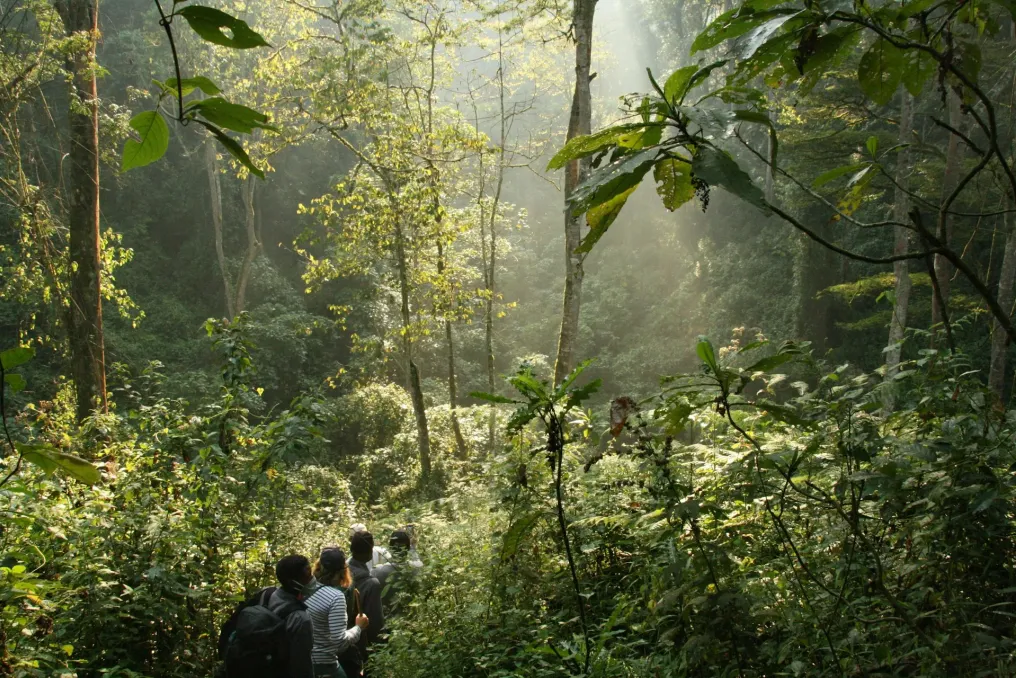
No wildlife experience compares to walking through the dense tropical forest of Bwindi Impenetrable National Park in search of mountain gorillas. The park is home to approximately half of the world's mountain gorilla population, and trekking takes place across four sectors: Buhoma, Ruhija, Rushaga, and Nkuringo. Hikes can last several hours and require a certain level of physical fitness.
However, gorillas are only part of Bwindi's appeal. It is a wonderful place for those who enjoy exploring forests on foot. Guided tours pass through dense vegetation filled with ferns, orchids, and tall trees, while ornithologists can look for endemic species of the Albertine Rift and other forest varieties. Ecosystem exploration options include the Ivi River, Mubindi Swamp, and bamboo trails.
One can walk the Waterfall Trail to three forest waterfalls, climb viewing platforms overlooking the Albertine Rift valley, or spend time birdwatching along forest paths. Depending on the accommodation, visitors can also explore local communities and learn more about the people living near this vital protected area. Bwindi is particularly suited for travelers whose wildlife interaction experience includes walking, listening, and observing, rather than just viewing animals from a vehicle.
Nature does not have to mean lush vegetation. In the Namib-Naukluft National Park, the landscape is defined by high dunes, gravel plains, mountains, and vast expanses of desert. This park is one of Namibia's great wilderness areas, with Sossusvlei, Deadvlei, and Sesriem being among its most famous attractions.
It is recommended to arrive before sunrise to watch the color of the dunes change as the light moves across the landscape. Then, one can climb Dune 45 or conquer the higher Big Daddy before heading into Deadvlei, where the dry remains of ancient camel-thorn trees rise on a white clay plain amidst huge orange dunes. Besides the famous dunes, visitors can explore the Sesriem Canyon, take a guided desert tour, hike in the Naukluft section, or engage in birdwatching. The park also offers off-road routes, photography opportunities, and stargazing, while scenic hot air balloons provide a completely different perspective of the desert.
Upon closer inspection, one can notice that the seemingly barren landscape becomes more interesting. Desert-adapted animals, resilient plants, and small signs of life show how species have evolved to survive in one of Africa's harshest environments. For nature lovers, the attraction is not only the beauty of the scenery but also the opportunity to see how life persists under extreme conditions.
The Okavango Delta offers one of the most unique safari adventures in Africa, as the shape and rhythm of the landscape are determined by water. The Okavango River spreads out into an extensive network of channels, lagoons, floodplains, and islands, creating a constantly changing wetland environment.
The best way to appreciate this aquatic wildlife is to experience it from different perspectives. A mokoro ride allows quiet movement through shallow channels, often enabling sightings of aquatic plants, birds, and wild animals from water level. Boat cruises offer another perspective, while land safaris allow exploration of drier islands and adjacent areas. One can go on a guided walking safari, birdwatch, take an evening boat trip, or participate in a traditional mokoro excursion. Depending on the camp and location, fishing, safaris, stargazing, and enjoying evenings by the fire are also possible.
The Delta is home to an amazing variety of wildlife, including elephants, buffalo, hippos, lions, leopards, cheetahs, wild dogs, giraffes, and numerous antelope species. Its birdlife is equally impressive, boasting hundreds of recorded species. The result is a place where the landscape is as important to the safari as the animals themselves.
Nyungwe National Park in Rwanda offers a completely different way to experience African nature. This montane tropical forest is a destination for hikers, ornithologists, and wildlife enthusiasts, where chimpanzee tracking and forest trails provide opportunities for ground-level exploration.
There is also a canopy walkway. High above the forest, it offers panoramic views of the treetops and gives a chance to see the tropical forest from a completely different vantage point. Visitors can join an organized chimpanzee trek, follow one of the park's walking trails, or search for monkeys and birds in the forest. More adventurous visitors can try the Nyungwe zip line and ropes course, while coffee lovers can stay at one of the forest cafes before or after their exploration.
The park's extensive network of walking routes makes it especially appealing if your idea of a vacation is to put on hiking boots and spend hours among the trees, rather than rushing between sights. Combining the forest with a visit to Lake Kivu allows for kayaking, lakeside relaxation, and picturesque mountain scenery to be added to the trip. Nyungwe ultimately boils down to slowing down and paying attention: to the sounds of chimpanzees in the canopy, the birds moving through the trees, and the mist rolling over the forest.
Few landscapes in Africa resemble Tsangyi de Bemaraha. Its jagged limestone peaks rise into a whimsical natural labyrinth of stone, where forests, caves, canyons, and waterways are interwoven throughout the terrain. UNESCO describes this area as a remarkable karst landscape with sharp limestone formations, deep river gorges, forests, lakes, and mangrove swamps. These formations can rise abruptly above the surrounding landscape, creating the impression of an extensive forest made of stone.
It is also an outstanding place for wildlife. The surrounding habitats support rare and endemic lemurs and birds, and Madagascar's long isolation has led to an exceptionally high level of endemism. Visitors can explore the Tsingy formations on foot, passing through narrow passages, over bridges, and viewing platforms, traversing the limestone landscape. Attention should be paid to the lemurs and endemic birds along the way. A trip to this region can also include a journey along the Manambolo River, which cuts through the landscape in a dramatic canyon. From the water, the scale of the limestone formations becomes even more apparent. For travelers interested in geology, wildlife, and unusual landscapes, this may be the most otherworldly stop on the list.
The appeal of these destinations lies in their differences. In Uganda, you trek through a tropical forest searching for gorillas. In Namibia, you climb massive dunes and search for signs of life in the desert. Botswana immerses you in water among wild animals, Rwanda lifts you above the tropical forest, and Madagascar leads into a landscape of towering limestone peaks. Together, they serve as a compelling reminder that Africa's natural wonders extend far beyond traditional safari. Regardless of whether your ideal trip includes wildlife, hiking, birdwatching, geology, forests, or simply breathtaking scenery, there is a place here to inspire the next adventure.
Traveling with a small child is not about visiting the maximum number of attractions, but about choosing places where the pace of rest is calm, distances are short, and parents can easily adapt the day's plans to naps, snack breaks, and unexpected meltdowns.
Fortunately, South Africa offers several destinations that make family trips less stressful. Whether it's walking through vineyards, watching elephants, exploring boardwalks, or stopping at rustic cafes, these places provide practical convenience alongside unforgettable experiences for young travelers.
Babies do not need dense itineraries or full-day excursions. Instead, the best places offer flexibility: attractions are located close to each other, there are safe open spaces, clean facilities, and many opportunities to stop, play, and recharge.
When choosing a destination, consider:
Although the Cape Town Wine Regions are known for their wine, many estates have turned into welcoming places for families with small children. Wide lawns, shaded picnic spots, ducks on ponds, and farm animals provide enough entertainment for toddlers while parents enjoy a more relaxed pace.
Many wineries around Stellenbosch and Franschhoek offer special play areas for children, while family estates like Boschendal and Spier combine excellent cuisine with extensive open spaces. Nearby attractions, such as Giraffe House Wildlife Awareness Centre and Polkadraai Farm, offer gentle animal encounters, ideal for younger visitors.
The compact layout of the region also means that attractions are rarely far apart, simplifying the return to accommodation if an unexpected nap time arrives.
The Garden Route has long been popular for family holidays and is particularly suitable for those traveling with babies. Picturesque towns like Wilderness, Knysna, and Plettenberg Bay offer short distances between beaches, forests, and family entertainment.
Babies can enjoy feeding animals, birdwatching, and walking on simple boardwalks without needing long hikes. Places like Birds of Eden, Monkeyland, and Knysna Elephant Park offer engaging wildlife interaction experiences that do not require hours of walking.
Parents will also appreciate the abundance of lagoon-view cafes, quiet picnic spots, and accommodation with spacious gardens where toddlers can burn off energy after a car ride.
For families looking for a short trip without a long highway journey, Hartbeespoort is a practical choice. Located within easy reach of Johannesburg and Pretoria, it offers enough variety to fill a weekend without feeling rushed.
Taking the Hartbeespoort Aerial Cableway allows families to enjoy breathtaking views with minimal walking, and gentle boat cruises on the reservoir offer a relaxing way to take in the scenery. Animal attractions, family markets, and children's cafes provide many opportunities to stop when babies need a break. The compact size of the area means less travel time and more time relaxing outdoors.
The Midlands Meander encourages travelers to slow down, making it one of South Africa's most relaxing destinations for families with babies.
Instead of rushing between major sights, parents can stop at farm cafes, browse artisan goods, meet farm animals, and enjoy open gardens where children can safely explore the surroundings. Many cafes feature outdoor seating and grassy play areas, allowing toddlers to move while food is being prepared. With a variety of accommodation—from cozy cottages to family farm lodges—it is easy to create an itinerary that balances sightseeing with sufficient downtime.
Gqeberha combines coastal relaxation with family activities that are easily accessible for young children. Hobie Beach offers wide promenades suitable for strollers, calm stretches of sand, and nearby cafes for quick snacks.
The Boardwalk area includes restaurants, entertainment, and open spaces within walking distance, and the city's relaxed pace makes getting around relatively easy. One of the main advantages is that Addo Elephant National Park is about an hour's drive away. Families can enjoy a game drive, giving babies the excitement of watching elephants and other wildlife without leaving the car.
Traveling with babies becomes much easier when expectations are realistic. Instead of trying to fit everything into a schedule, you need to leave room for spontaneous stops and slower morning hours.
Several simple strategies can make a big difference:
Traveling with babies is less about covering long distances and more about embracing simple moments together. Feeding ducks at a vineyard, watching an elephant from the car, building sandcastles on a quiet beach, or having a meal together at a rustic cafe can become the highlights of a family vacation.
By choosing destinations that prioritize convenience, flexibility, and outdoor experiences, parents spend less time managing logistics and more time creating memories with their youngest companions.
Long before the advent of factories and mass production, African artisans created objects reflecting their culture, beliefs, and way of life using techniques such as weaving, carving, molding, and forging. Today, these traditions are preserved in villages, workshops, and historic quarters, where skills are passed down from generation to generation.
For travelers seeking a deeper experience, visiting these places offers an opportunity to meet masters, observe age-old working methods, and acquire items imbued with history. Below are seven African destinations where craftsmanship is as captivating as the surrounding nature.
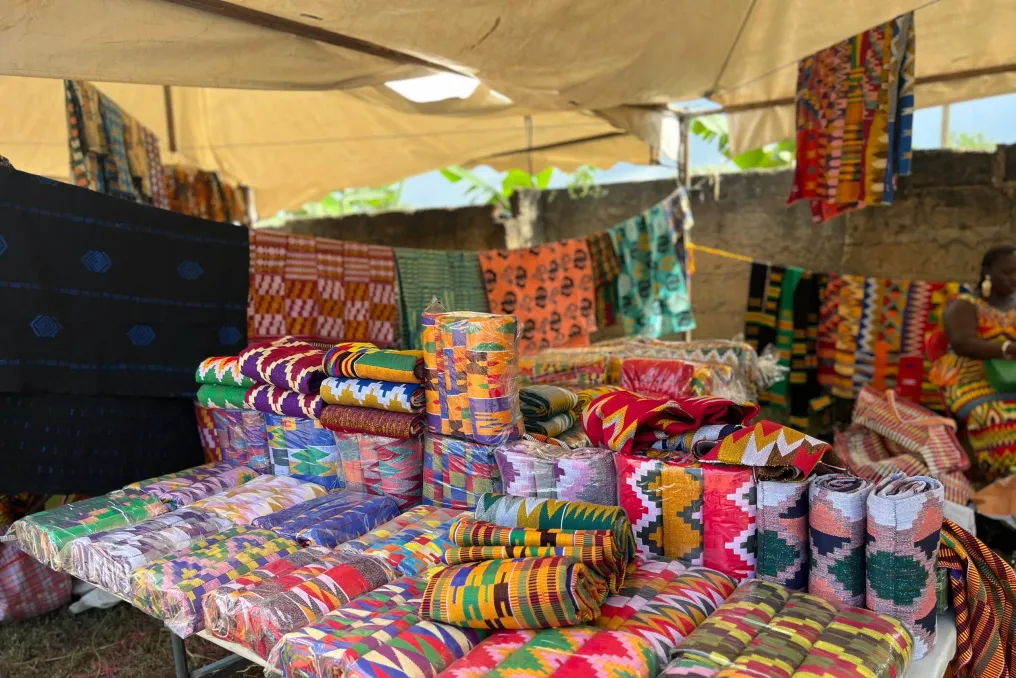
In the Ashanti region of Ghana, the village of Bonwire is considered the origin of Kente cloth, one of Africa's most recognizable textile products. Traditionally, Kente was reserved for the royal family and is made on narrow looms from brightly colored silk or cotton threads, with every pattern and color holding symbolic meaning.
Visitors can observe the work of master weavers, learn the stories behind different designs, and visit workshops where families have practiced this craft for many generations. Instead of simply purchasing fabric, tourists gain an understanding of the mastery and cultural significance of each strip.
Communities around the Okavango Delta have long been transforming local Mcola palm leaves into intricately woven baskets. Originally used for storing grain, carrying food, and fishing, these baskets are now valued worldwide as works of art.
In villages such as Etsha and Gumare, there are women's weaving cooperatives where guests can see the entire process: from collecting and dyeing fibers with natural pigments to creating detailed geometric patterns that make each basket unique. The designs often reflect the local wildlife, waterways, and daily life in one of Africa's most unusual ecosystems.
Eswatini has earned a reputation as a country that supports local artisans, and nowhere is this more evident than in the Malkerns Valley. This region is home to renowned craft centers where visitors can watch recycled glass being transformed into colorful sculptures, wax being cast into intricate shapes, and skilled artisans producing woven baskets, ceramics, textiles, and woodwork.
Many workshops encourage guests to observe the production process, allowing for an easy appreciation of the skill invested in every handmade item.
A stroll through the winding streets of Stone Town resembles visiting an open-air museum dedicated to crafts. This historic city is famous for its richly decorated wooden doors, many adorned with floral motifs, Arabic inscriptions, and Indian-style details, reflecting Zanzibar's rich trading history.
Beyond the iconic doors, small workshops continue to produce furniture, decorative carvings, and traditional artwork, utilizing techniques honed over generations. Exploring these artisan spaces provides fascinating insight into one of East Africa's most distinctive artistic traditions.
Glassmaking has flourished in Egypt for millennia, and the historic district of Fustat remains one of the best places in the country to experience this craft. In traditional workshops, furnaces glow as artisans blow, shape, and color molten glass using techniques that have barely changed over centuries.
Visitors can also tour neighboring pottery studios and craft markets, making this area a worthwhile stop for anyone interested in handmade design and heritage.
Near Bonwire, the Ashanti city of Kumasi is another important center of Ghanaian craftsmanship, known for its Adinkra cloth. Unlike Kente, Adinkra textiles are decorated with hand-stamped symbols, each representing concepts such as wisdom, bravery, unity, or perseverance. Traditionally, the cloth was printed using natural dyes derived from tree bark and was worn during important ceremonies and cultural events for a long time.
Visiting the workshops allows tourists to see how symbols are carved into stamps, prepared by hand, and carefully pressed onto the fabric, preserving a tradition deeply connected to Ghanaian identity.
Across the Sahara, Tuareg artisans have long been renowned for creating elegant silver jewelry characterized by geometric patterns, engraving, and symbolic elements. Crosses, bracelets, and necklaces are not merely decorative items; they often symbolize identity, protection, and family heritage.
Although security conditions currently prevent many Tuareg communities from hosting tourists, their craftsmanship continues to be displayed in museums, cultural exhibitions, and craft fairs in parts of North and West Africa. Studying this enduring tradition offers valuable insight into one of the continent's most unique artistic heritages.
The experience of traditional crafts goes beyond buying souvenirs. Watching a basket take shape from palm fibers, seeing molten glass transform into delicate forms, or studying the symbolism woven into a piece of fabric creates a deeper connection to the destination itself. These encounters also support local artisans and help preserve skills that have survived centuries despite rapid modernization. For travelers seeking authentic cultural experiences, the workshops, villages, and craft communities of Africa offer stories as enduring as the items they produce.
Across the territory of South Africa, mountains, craters, caves, and canyons hold evidence of ancient volcanoes, meteorite impacts, continental shifts, and rivers that have shaped the landscape over billions of years.
These sites reveal extraordinary geological forces that formed South Africa long before humans appeared, whether you are fascinated by fossils, interested in plate tectonics, or simply enjoying dramatic natural scenery.
The Barberton Makhonjwa Mountains are among the oldest exposed rock formations on the planet, estimated to be about 3.5 billion years old. Recognized as a UNESCO World Heritage site, these mountains provide scientists with a unique window into the early Earth's crust and the conditions present during the dawn of life.
Unlike many ancient formations heavily altered by time, the rocks here are exceptionally well preserved. Visitors can hike the Barberton Makhonjwa Geotrail—a self-drive route featuring viewpoints and information boards explaining volcanic activity, ancient oceans, and some of the earliest known geological processes.
Approximately two billion years ago, a massive meteorite struck central South Africa, creating the largest confirmed impact structure on Earth. Although erosion has worn away much of the original crater, the Vredefort Dome still demonstrates the immense forces released during the collision.
The impact exposed deep layers of the Earth's crust, forming unusual mountain structures and impressive folded landscapes. Today, visitors can explore hiking trails, river routes, and participate in guided geological tours detailing how this collision permanently changed the surrounding region. This dome is also a UNESCO World Heritage site, underscoring its global scientific significance.
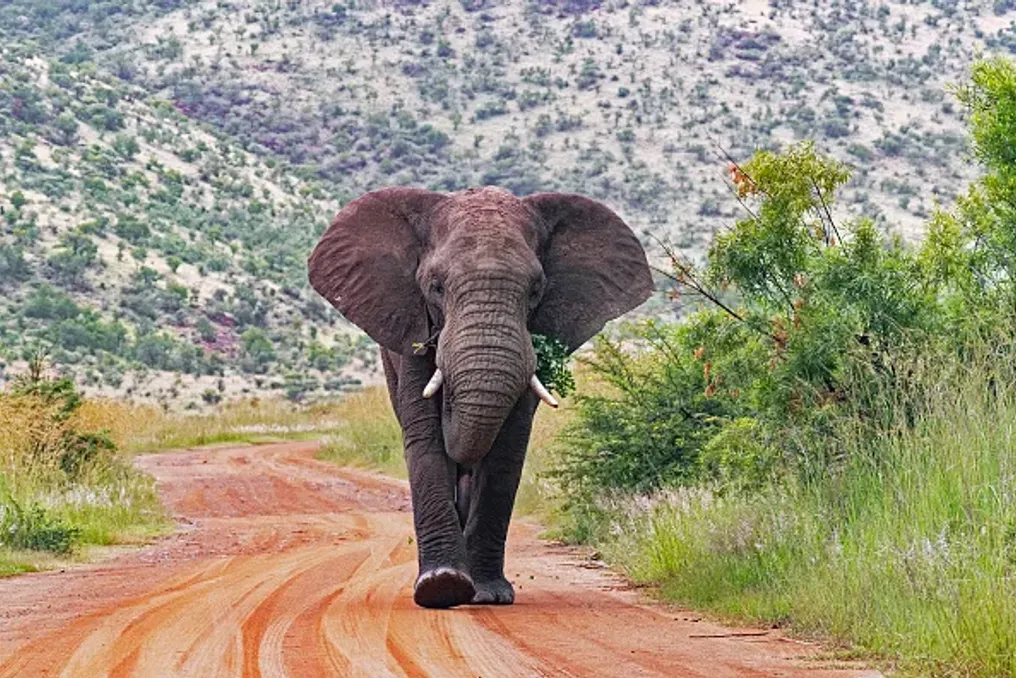
Pilanesberg National Park is known for Big Five safaris, but many tourists do not know they are driving through the remnants of an extinct volcano. The park is located within one of the world's largest alkaline volcanic ring complexes, which formed about 1.2 billion years ago.
Over time, erosion has removed the volcanic cone, leaving behind a ring of hills that now surrounds fertile, wildlife-rich valleys. This unique geology contributes to Pilanesberg's outstanding biodiversity, as varying altitudes and soil types support numerous ecosystems. It is one of the few places where wildlife viewing can be combined with a lesson in volcanic history.
The mighty Orange River plunges nearly 60 meters into a dramatic granite canyon in Augrabies National Park, creating one of South Africa's most impressive geological spectacles. Over millions of years, the flowing water has carved deep channels into the ancient granite bedrock, leaving polished stone surfaces, high cliffs, and amazing erosion patterns.
The name 'Augrabies' derives from the Khoi word Khoi Aukoerebis, meaning 'place of great noise'—a fitting description for the thunderous waterfalls, especially after seasonal rains. Panoramic viewpoints throughout the park showcase the colossal power of water in shaping the landscape over geological time.
Near Pretoria lies Cswaning Crater, one of the best-preserved meteorite impact craters in the world. It formed approximately 220,000 years ago when a meteorite fell to Earth. The crater is about 1.13 kilometers in diameter and once contained a salt lake that attracted both wildlife and early humans.
A hiking trail leads visitors down into the crater, where informational plaques explain the impact event, local ecology, and archaeological findings. The combination of geology, archaeology, and biodiversity makes Cswaning an engaging destination for curious travelers.
Hidden beneath the Swartberg Mountains near Oudtshoorn, Kango Caves demonstrate millions of years of slow geological transformation. Formed in thick limestone deposits, the caves gradually developed under the action of groundwater dissolving the rock, resulting in vast chambers adorned with magnificent stalactites, stalagmites, and delicate flowstone formations.
Tours showcase majestic caverns such as Van Zila Hall and Cleopatra's Needle, while explaining the geological processes responsible for these remarkable natural sculptures. The caves remain one of South Africa's most famous natural attractions, continuing to inspire visitors with their subterranean beauty.
South Africa's geological wonders tell stories spanning billions of years—from ancient volcanic eruptions and colossal meteorite impacts to rivers patiently carving canyons and caves beneath the surface. Visiting these sites offers more than just picturesque views; it is an opportunity to witness the forces that shaped not only South Africa but our planet as a whole. For geology enthusiasts, every rock, cliff, and crater reveals a new page in Earth's extraordinary history.