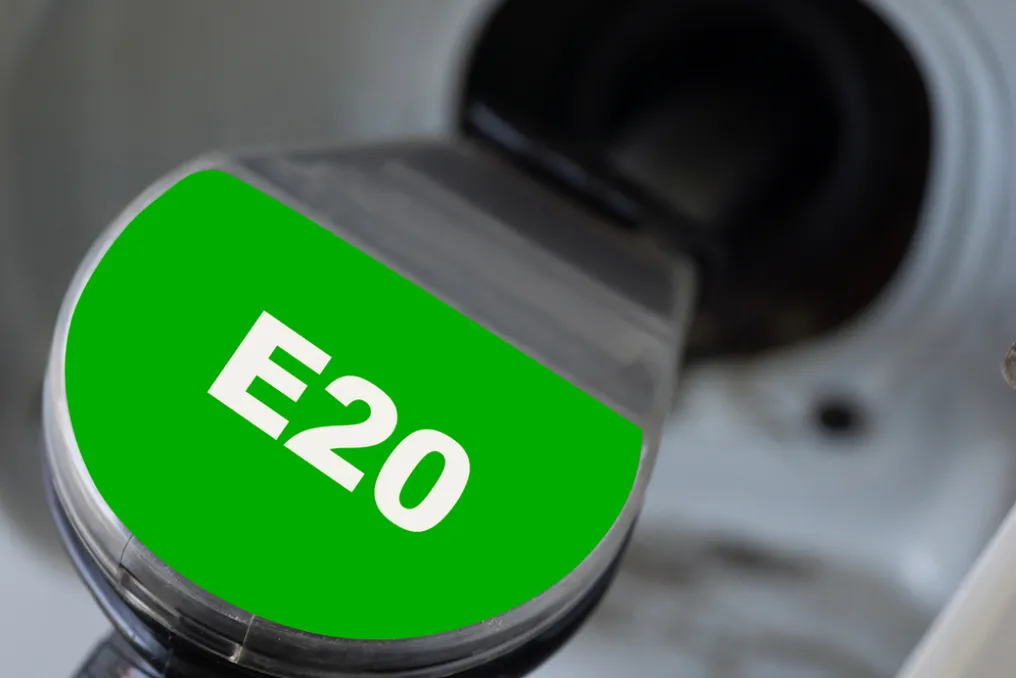
Despite public assurances from India regarding the safety of ethanol-blended gasoline, the automotive lobby managed to withdraw a complaint about fuel contamination that it had sent to the government a week ago. However, internal correspondence among industry executives, reviewed by Reuters, showed that in previous days, leading automakers Maruti Suzuki, Tata Motors, and Mahindra discussed concerns about the contamination of gasoline mixed with 20 percent ethanol (E20).
This data was gathered as part of the most comprehensive fuel testing conducted by the industry since the government, under Prime Minister Narendra Modi, began implementing E20 nationwide last year to reduce pollution and decrease oil imports. Since only this type of fuel has been available since April 1st, consumer concern is growing regarding the impact of E20 on vehicle performance.
The automakers' emails are the first to demonstrate their private anxiety about contaminants in E20, such as chloride and moisture, which they claim damage vehicles, even amidst the government's public support for the fuel adoption program.
The Society of Indian Automobile Manufacturers (Siam) withdrew its letter of July 28th regarding fuel contamination following a public and governmental outcry over the warning, stating that some figures required 'confirmation.' Previously undisclosed industry data and emails analyzed by Reuters indicate that 'many' automakers conducted extensive tests, collecting over 250 fuel samples from petrol pumps across 21 of India's 36 states and territories. They found high levels of chlorides in many samples in 18 states, as well as high moisture levels.
Executives did not express concerns about data authenticity in their emails. Siam informed Reuters that the data was intended only for internal use, discussion, and verification, and was collected by 'very few' automakers. Maruti, Tata, and Mahindra, who were part of the correspondence seen by Reuters, account for 67 percent of the Indian automotive market.
Siam explained the withdrawal by stating that 'the testing base and sample size were insufficient to support final conclusions, so the message was sent in error,' adding that it intends to conduct proper scientific research.
The Ministry of Petroleum and Natural Gas did not respond to requests for comment. Its minister, Hardeep Singh Puri, stated on Friday that two weeks before receiving the letter from Siam, Indian oil marketing companies began 'thorough testing' of fuel at retail points to check for contamination. He reported that only four cases of contamination were found. State fuel retailers also stated last week that extensive random and scientific tests showed 'no cause for concern regarding fuel contamination.'
Mahindra stated that the conclusions drawn from its executives' emails are 'completely unfounded and incorrect,' noting that the industry data is limited and preliminary, and the company sees no issues with E20. Maruti and Tata did not respond to requests for comment.