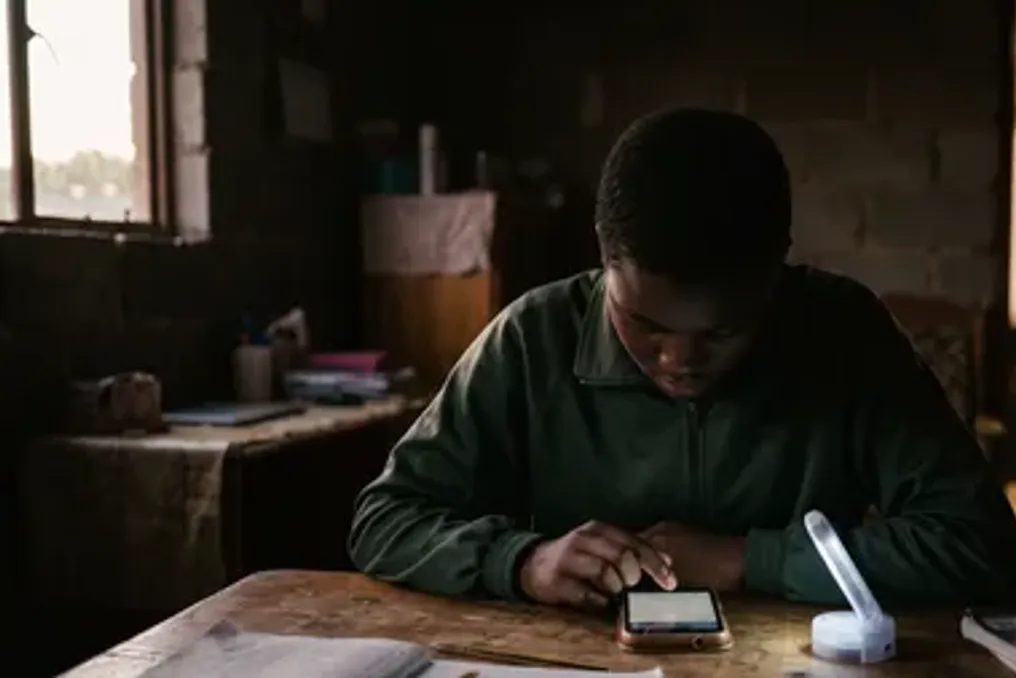
Connecting schools in South Africa to broadband internet is an important step, but new research demonstrates that high data costs, unreliable power supply, shared device usage, and limited support prevent young people from turning access to digital technologies into opportunities for education, employment, and economic growth.
When Minister of Communications and Digital Technologies, Sulli Malatsi, announced new partnerships to expand broadband infrastructure in schools across South Africa, it was seen as significant progress in bridging the country's digital divide. These partnerships unite the government and telecommunications companies to improve connectivity in educational institutions, recognizing that in the modern world, lack of network access increasingly means exclusion from education, employment, and opportunities.
As more classrooms become digital, more public services move online, and artificial intelligence transforms the labor market, ensuring connectivity has ceased to be a desirable addition—it has become a necessity.
While the announcement deserves praise, it must serve as a catalyst for a broader discussion on what true digital inclusion looks like. If we assume that simply connecting schools to broadband internet is sufficient, we risk confusing access with opportunity. Fiber optic cables can deliver the internet to a classroom, but they do not guarantee that a young person will leave school with the confidence, support, and chances needed to live in an increasingly digital economy.
This distinction lies at the heart of our latest study, which examined what digital inclusion truly means for youth living in different communities in Johannesburg. For a long time, South Africa measured digital progress by the number of smartphones in people's hands, the expansion of broadband networks, and the number of households connected to the internet.
These achievements are important and deserve commendation, but they say little about whether young people can use technology to improve their lives. Having a smartphone does not equate to finding a job online, nor does having Wi-Fi in a school automatically lead to better learning outcomes. Being connected does not necessarily mean being included.
The most telling part of the study was not the analysis of international digital literacy frameworks or a review of government policy, but listening to the young people themselves. Researchers sought to understand what their daily experiences could teach us about digital inclusion, and what they found challenged many assumptions shaping public policy.
The youth spoke little about a lack of motivation to learn digital skills. Instead, they described daily obstacles that make full participation in the digital world much harder than policymakers often imagine. They mentioned the high cost of mobile data, which forces them to conserve every megabyte, unreliable connections that interrupt online learning and job applications, shared devices that limit the ability to practice new skills, and digital platforms that often do not reflect their languages, culture, and reality.
Listening to these testimonies clearly showed: the problem for many young people is no longer just getting online. The real challenge is staying online long enough, often enough, and meaningfully enough to turn digital access into better education, decent work, and economic opportunities. This may seem like a minor difference, but it fundamentally changes the approach to digital policy development.
Imagine two 11th-grade students whose classes have recently been connected to broadband internet. Both know how to search for information online, prepare assignments using digital tools, and use artificial intelligence to support learning. On paper, both would likely be considered digitally literate. However, when the school day ends, their lives begin to look very different.
One returns home with reliable fiber optic internet, uninterrupted electricity, a personal laptop, and parents who can support their education. The other returns home with expensive prepaid data, regular power outages, a shared smartphone, and in a family where every rand must cover food, transport, and rent expenses. Although both students may possess similar digital skills, their chances of turning those skills into academic success, employment, or entrepreneurship are on vastly different levels. The difference is not what they know; the difference is whether they have the ability to use what they know.
This is why our study is based on economist Amartya Sen's Capability Approach, which argues that development should be measured not just by the resources a person possesses, but by the real freedoms they have to use those resources to improve their lives. Applied to South Africa's digital future, this means recognizing that accessible data, reliable electricity, quality education, household income, disability inclusion, language, and family support determine whether digital technology becomes a path to opportunity or just another reminder of inequality.
A smartphone creates an opportunity only if there is affordable data to use it. Broadband access changes lives only if young people have the support and confidence to utilize it. Digital skills matter only if they can be translated into decent work, further education, and meaningful societal participation.
Therefore, Malatsi's broadband initiative should be viewed as a foundation, not an end goal. Connecting schools is one of the wisest investments South Africa can make, but stopping there will only solve one part of a much larger problem.
Creating a truly inclusive digital society also implies increasing data affordability, strengthening public education, developing digital platforms suitable for all South Africans, investing in technologies that account for the needs of people with disabilities, and creating more opportunities for youth to apply their digital skills outside the classroom. It also means involving the youth themselves in these discussions, as the study clearly shows they understand the barriers they face best.
Too often, digital policy is developed for youth, but not with them. Nevertheless, throughout the study, they offered thoughtful and practical ideas on what genuine digital inclusion could look like in their own communities. They did not ask the government to solve all their problems for them. They asked for a fair chance to turn their skills, ambitions, and resilience into opportunities that too often remain out of reach.
South Africa's digital transformation is happening faster than ever, and this is cause for celebration. But as we lay more fiber, connect more schools, and expand digital infrastructure, we must remember that technology has never been the final destination. It is merely a bridge. The true measure of success will not be how many schools have broadband access or how many young people own smartphones. It will be whether these investments help more young people find jobs, succeed in education, start businesses, and build lives they value.
Because ultimately, South Africa's digital future will be built not only through broadband access. It will be built by the youth who are provided not only with the tools to connect, but also with the freedom, support, and opportunities to turn that connection into a better future.