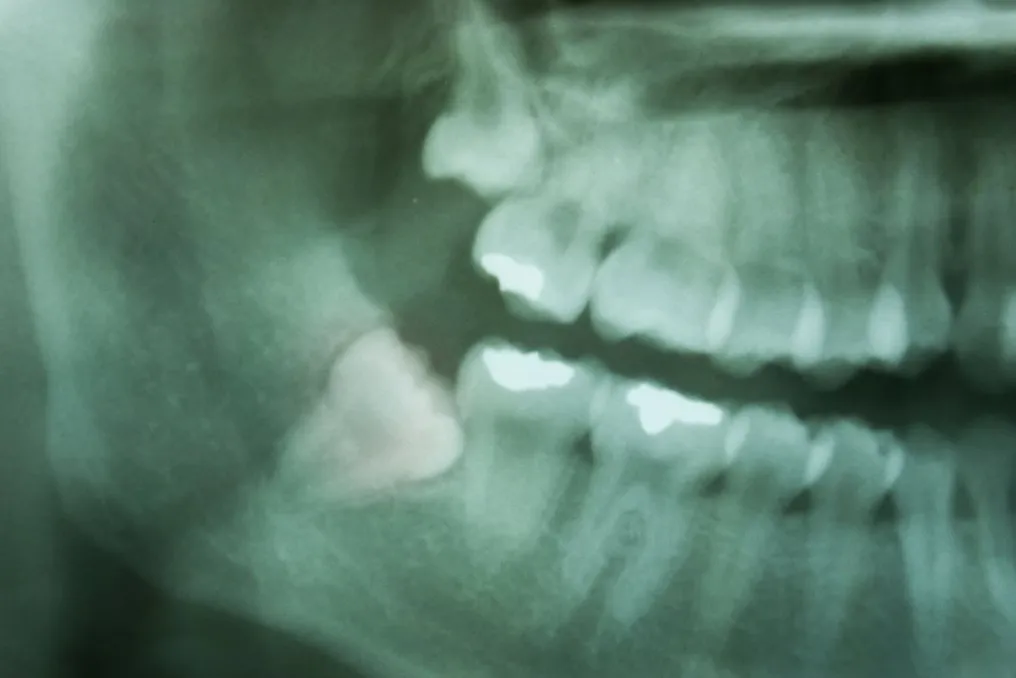
Researchers at the University of São Paulo (USP) have created an artificial intelligence (AI) tool designed to identify teeth and flag signs of cavities in dental radiographic exams. This technology, developed in Ribeirão Preto, aims to support dentists in interpreting these images, making clinical assessments faster and more accurate.
The development arose from a partnership between computer science specialists from the Faculty of Philosophy, Sciences, and Letters of Ribeirão Preto and professionals from the USP Faculty of Dentistry. The InReDD group, composed of approximately 30 researchers, is responsible for creating digital solutions aimed at the dental field.
Using convolutional neural networks, the tool was trained with thousands of radiographs that had already been analyzed by specialists. The main objective is not to replace the dentist but rather to provide a second opinion that can support decisions regarding diagnosis and treatment planning.
The functioning process begins with the preparation of a vast set of dental images, accompanied by their respective expert evaluations. This material serves as a reference base for training the system, which learns to correlate the visual patterns of the radiographs with the changes it needs to recognize.
The architecture employed belongs to the category of convolutional neural networks, specifically designed to process visual information. Alessandra Alaniz Macedo, a professor of Computer Science at FFCLRP and project coordinator, explained that this type of structure is ideal for tasks involving images, such as dental radiographs.
During the training phase, the model compares its own predictions with the data established by specialists. When discrepancies are identified, it adjusts its parameters to reduce errors, allowing the tool to continuously improve its ability to locate modifications in the images.
However, creating a system of this nature goes beyond just coding the algorithm; it also encompasses data selection and preparation, as well as training and verifying its performance, constituting a scientific process conducted by computer scientists.
In a clinical setting, one of the applications suggested by the group is to use AI as an additional support to the analysis performed by the professional. The tool can help both in discovering problems and in structuring the treatment plan for a clinical case.
The scope of the project extends beyond radiographs. The team indicated that AI solutions could also be applied to administrative functions in clinics, such as appointment management, answering simple queries, and producing communication materials for patients.
Despite the results being considered promising, researchers emphasize that the technology should not yet take over the role of the dentist. A notable challenge lies in the complexity of fully explaining how certain models arrive at their conclusions, which often leads to these systems being associated with the concept of a 'black box'. Camila Tirapelli, a professor at the Ribeirão Preto Faculty of Dentistry and co-coordinator with Alessandra Macedo, stresses that no AI system is perfect, keeping the interpretation of the result and the clinical decision under the responsibility of the professional.
The quality of the data used in training directly impacts the system's performance. According to Tirapelli, insufficient information can cause the tool to replicate flaws present in the material used for its learning. Thus, the union between health and computer science professionals is seen as crucial for building reliable models.
It is expected that, for patients, these tools can reduce the time required for certain evaluations and contribute to more accurate diagnoses. In the realm of scientific research, the ability to process large volumes of radiographs can facilitate the identification of population patterns and support epidemiological investigations in oral health.
The solutions generated by InReDD are intended for various audiences, including dentists, radiologists, and researchers. Although current advances are positive, the systems still require refinements before broader adoption in clinical practice.
This work is the result of a collaboration between two USP units in Ribeirão Preto, bringing together faculty, students, and researchers of various levels. The group includes undergraduates, master's students, doctoral candidates, a master's holder, a postdoctoral researcher, and professors from relevant fields.
The initiative also receives financial support from the São Paulo State Research Foundation. The original project that gave rise to the tool seeks to integrate AI and dentistry resources through the so-called multimodal fusion, expanding the possibilities of computing in oral health.
For Alessandra Macedo, the aggregation of multiple functionalities into a single solution represents a differential aspect of the team's work. The project has already generated academic publications, dissertations, and theses, in addition to a technological product whose code has been registered by USP. The researchers aim for future studies to improve the tools and expand their applications, aiming for a dentistry where AI is a complementary resource, without diverting clinical responsibility from the professional.